Key Takeaways:
· The DSCSA has significantly advanced supply chain integration in the pharmaceutical industry by mandating that all supply chain participants be interconnected to exchange regulatory data.
· The complexity across a huge network of suppliers and customers is what gets exponentially more challenging.
· A leading U.S. healthcare system is expected to save millions of dollars through full procure-to-pay digitalization.
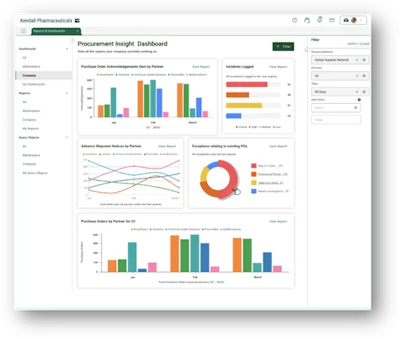
TraceLink, the end-to-end digital network platform for intelligent orchestration of the life sciences and healthcare supply chain, has announced significant new platform enhancements to drive supply chain transformation with its Orchestration Platform for Universal Solutions (OPUS). The new capabilities are designed to empower supply chain, finance, commercial, and IT leaders to master today’s supply chain complexities and prepare for the increasing prevalence of goal-oriented AI systems.
Digital tools to enhance supply chain visibility, and to serialize products, is not new to life sciences in light of the Drug Supply Chain Security Act (DSCSA) and other regulations that demand more visibility to protect patients and product. But how many life sciences companies are leveraging advanced digital tools like AI? I reached out to TraceLink to gain a better understanding of these new digital tools and the adoption rate in the U.S.
“I'd say it's a very small portion, maybe at about 25% based on our experiences,” says Lucy Deus, SVP of Supply Network Products, TraceLink. “Where you do see more digitalization is inside the four walls of a company, like their manufacturing systems or their warehouse systems, ERPs, things like that..."
Read the full article here.