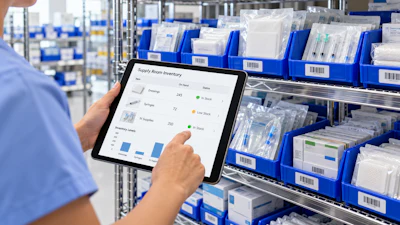
Autonomous supply rooms using AI and computer vision technology are transforming healthcare inventory management by providing real-time visibility and reducing manual labor, but their effectiveness depends heavily on package design, legibility, and how supplies are organized and presented to cameras.
- Technology in Action: UCSF Health deployed autonomous supply rooms combining computer vision, artificial intelligence, and workflow automation to reduce labor-intensive manual inventory tasks.
- Packaging Is Critical: Camera recognition depends on package legibility, contrast, label clarity, and information visibility—requiring product names, codes, lot numbers, and expiration dates on individual packages, not just outer cartons.
- Design Improvements Matter: Matte finishes, high contrast, color bands, and clear labeling on multiple package sides improve AI recognition accuracy and reduce system retraining needs.
- Manufacturer Communication Gap: Packaging changes currently require no notification to health systems, creating system anomalies that demand manual retraining—advance notice would streamline operations.
- Broader Benefits: Beyond daily efficiency, autonomous supply rooms support emergency preparedness by instantly identifying available supplies, quantities, and consumption forecasts during disasters.
University of California, San Francisco (UCSF) Health has introduced emerging inventory technology in an initial group of autonomous supply rooms. UCSF’s adoption is consistent with a recent report from research and advisory firm Gartner, which describes leading health systems as beginning to deploy supply rooms that combine computer vision, artificial intelligence, and workflow automation.
The health system began using the technology less than a year ago, with plans for a broader rollout, says Jake Limbert, system director of supply chain at UCSF. Post roll-out, Limbert describes the rooms as less labor-intensive, allowing greater focus on patient care.
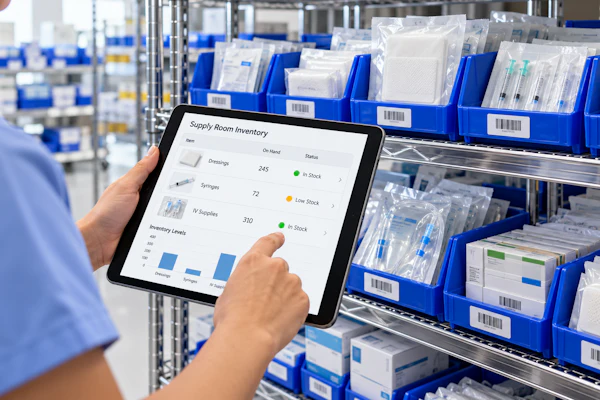
A central benefit, Limbert says, is a real-time view of available supplies. UCSF wants to optimize the system’s capabilities as use expands. Package recognition is an operational consideration because inventory and replenishment decisions depend largely on the system’s ability to read product packaging.
How the Technology Supports Inventory Visibility
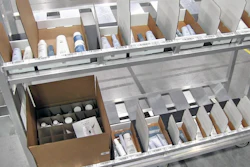
These systems use multiple high-resolution cameras to recognize packages for inventory management. Limbert explains that the cameras continuously take snapshots, recognizing the stock-keeping unit, or SKU, and other package characteristics while assessing supply levels in each bin. As supplies are removed, the system monitors declining levels, providing inventory information quickly and helping anticipate supply needs before staff request an update.
These capabilities bring product packaging into the workflow in a new way. Bruce Gilmore, vice president analyst in Gartner’s Supply Chain and Procurement practice, has more than 35 years of experience in supply chain leadership in the high-tech and healthcare industries, including over eight years in Mayo Clinic’s supply chain operations. His insights draw on evaluating the technology and observing these systems in operation.
Gilmore describes initial system training based on predetermined inventory specifications as accounting for most of the manual upfront work. Once configured, the system monitors inventory and continues to learn through artificial intelligence, which he describes as a key advantage. He also highlights its ability to communicate automatically with an enterprise resource planning system or inventory management platform through an application programming interface, exchanging data to coordinate inventory updates and ordering. Staff intervention may still be required to review flagged exceptions or retrain the system to recognize packaging changes.
Despite that upfront work, Limbert says autonomous supply rooms can reduce day-to-day manual work and help address labor shortages, supply chain staffing constraints, stockouts, and waste.
 ChatGPT
Maintaining visibility, however, depends on how supplies are packaged and presented to the cameras. Gilmore describes the cameras as reading packaging attributes and storage information spatially within the room, including package size, shape, configuration, and appearance, along with package labels and bin and shelf labels.
The cameras can only recognize a package within their line of sight. For hospital staff, shelf placement and product presentation therefore require attention alongside packaging to support accurate inventory monitoring and help identify and resolve discrepancies. This makes package design and supply room organization closely connected because information must be legible on the package and visible in its storage position.
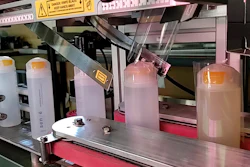
Current autonomous supply room systems work with existing packaging, Gilmore says, but physical distinction matters. Design changes that differentiate products could improve recognition. He identified high-gloss and thin packages as potentially problematic and emphasized that product names, codes, product types, and unit information should be clear and legible on multiple sides of the package.
Individual consumable packages should also include the global trade item number, lot number, and expiration date. Sometimes that information appears on the outer carton but not the individual package. Complete information needs to be on the lowest level of packaging for the item used by the clinician, says Gilmore. This retains identifying information when individual supplies are removed from cartons and placed in bins or on shelves.
Higher contrast, matte finishes to reduce glare, and color bands could help improve readability and differentiate similar products, including stacked packets or pouches, he adds. His observations point to an opportunity to improve visual recognition by computer vision systems through package design. Limbert echoes that view by saying he would “love to see manufacturers design their packages so they are easier to read by a camera.”
Managing Packaging Changes
Gilmore suggests that advance notice of packaging changes would be valuable to health systems.
“Packaging today does not require any notification from manufacturers; changes do not require any notification to health systems,” says Gilmore. “They can change a package any time, where they have to communicate if there is a formulary change or product change, but not a packaging change. So, ideally, when a package—artwork, layer, color, different dimensions, whatever it is—changes, that would be a good change notification to the health system because that would require system retraining.”
He notes, “The system would detect an anomaly, and have to retrain anyway, but that would be rework or an exception versus that being communicated ahead of time.”
His comments show that both improving package readability and managing design changes in a system already in operation matter in autonomous supply rooms.
Potential for Emergency Readiness
UCSF is also considering how real-time inventory visibility could support emergency readiness. Limbert sees potential value during disasters such as hurricanes and wildfires, or a pandemic like COVID-19. In those circumstances, he says, an autonomous supply room should be able to establish what supplies are available, where they are, and how long they will last without requiring staff to gather that information manually.
Emergency use is seen as a potential application of the technology rather than an outcome demonstrated during a UCSF disaster response. This application also connects packaging to operational readiness because effective planning depends on identifying supplies and understanding their usable quantities and anticipated consumption.
Broader System Capabilities
Beyond emergency readiness, Gilmore sees broader potential to improve everyday inventory management. Drawing on his experience moving from a manual system of physical carts and weighted bin technology to radio frequency identification capability, he says autonomous supply room technology offers an opportunity to bypass a lot of those steps.
“I think this is going to be a game changer in the healthcare inventory management process. I understand the cost burden is lower, and then the need for human interaction in the stock room, meaning physical counting, doing that type of work, is greatly reduced. So, it has a supply chain labor reduction possibly. It also enables better inventory availability for the clinicians. And then if it’s coupled with other technologies that are available, like light guided picking for the nurses and clinicians, it really reduces their time to access material, so not searching for products in bins.”
Looking Ahead as the Rollout Expands
As UCSF moves toward broader implementation, its early experience highlights the connection between real-time inventory visibility, supply room workflows, and camera-ready packaging. Limbert’s observations describe the benefits of daily use, while Gilmore’s assessment identifies considerations for continued adoption.
Limbert says he is “excited to bring this technology to healthcare to make it more resilient and efficient.” For medical product manufacturers and their packaging suppliers, there is an opportunity to assess how easily a package can be distinguished at its storage location, considering its profile, product-name legibility, code size, and visual contrast. That assessment also extends to the information available on individual consumable packages and how design changes are communicated to health systems.