Modern tamper-evident packaging design combines physical security features with digital traceability to protect pharmaceutical products while maintaining customer convenience, moving away from frustrating clamshell designs toward integrated solutions like adhesive-free cartons and smart packaging technologies.
- The global anti-counterfeit packaging market is projected to grow from $227 billion in 2024 to over $316 billion by 2031, driven by regulatory requirements like the Drug Supply Chain Security Act and Falsified Medicines Directive.
- Modern tamper-evident solutions combine multiple layers of physical and digital protection, including holographic effects, invisible inks, serialization, QR codes, and cloud-linked data for end-to-end supply chain visibility.
- Thermo Fisher's patented 2024 carton design eliminates adhesive labels by integrating tamper evidence directly into carton structure, solving integrity issues at ultra-low temperatures where traditional adhesives fail.
- Shrink bands and sleeve labels offer flexible, cost-effective tamper evidence alternatives for pharmaceutical products, with new conversion kits enabling manufacturers to apply customized bands to various bottle types automatically.
- FDA regulations require healthcare e-commerce products to feature unmistakable visual evidence of tampering through breakaway seals and void-activation tapes, prioritizing clear security signals over difficulty of access.
Clamshells might just be the most detested type of packaging on the market today. Typically requiring a pair of scissors to cut through their plastic casing and hinges, clamshells tend to frustrate customers to the point that their ability to prevent unlawful tampering or accidental access essentially becomes lost in translation.
“They’re not what customers want,” says Trumbull, director of packaging engineering at Thermo Fisher Scientific. “When it comes to a child-resistant or tamper-evident standpoint, what customers want to see are things that convey that the package hasn't been opened already and that doesn't create a barrier to entry or requires tools to get to their product.”
Beyond the need for extraneous efforts, the clamshell is also proof that no package is completely impenetrable despite the billions of dollars spent annually on various types of materials and technologies intended to secure today’s healthcare products. If someone really wants access, the potential to breach any mechanism cannot truly be eliminated. What becomes most important in this context is the ability to design packages that inherently make it obvious when tampering has occurred without compromising accessibility.
Signaling of the Seal
The market for anti-counterfeit packaging is reportedly expanding globally from an estimated $227 billion in spending this year to more than $316 billion by 2031. Related requirements to the United States’ Drug Supply Chain Security Act and Europe’s Falsified Medicines Directive have now reached full enforcement, with the EU’s Packaging and Packaging Waste Regulation entering into phased compliance as well. Features such as serialization, traceability, and tamper evidence now represent more of the baseline for conducting business in pharmaceutical packaging, according to Sam Day, head of healthcare sales at Graphic Packaging International.
“The biggest change in pharmaceutical packaging is the move from single-point solutions to fully integrated, multi-layered security — combining overt features like holographic effects with covert technologies such as invisible inks,” says Day. At Graphic Packaging, tamper-evident structures, advanced security print, and serialization are being combined with unique on-pack identifiers so that all packages become both physically secure and digitally traceable. A significant recent shift has been in how these elements now connect into a broader digital ecosystem, explains Day.
Through cloud-linked data, QR or code-based authentication, and smart packaging features, packs are gateways into real-time verification and end-to-end visibility across the supply chain.
“By integrating multiple layers of physical and digital protection into a single, scalable solution, we’re helping our customers stay ahead of evolving threats while meeting global regulatory requirements,” says Day.
 Thermo Fisher Scientific
Transport packaging is seeing more tamper-evident packaging enter the scene as the cold-chain logistics market continues to grow. According to Jessica Beyer of Mercury, shipping experts in the life sciences, adding a tamper-evident seal on the outer shipping container provides an additional layer of security, but can create operational challenges.
"If a seal can’t be broken to replenish cooling materials, the shipment may require a temperature-controlled vehicle for final delivery, increasing transportation costs," says Beyer.
The challenge then is balancing product security and integrity with the flexibility needed to maintain temperature-controlled requirements throughout the entire shipping process.
"I could see the industry eventually exploring electronic, alarm-triggered seals similar to what is used on high-value retail merchandise," says Beyer. "With this, breaking a seal could automatically trigger an email alert. When paired with GPS monitoring, this could allow logistics providers to know when and where a seal was broken and who was in possession of the shipment. Something of this sort could provide another layer of security and accountability for sensitive shipments."
Cartons & Combinations
With more products today requiring shipment and storage that involves ultra-low temperatures, traditional tamper-evident seals and containers across the industry have shown limitations, particularly when it comes to cartons and their closure, says Trumbull.
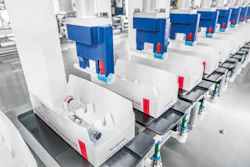
Although adhesive labels on cartons are a long-standing security measure, not all maintain their integrity in the most challenging of environments. The colder that conditions are, the more likely it is for adhesives to weaken and not have the strength to remain attached to their container. At Thermo Fisher, technology that was patented in 2024 is said to be reimagining the safety aspects of the company’s cartons by integrating tamper evidence directly into carton structure. The company’s tamper-evident carton design reportedly eliminates the need for typical tamper-evident labels by incorporating the carton as well as any insert and other tamper-evident features into a single, unified package that can reportedly reduce the risk of tampering or quality failures within various storage environments.
“Adhesives are one of the things that you really worry about with cartons,” Trumbull explains. “At temperatures of minus 65, where we're now packaging, we're seeing that fibers can stiffen and start to break prematurely. With that challenge out there - our clinical division developed a tamper-evident design that has no glue and incorporates a durable tamper-evident feature in the form of a tear strip.”
Whereas standard reverse tuck or straight tuck cartons have a manufacturer's glue joint that can be tampered with by accessing product through that seam, Thermo Fisher cartons have no failure point for a seam or adhesive. “Our design doesn't have that issue, because where we've hinged it is separate from where the tearaway strip is,” Trumbull says. “We've isolated the two features so as not to cause problems while we're packaging or to see something come open or start to be damaged during the distribution process. You can't unfold or untuck anything without risking damage to that tamper-evident feature that tucks in the front. Once the tab is inserted, that fiber has enough memory that it springs back into the position it was in before being put into the carton. It creates that locking mechanism that is different from a typical tab where you could reach in with a pair of tweezers and start to bend it down then pull it out. This design is far more complicated than that. We've eliminated a failure point by having no adhesive.”
Shrink Banding & Sleeve Labels
As healthcare e-commerce has grown into more than $580 billion in sales, regulations pertaining to tamper evidence also continue to evolve. Under laws such as the U.S. Food & Drug Administration’s Code of Federal Regulations §211.132, mandates hold that healthcare products purchased online must feature barriers that provide unmistakable visual evidence of interference, such as breakaway seals, shrink bands, and void-activation tapes as opposed to focusing on the degree of difficulty in opening packages.
While the pharma sector upholds more regimented standards that dictate the size and shape of bottles and other containers, companies are finding that the sizes of sleeves and bands can be more flexible and more cost effective when they’re sized uniquely depending on the product, according to Daniel Deitz, vice president at Deitz Company Inc.
“You don't have to use the full length of a bottle or container to put on a material to show tamper evidence,” says Deitz. “One of our prime targets in the pharma industry are those companies that don’t want a full sleeve on a product with a child-resistant cap.”
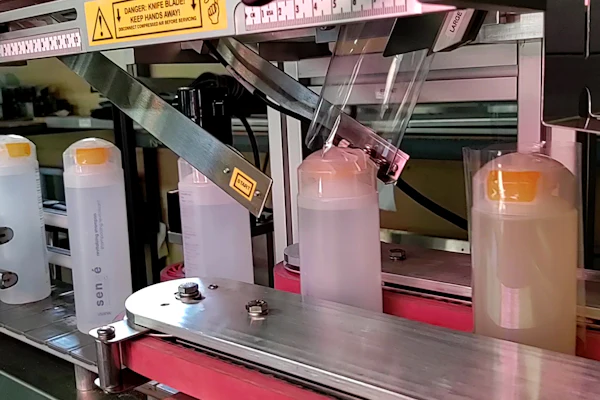
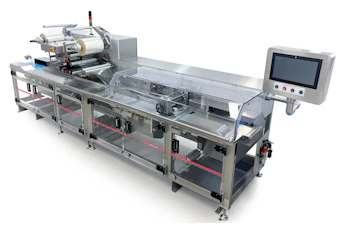
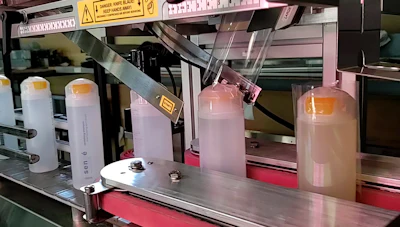
A new Shoulderless Bottle Bander (SBB) conversion kit enables the manufacturer’s Pharmafill™ NB1 tamper-evident neck banding machine to automatically apply shrink bands and sleeve labels onto bottles and other containers with no lip or shoulder — in addition to bottles and containers that do include lips or shoulders. Adding to the proprietary capabilities of the company's Pharmafill NB1, the conversion kit enables manufacturers to apply a range of shrink bands, full-body shrink sleeve labels, and partial body sleeve labels onto various bottles and containers with the same traditional NB1 tamper-evident applicator machine. The SBB kit is versatile in that it can also be combined with other banders, says Deitz. “If you already own a Deitz conveyor or you own any other kind of conveyor, we have kits available that you can adapt this piece of equipment to the line that you're already running.”
Available for retrofit on neck banders in service, the conversion kit features the company's bottomless hugger belt conveyor, heat gun, hardware, and installation guide. The hugger belts hold the shoulderless bottle in place as the band or label is applied at the proper height, gently heated, and held in place without slipping down the bottle. The heat gun begins shrinking the band as it moves downstream to the companion heat shrink tunnel for complete sealing.
“We're focused on the physical layer of tamper evidence,” says Deitz. “When a pharmacist or a customer sees a perfectly applied, unbroken, clear, or holographic neckband, they have that visual confirmation that the drug or product inside of that container hasn't been intercepted, or diluted, or swapped out.”