The packaging and beverage industries are experiencing significant growth with humanoid robots emerging as potential solutions for manufacturing automation, while a new flake-to-preform recycling process developed by Suntory could revolutionize how plastic bottles are recycled globally by 2028.
- Humanoid Robot Debate: Industry experts question whether humanoid robots need human-like appearance and movement for manufacturing efficiency, with focus shifting toward practical utility and dexterous hands for high-mix, low-volume production environments.
- Pharmaceutical Manufacturing Growth: U.S. pharmaceutical manufacturing is projected to add 19,000 jobs over the next decade, with packaging and filling machine operator roles among the fastest-growing occupations, adding approximately 1,700 positions between 2024 and 2034.
- Flake-to-Preform Innovation: Suntory's proprietary process converts recycled PET flake directly into bottle preforms by reversing the order of operations—melting before decontamination—allowing it to handle inconsistent feedstock streams outside Japan's homogeneous system.
- Thailand Pilot Program: Suntory plans to produce 400 million preforms annually in Thailand by 2028 using this new process, potentially enabling bottle-to-bottle recycling in markets beyond Japan and addressing EPR compliance and recycled-content mandates.
- FDA Approval Challenge: The flake-to-preform process must clear food-contact safety requirements and FDA approval in every market where it operates, representing the primary regulatory hurdle for widespread adoption in beverage packaging.
Liz Cuneo: Hello, everybody, and welcome to another episode of End of the Line, a video podcast where all of us PMG editors get together and talk about interesting things that came across our desks this week.
I’m Liz Cuneo, editor-in-chief of Healthcare Packaging. I’m joined by Derrick Teal, editor of ProFood World; Matt Reynolds, editor of Packaging World; and Casey Flanagan, another editor on ProFood World.
Casey, it’s so good to have you back.
Casey Flanagan: I’m excited to be back. It’s always fun to join these.
Liz: We are gearing up for PACK EXPO, but we’re not only going to talk about PACK EXPO today. We have some fun things that came across our desks, including humanoid robots. Derrick and Casey, I’ll let you guys kick things off with a robotics update.
Matt Reynolds: Don’t say “kick” around Derrick with humanoid robots.
Liz: Didn’t you get kicked?
Derrick Teal: I did not. It tried to. At interpack this spring, they had a robot running around. It really wasn’t there as a robot you’re going to see on the plant floor. It was there more for show—one of those eye-catching things.
During one of its demonstrations, I was standing in front of it, and it turned, looked right at me, and kicked at me. It tried to kick me in the head. Thankfully, it was about a foot shorter than me.
But there’s always this year. There’s always PACK EXPO. We don’t know what we’re going to find or see at this year’s show.
Casey and I attended a webinar yesterday, and I don’t think either of us got out of it what we wanted in terms of information. I think the biggest takeaway for both of us was—what’s it called? The uncanny valley?
Casey: Yeah, there was a bit of an uncanny valley. They were really focused on the natural movement of the robot, which I thought was an interesting thing to put all your energy toward. In my eyes, automation is the point. Having an efficient robot that does things effectively is the point.
But he was saying it would give people the heebie-jeebies if something was human-shaped but wasn’t moving in a human way. His example was that if it’s sweeping the floor effectively, but looking sideways and doing it with a nonhuman motion, we don’t want anything like that.
He said the focus is to do something people can look at and say, “Oh, yeah, I recognize the movement it’s making.”
I just feel like it’s already a humanoid robot. It’s already strange to look at, so it’s an odd thing to put all your energy toward, in my opinion. But I’m not the humanoid robot expert.
Matt: We’re talking about what could potentially be lights-out factories. Who would be the observer anyway?
Putting all your eggs in the aesthetics basket instead of the utility basket, at least for our industries, doesn’t seem like the priority. We’re here to improve efficiency and fill labor needs where people aren’t walking in the front door. I would focus on utility.
The purpose of humanoid robots, as I understand it, is that we’ve already built these facilities to accommodate roughly the size and shape of a person. Is that right, Casey? We’ve already gotten to that point. Getting it to where it’s indistinguishable from a person doesn’t seem like the finish line we need to cross.
Derrick: That was something Casey and I talked about. If you’re talking about a humanoid robot, there’s this big push to ensure these robots are bipedal. But why? Why does it have to be bipedal?
Casey brought up the fact that sometimes they’ll have steps to go up and down, so it needs to be bipedal. But we also said that if your plant is ADA compliant, that would not be an issue. You would not need a bipedal robot.
Then again, if a robot has wheels, is that going to give someone the heebie-jeebies?
Matt: I think it’s the expectation. My dog moves like a dog. I see birds that move like birds. Robots move like robots. I think we’d get over it pretty quickly.
It doesn’t even need to have a head. It’s a robot, so who cares if it’s looking at you? We all love R2-D2, right?
Derrick: True.
Matt: I wasn’t on your webinar, but I have to think this person may have been talking more about robots in customer service settings, or baristas, as opposed to purely utilitarian functions. But I’m speculating.
Casey: That’s a good point. It was an A3 webinar, so it was about automation generally. Maybe they were thinking about retail in that way.
Derrick: You had to say the name. Now we’re no longer going to be allowed to watch their webinars.
Casey: Fair.
Derrick: It wasn’t specific to food and beverage. It was general humanoid robots, so it included manufacturing and, like Casey and Matt mentioned, it could be retail. In that case, I assume you’d want something more C-3PO-looking.
But if you’re talking about a plant floor, the mechanical arms in every plant do not look human.
Liz: I know you and I both interviewed a couple of the same companies about humanoid robots. One company—I can’t remember the name now; you might remember—was really focused on the dexterity of the hands. I thought that was interesting, too.
They’re really trying to nail down the hands. I heard someone say once, “If we wanted a human form, we would just use a human.” The reason we’re going robotic is because they can do things we can’t, but some makers are really trying to push for that human element. It’s a funny line we’re walking here.
Casey: Definitely. This goes into a big tangent, but when I was at the Humanoid Robot Forum at Automate, they talked about the hand issue. It’s interesting, the decision a company has to make: “A claw is going to do everything I need it to do. I’m not going to worry about this dexterous hand.”
But the benefit of the dexterous hand is flexibility. If they can get those hands easily manufacturable and attainable, that makes it more of something that can walk around and do a dozen different tasks on the plant floor.
I thought that was interesting, but I think it’s definitely easier now to do the claw.
Matt: The claw would have been great, and continues to be great, in a Henry Ford plant where you’re making the same Ford Escort over and over again, in the millions. I’m dating myself—the Ford Escort was my first car.
But think about packaging, SKU proliferation, and the number of SKUs food and beverage processing plants are pushing out. There are different formats. Some are in flexible packaging that requires more of a deft hand.
You’ve got a higher-mix environment with more SKUs and lower volume. Instead of one claw picking up the same rigid structure, where it doesn’t matter as much how much pressure is applied, you might be picking up something like a peach that requires a softer touch.
Having the ability to move between the two, given whatever the mix is, is what a modern distribution or fulfillment center needs now.
If you’re going to be replacing human labor there, you’re going to need end-of-arm grippers or end-of-arm tooling—that’s what I’d call it for articulated-arm robots. For a humanoid robot, I don’t see how that’s any different. It’s the flexibility that would afford in those high-mix environments, which are becoming all of these environments.
Derrick: Talking about flexibility, when Boston Dynamics was working on its Atlas robot, it looked humanoid until the arm bent one way and then completely bent the opposite way, like a human elbow will not bend.
That was something they said they wanted: Why does it have to move like a human? Why can’t it do this? Instead of completely turning around to do a task, it can flip its limbs around and do the task that way.
That’s probably a different form of flexibility than Matt was discussing, but it’s interesting. I’m curious to see what comes out at PACK EXPO, if anything.
Matt: We saw them walking around at interpack. Some were a little more fighty than others. Derrick’s a hockey fan, so he’s ready to drop his gloves.
Derrick: I was ready to go. I would get my butt kicked, but I was ready to go.
Matt: There was one at—actually, it was an expo at the Javits Center, the e-commerce and white-label expo. It was there for sizzle, not steak. It was there to draw people into a booth and walk around.
It was becoming a distraction because we were at presentations, and a robot dog or a robot would walk by, and everybody’s eye would be drawn to it.
I expect that in a situation like PACK EXPO, where it’s real equipment expected to do real things in a real manufacturing environment, we’re going to see the real deal. More steak than sizzle, at least.
Derrick: Take that, interpack.
Liz: Quit making enemies of everyone, Derrick.
Derrick: I just have one of those faces, I guess.
Liz: Hopefully, pharmaceutical manufacturing will add some more robots. We’ve been covering more from the manufacturing side, and there are some interesting stats from the U.S. Bureau of Labor Statistics. Pharmaceutical manufacturing is growing. It’s expected to add about 19,000 jobs over the next decade.
Some of it is what you’d think—data scientists and more of the mixing and formulas—but a lot of it is packaging as well.
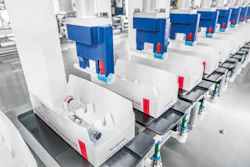
Several manufacturing- and packaging-related positions are expected to add substantially more employees, according to BLS. Packaging and filling machine operators and tenders are projected to add about 1,700 jobs between 2024 and 2034. That role is one of the fastest-growing occupations by headcount.
Could packaging and filling machine operators be robots, humans, or some hybrid mix of the two? Only time will tell.
Matt: Absolutely. Casey, what’s the holdup there? It’s more risk assessment than anything, right?
Casey: It really comes down to that. The collaborative side is a major holdup—having the standards to be able to put something humanoid-shaped in there.
At the Humanoid Robot Forum at Automate, they had one company focused on the pharmaceutical and medical device space. They were showing a wheeled robot. A wheeled humanoid is basically an AMR with a two-armed cobot attached to it.
They had that, but it was locked into a space nobody could get near. It was doing tasks and bringing stuff back and forth within that space. Maybe we will see something like that in the pharmaceutical space.
Liz: I hope so. Speaking of cobots, that’s one of the hangups. If we do lights-out manufacturing, like you said, Matt, they don’t necessarily have to be compatible with humans. But when you’re working alongside them, you get that other factor of safety.
Is the robot going to kick another worker? Is it safe to move around it without it bumping into you?
There’s a lot to consider when thinking about adding those kinds of robotics, but I do hope we see some at the show.
Wasn’t there one making or dishing out ice cream? Do you remember that one?
Derrick: I don’t remember that.
Casey: I know there’s an automated beer-pouring robot arm. I’ve seen it a couple of years in a row now. It’s really funny, too. They have a wood-carved, pub-like bar top, with the robot arm pouring beers behind it. It’s something to look out for at the show.
Liz: All right. Anything else from you guys this week?
Matt: I’ve got something. Do you want to go first?
Casey: Sure, I can kick it off. Putting my PFW hat on, I’m working on something I’m pretty excited about: a sanitary changeover readiness assessment.
I’m building an interactive assessment in a web page format that will help food and beverage processors evaluate the maturity of their cleaning and sanitation processes.
Users will answer 12 questions covering cleaning processes, documentation, verification, and changeover performance. Their answers will place them on a maturity curve and give them insights into what they might want to look into to improve their systems and operations, based on where they land.
The important distinction I’m working on is that the quiz shouldn’t be a test of how much you’ve invested in fancy machinery. A facility using a largely manual cleaning process, if it’s disciplined and well managed, will still be able to score highly.
I’m hoping it will be a helpful way for processors to identify gaps, see where they might be overlooking steps, or determine whether it’s time to upgrade.
Keep an eye out for that on ProFood World in about the next month, probably right after PACK EXPO. You’ll be able to test for yourself where your operation stands.
Liz: Right about the next time you come on another End of the Line.
Casey: Exactly. I’ll tell you how it went, building this thing.
Liz: That sounds really cool. Matt, we’ll kick things back to you. Tell us what you’ve been working on.
Matt: This will be something quick. I know we’re coming up on time, but do you guys know how a 2-liter or 1-liter PET bottle is made—how it goes from plastic granulate to a PET bottle? Are you familiar?
Liz: No.
Matt: A quick primer for folks who haven’t lived in plastic bottle production: A PET bottle, from a 20-ounce Coke bottle up to a 2-liter, doesn’t start as a bottle. It’s not molded from wet, viscous plastic directly into that super-thin-walled bottle. Think of water bottles from Nestlé, too.
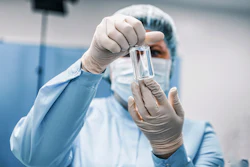
It starts with what’s called a preform, which looks more like a test tube or an ampule from Liz’s side of the fence. That already has finished threads on the neck.
Those preforms get made at one plant and are bulk-shipped, usually to wherever beverage filling happens. On the filling line, before they’re filled, they’re reheated. Then there’s what’s called stretch blow molding into the bottle shape.
A rod dives down inside the preform while air inflates it outward. It’s blowing up a bubble, and the material stretches in two directions at once. It’s biaxially stretched. That’s what gives a PET bottle its strength and clarity. Some of PET’s superpowers come from that method of blowing the bottle.
The neck you drink from when you open the closure was already finished. They actually call it a “finish.” That was already made on the preform, so only the body gets blown. Everything below it gets stretched and blow-molded.
That’s why preforms are considered their own product, with their own supply chain, and why who makes them and who you get them from matters to your beverage production.
That was a long preamble to explain how that works. You guys are familiar with Suntory, right? The big beverage brand owner.
They have a unique process called flake-to-preform. Washed flake from recycled bottles—rPET, or recycled PET—goes in one end, and preforms come out the other. It skips some steps, like the crystallization and drying steps that conventional recycling needs.
They’ve run it for about eight years now, since 2018, in Japan. But Japan is unique. Its bottle collection delivers an unusually clean, consistent stream of feedstock, and the flake-to-preform process was designed around that extremely consistent, clean feedstock.
The question is: Can you do that outside an extremely homogeneous bottle stream like Japan’s?
Thailand is going to be the test. They see bottles coming in that vary a lot more. In that Southeast Asia region, there’s a lot of water and material coming in that’s in very different shape from the Japanese stream.
Suntory is going to try this flake-to-preform process with a much more difficult stream. They’re going to try to prove a point. They’ve taken that Japanese recycling format and made two changes.
The most interesting one is the order of operations. In Japan, where everything’s clean, the flake gets decontaminated first. Then it gets melted and molded into a preform.
In Thailand, it’s going to get melted first, and only after being melted will it be decontaminated.
They’ve also tightened the selection. There’s a slightly higher floor for what goes into the stream in the first place. But it’s still a much more inconsistent feedstock compared with Japan. Everybody is inconsistent compared with Japan, to be fair.
The mechanism for switching the two is proprietary. They didn’t tell us more about it, but think about what reordering implies. Instead of cleaning the material and protecting it through the heat, you take it through the heat first and clean it afterward.
When you heat PET, it doesn’t just melt. Part of it partially breaks down and creates new compounds. If you clean the flake first, those compounds ride straight into the preform. If you clean it after melting, like they’re doing in Thailand, you’re catching both sets of impurities: the stuff coming in with it and the stuff that comes from the melting process.
Historically, the industry in the U.S. and everywhere else has answered dirty or inconsistent feedstock by spending money upstream on better bottle sorting and washing.
What Suntory is doing in Thailand is the opposite bet: You can design a process that tolerates what the stream gives you.
By 2028, they think the output will be 400 million preforms a year. Suntory PepsiCo Thailand will take all of them. They haven’t said which beverages it will be yet, but we assume it will be their mainline Suntory PepsiCo beverages.
If it works, the list of markets that can go truly bottle-to-bottle in recycling will be wider than just Japan with its flake-to-preform process.
It’s worth keeping an eye on. We won’t know until 2028, when it goes live, but it’s something interesting to flag.
Derrick: It’ll be interesting, if something like that comes to the States, to see how quickly, if at all, it’s able to get FDA approval for use in food and beverage packaging.
Matt: That’s the biggest thing. It’s definitely met preapprovals for food-contact safety. I mentioned floors and ceilings—that is the floor.
Thailand has its own version of the FDA, so it’s gone through the necessary checks and validation to meet that standard. It’s going to have to do the same thing in every other market.
I should note that, out of all the plastics, PET doesn’t have some of the drawbacks that polypropylene or other polyolefins have in terms of converting recycled material into food-safe material. It’s a lower hurdle to clear, but it is the big hurdle. If you’re going to make a bottle for a beverage, it has to be food-safe.
Derrick: It’s going to be interesting to see.
Matt: Fingers crossed that it works over these next few years. That’ll be something to watch with EPR ramping up and more pressure to use recycled content.
This would be another arrow in the quiver for brand owners to get ahold of that material and use it, lower their EPR fees and exposure by using more recycled material, and meet recycled-content mandates in states like New Jersey.
Liz: Interesting. Very cool. Thank you all so much for your time. I look forward to seeing you in person next week.
When we join next week, we’ll talk about some of the things we see at the show and some of the innovations. It’ll be great. Thank you.
Matt: See you in Chicago.