According to RoadRunner WM, by definition, closed-loop recycling is the manufacturing process that leverages the recycling and reuse of post-consumer products to supply the material used to create a new version of the same product.
In a closed-loop recycling system, products are designed in a way that benefits the overall supply chain, emphasizing universal collection and recovery, ease of re-manufacturing, and economic feasibility.
Today, pharmaceutical companies and their suppliers are turning to closed-loop recycling to bring real sustainability momentum to the life sciences segment.
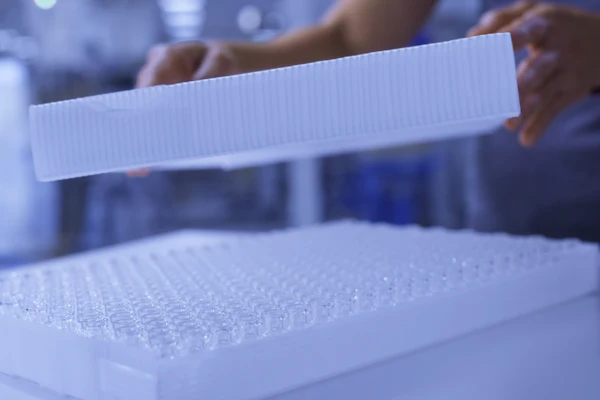
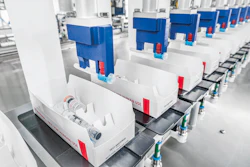
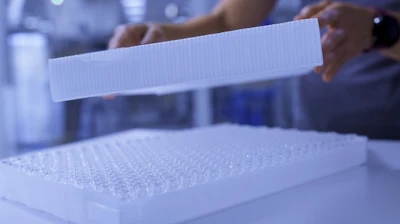
First up is SCHOTT Pharma, who says it has reached a major milestone in advancing circularity in pharmaceutical manufacturing. Following a successful pilot phase, the first full-batch delivery of pharmaceutical vials packed in trays containing recycled polypropylene has been completed with SCHOTT Pharma’s customer Takeda and partner Corplex.
The objective of the project, which was years in the making, was to introduce circularity without compromising existing pharmaceutical operations. Over the past years, the partners conducted a comprehensive risk assessment, carried out a ton‑scale production study, and demonstrated equivalency between trays from virgin material and trays from recycled material.
“The equivalency program focused on demonstrating that recycled-content trays continued to meet application requirements,” says Philipp Ludihuser, Sustainability Manager at SCHOTT Pharma and Johanna Jobin, Global Head of Environmental Sustainability & Compliance at Takeda. “Key characteristics included mechanical performance, chemical stability, and processability in pharmaceutical manufacturing. Comprehensive testing confirmed equivalent performance for the intended application.”
The project builds on established plastic-recycling expertise from other industries, while carefully adapting every step to the specific requirements of pharmaceutical manufacturing.
“The project combined risk assessment, material characterization, tray performance testing, operational collection trials, and independent environmental assessment. The partners evaluated contamination risks, material degradation, and potential material mix-up scenarios, while equivalency studies demonstrated that recycled-content trays met predefined application requirements for their intended use,” explains Ludihuser.
The collaboration has now reached a milestone with the successful transition from pilot phase to routine operations. This past August, the first full batch of vials in trays containing recycled material was delivered to Takeda’s manufacturing site in Singen, Germany. After Corplex reintroduced the closed‑loop material into new-tray production, and SCHOTT Pharma deployed it as intermediate packaging, formal change controls and trials aligned with Takeda confirmed the vial tray’s processability in pharmaceutical manufacturing. The results demonstrate that circular packaging materials can be reliably and compliantly integrated into pharmaceutical supply chains.
“This closed-loop approach provides environmental benefits confirmed by an ISO-compliant life cycle assessment and supports our ambitious goal of achieving net-zero emissions across our value chain by 2040,” states Jobin.
The closed‑loop recycling system can divert tray waste from downcycling, incineration, and landfill, significantly reducing reliance on fossil‑based virgin polypropylene. At the same time, it introduces recycled material into intermediate packaging of equivalent assessed performance at an industrial scale for the first time. But of course, a closed-loop system is not without its challenges.
“Successful circularity depends on more than recycling technology. It requires a reliable collection system, trusted quality processes, and close collaboration across the value chain. We also learned that packaging design matters: reducing material complexity, such as replacing paper labels and standardizing tray colors, can significantly improve recyclability and material recovery,” explains Ludihuser and Jobin.
Repurposing Plastic Waste
This isn’t the first instance where closed-loop recycling made healthcare headlines.
Plastic Ingenuity has partnered with a pharma company wishing to be unnamed to repurpose its plastic waste. According to the company, a global pharmaceutical company came to them with the hope of repurposing plastic waste for reuse (or recycling) and reducing GHG emissions.
 Plastic Ingenuity partnered with a pharma company to begin incorporating 50% recycled high impact polystyrene resin into their thermoformed trays.Plastic Ingenuity
The used thermoformed trays were then shipped to a recycling partner that ground the trays into flake and pelletized the material. The pellets were shipped back to Plastic Ingenuity to be incorporated into the extrusion process to make new thermoformed trays and continue the cycle.
A carbon footprint analysis of the pharmaceutical company’s take-back program demonstrated significant improvement, with a 41% annual reduction of carbon dioxide equivalent (CO2e), or 17,338 metric tons of CO2e avoided. Additionally, they displaced 2,009 metric tons of virgin plastic by incorporating 50% recycled material in the thermoformed trays.
There's also the ongoing work being done at Closed Loop Partners’ Center for the Circular Economy (the Closed Loop Center) to combat the problem of small-format plastics. Billions of small-format plastics end up in landfills each year because they are too small to be properly captured by traditional recycling equipment. That’s why the Closed Loop Center has announced the next phase of its Smalls Consortium: Advancing the Recovery of Small-Format Packaging (the Smalls Consortium), joined by founding partner L'Oréal, supporting partners Kraft Heinz and CVS Health, and strategic advisor Circular Action Alliance.
The Smalls Consortium is focusing its field-testing efforts on California as the state prepares for the implementation of SB 54, the historic EPR law set to take effect on January 1, 2027. This initiative serves as a critical proving ground to help brands, recyclers, and end markets build a scalable roadmap for capturing small rigid plastics before they are lost to waste.
"Small-format packaging plays a critical role in health care, and it's an area where we see opportunity to improve recovery, from prescription pill bottles to everyday wellness product packaging," says Jenny McColloch, Chief Sustainability Officer & VP of Community Impact at CVS Health. "As this work advances in California, these efforts can help create progress that better serves our CVS Health customers and supports a more circular future."
These projects show that closed-loop recycling is moving beyond sustainability goals and into practical healthcare packaging applications. From pharmaceutical trays to small-format plastics, companies are finding ways to recover valuable materials, reduce reliance on virgin resin, and keep packaging in circulation longer.
The challenge is doing so without compromising the performance, quality, and regulatory requirements healthcare packaging demands. As more pilots move toward commercial scale, collaboration among pharmaceutical manufacturers, packaging suppliers, recyclers, and other partners will be critical to making circularity both practical and scalable—while keeping product and patient safety at the forefront.