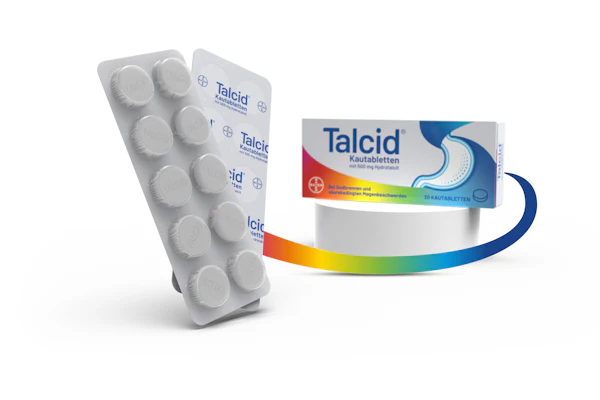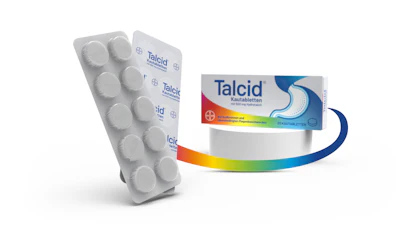
Bayer has launched a mono-material polypropylene blister for its Talcid antacid in Germany, replacing multi-material packaging with a single recyclable design that maintains product protection while achieving RecyClass Class A certification. The packaging will roll out across 11 additional European markets through 2027 as part of Bayer's broader sustainability strategy.
- Mono-material design: Single polypropylene structure replaces previous multi-material blister, improving recyclability and simplifying packaging
- RecyClass certified: Achieved highest Recyclability Class A rating with 98.86% recyclable plastic content
- European rollout: Launched in Germany and Slovenia, expanding to 11 additional European markets by 2027
- Product protection maintained: New blister delivers equivalent protection to previous packaging with lower moisture-transmission rates
- Consumer-focused design: Push-through performance and ease-of-use preserved through extensive testing and validation
Bayer has launched a mono-material polypropylene (mono-PP) blister for Talcid® in Germany, following its initial launch in Slovenia in late 2025. Talcid is Bayer’s antacid treatment for heartburn and acid-related symptoms. The new blister replaces a multi-material structure with a single-material polypropylene design. The mono-PP blister is planned for phased rollout across 11 additional European markets over 2026–2027.
“The promise of this mono-material polypropylene design is that it can improve compatibility with recycling processes where appropriate systems exist, while continuing to provide a strong consumer experience,” says Chris Padain, Vice President and Global Head of Design, Packaging, Product Experience & Sustainability for Bayer’s Consumer Health division. “It’s push-through performance supports intuitive use, while the mono-material structure simplifies the packaging design. This is the kind of practical, scalable innovation that can make a meaningful difference across our portfolio.”
The launch comes as consumers and regulators place greater emphasis on packaging that combines product protection with designs that can better support recycling processes. According to McKinsey’s 2025 global consumer packaging survey, the ability to recycle packaging remains one of the sustainability characteristics consumers value most, but Padain says this launch was driven by a combination of factors.
“Consumers, policymakers, and companies are all placing greater emphasis on packaging designs that are more compatible with existing recycling systems. At the same time, Bayer has been working to reduce packaging complexity and increase recycling readiness across its portfolio where appropriate infrastructure exists,” says Padain. “The Talcid blister is a practical example of that approach. It supports our broader packaging strategy while maintaining the quality, safety, and product experience consumers expect.”
 Bayer
Bayer
Building on Bayer’s Packaging Innovation
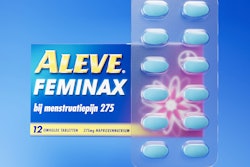
The Talcid launch builds on Bayer’s broader work to develop mono-material blister solutions. In 2024, Bayer introduced the healthcare industry’s first PVC-free polyethylene terephthalate (PET) one-material blister for Aleve in the Netherlands. The company says that although the Talcid and Aleve formats use different materials, both programs simplify packaging structures while maintaining product protection and usability, demonstrating how Bayer is applying the same design principle across its portfolio.
“The packaging was developed to maintain the product protection required for Talcid while simplifying the material structure,"says Padain. "In terms of performance, the mono-PP blister delivers equivalent product protection to the previous packaging configuration and meets the quality and stability requirements. Compared with conventional PVC-based blister structures, it achieves lower moisture-transmission rates, helping support product protection throughout shelf life.”
Across its portfolio, Bayer is working to improve the compatibility of packaging with recycling processes where suitable infrastructure exists, expand reusable packaging formats and incorporate recycled content where appropriate, and reduce unnecessary packaging materials. Of course, all while creating a user-friendly experience.
 Bayer
Bayer
Collaboration Across the Packaging Value Chain
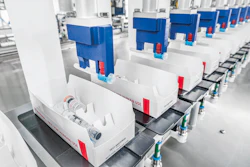
The blister was developed in collaboration with Etimex Primary Packaging, Bayer's packaging development partner for this project. Together, the teams developed the PURELAY® polypropylene mono-material blister solution used for Talcid.
It's the result of years of collaboration to balance product protection, everyday usability, and a mono-material packaging design intended to support sorting and recycling processes where appropriate collection, sorting, and recycling systems are available. Talcid continues to be manufactured and supplied from Bayer’s site in Bitterfeld, Germany. Germany accounts for approximately 75% of its European sales, making it the product’s largest market in the region.
“Developing a mono-material blister for a consumer health product requires the packaging material, manufacturing process and product-protection requirements to work together seamlessly... rather than building an entirely new manufacturing approach, a key objective was to leverage existing production capabilities wherever possible, which helped support scalability and implementation,” concludes Padain.