French blood banks were targeted in a cyberattack that compromised refrigeration systems operated by external providers, with hackers raising temperature thresholds to dangerous levels. No blood products were lost because surveillance systems detected the breach quickly and products were transferred to other facilities, but the incident highlights the need to balance remote access for monitoring with stronger security controls.
- French blood banks' cold storage units were compromised across three sites, with hackers setting temperature and defrost thresholds to excessively high levels
- No blood products or samples were lost due to rapid detection by surveillance systems and quick transfer to backup facilities
- The attack followed a broader wave of cyberattacks on European refrigeration systems affecting supermarkets in seven countries
- Experts recommend separating monitoring access from control access, with monitoring easy to reach but control difficult to access and all changes logged
- Temperature-sensitive medical products require qualified thermal packaging and independent temperature monitoring to protect against equipment failures and cyberattacks
Last week, French blood banks were affected by the recent wave of cybersecurity attacks on European refrigeration systems. This has been confirmed by the French Blood Establishment, the public blood service in France.
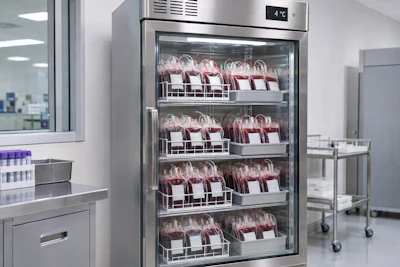
The organization said that while it wasn’t the direct target of the attack, cold storage units operated by external providers containing the EFS’ blood products were compromised across three of its sites, with hackers cranking up temperatures.
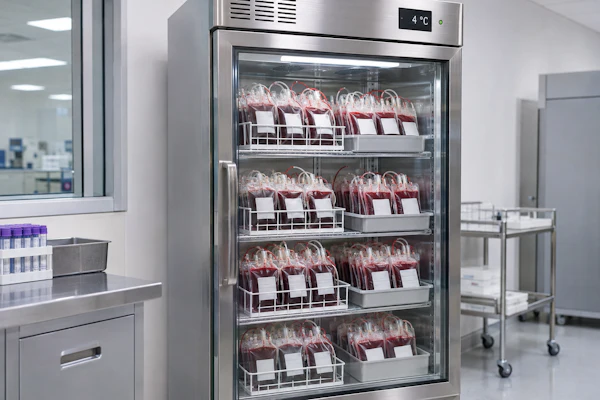
“Specifically, temperature and defrost thresholds were set to excessively high levels,” the EFS said in a statement translated from French to English by CNBC. “These cold storage units—located at EFS preparation and distribution sites—are used to store blood products prior to their delivery to healthcare facilities, as well as samples intended for EFS biobanks.”
The EFS said that its surveillance systems were triggered rapidly, and depending on the situation, affected equipment was either brought under control with no impact on the products or samples, or they were taken offline. Luckily, no samples or blood products were lost during the attack, with samples quickly transferred to other facilities.
The EFS is now coordinating with the French National Cybersecurity Agency (ANSSI) and the Ministry of Health and has increased monitoring of its equipment. The French Health Ministry said the situation is now under control and is being closely monitored, according to Reuters. They added that the safety of the blood supplies was preserved “thanks to the facilities’ monitoring and alarm systems, as well as precautionary measures immediately implemented.”
This is after dozens of supermarkets across seven European countries have been hit by cyber-attacks affecting their refrigerators and freezers. Around 40 Delhaize supermarkets in Belgium and Luxembourg were affected, while a smaller number of shops were hit in Sweden, Ireland, the Netherlands, Estonia and Finland. Refrigerators were remotely hacked and temperatures raised, resulting in millions of euros worth of food thrown away. According to local media, most supermarkets across Europe are linked to the internet, and maintenance and troubleshooting can be done remotely.
Jeff Lander, Director, Global Logistics Engineering, Moderna, stresses that moving away from remote access is not the solution. “The answer isn’t to unplug everything. Remote visibility is why people knew to move the product," he said in an interview on this topic. "The answer is to separate seeing from controlling. Monitoring should be easy to reach; control should be hard to reach and every change should leave a trail.”
The cyberattack affecting French blood banks underscores how the protection of temperature-sensitive life sciences products depends on both packaging performance and the security of surrounding cold chain infrastructure.
For packaging teams, the incident highlights the value of qualified thermal packaging that can provide a defined protection window during equipment failures or emergency transfers, supported by temperature monitoring independent of refrigeration controls. It also raises questions about connected devices: remote access can improve visibility, but compromised controls or data could undermine product protection and decisions about whether products remain suitable for use.
Editor’s perspective: Although EFS reported no loss of blood products or samples, the event offers a clear reminder to assess packaging, monitoring, third-party providers, and contingency plans together—including how quickly products can be moved and how their temperature history will be verified after a disruption.