BayCare is partnering with Zipline to develop drone delivery for medications, requiring pharmaceutical packaging to undergo rigorous qualification testing to ensure drugs maintain proper temperature and integrity during aerial transport, with the service launching in 2027.
- BayCare's drone delivery partnership with Zipline will launch in 2027 in the St. Petersburg-Clearwater area, expanding across Tampa Bay
- Packages must meet an 8-pound weight limit, which covers most specialty pharmacy shipments but requires efficient packaging design
- Temperature testing must verify medications remain within required ranges throughout the entire delivery cycle, including scenarios where packages sit unattended for 18-20 hours
- Packaging will use existing coolers, ice packs, and specialized envelopes, with final configurations determined by testing to ensure drug integrity during flight
- Drone delivery offers precise delivery windows and real-time tracking, reducing package theft and time medications sit unattended compared to traditional courier services
When a prescription travels from a specialty pharmacy to a patient’s home, the package has a straightforward but critical job: protect the medication until it reaches the patient. Traditionally that journey takes place on the ground by couriers, but BayCare will soon be leveraging Zipline’s technology to offer another option: the air.
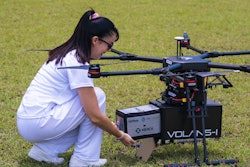
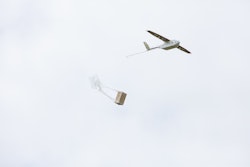
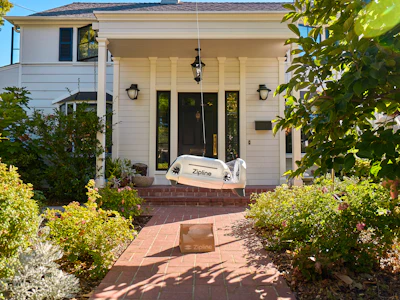
BayCare is partnering with autonomous delivery company Zipline to build a healthcare drone delivery network for medications, lab samples, and critical supplies. The optional service is expected to launch in 2027, beginning in the St. Petersburg-Clearwater area before expanding across Tampa Bay.
While drones offer the possibility of bypassing traffic and creating more predictable delivery windows, the new mode of transportation also raises an important packaging question: How do you ensure a medication arrives at the proper temperature and uncompromised when its trip takes place by air rather than by delivery vehicle?
For BayCare, answering that question will require qualification and testing before the first patient delivery ever takes flight.
Packaging Will Be Qualified for the New Delivery Route
BayCare sees drone delivery as another way to make healthcare more convenient and accessible, particularly for patients receiving prescriptions at home. It may also address one of the inherent uncertainties of conventional delivery: traffic.
Michelle Carrasquillo, BayCare’s director of pharmacy, says that healthcare system operates in a densely populated area where road conditions can make delivery times unpredictable. Drone transportation could allow BayCare to offer tighter, more reliable delivery windows for time-sensitive products.
But changing the mode of transportation doesn't change the medication's storage requirements.
"We'll actually do temperature testing for these drones once we get them," says Carrasquillo.
BayCare's specialty pharmacy follows national accreditation standards for temperature-controlled deliveries and tests its delivery methods to confirm that products remain within appropriate temperature ranges. Drone delivery will be subjected to the same qualification process.
Zipline has conducted its own testing across a range of temperatures and weather conditions, according to BayCare. However, Carrasquillo says they plan to independently verify the delivery process against its pharmacy requirements.
"The most important thing is not just can we maintain that temperature, but also to ensure the fact that we're following whatever label requirements exist for the specific medications themselves," says Carrasquillo. "Much of what we do is refrigerated, and so refrigerated temperature maintenance is of the utmost importance to us."
That distinction is important for pharmaceutical packaging operations. A delivery platform's ability to operate in challenging weather is only one part of the equation. The packaging system still needs to demonstrate that the drug itself remains within its specified conditions throughout the delivery cycle.
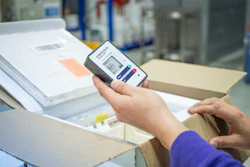
BayCare is still early in the process of determining exactly what its drone-delivery packaging system will look like. Its existing specialty pharmacy shipments use coolers, ice packs, and specialized envelopes depending on the product and delivery requirements. Some variation of those systems is expected to carry over to drone delivery, but the final configuration will be based on testing.
"Packaging testing to ensure maintenance of integrity—that'll be at the core," Carrasquillo says.
Drone delivery introduces a transportation environment that differs from conventional courier delivery. Packages may experience different vibration, acceleration, weather, and handling conditions during their journey.
That means package qualification will need to consider not only the flight itself but the entire delivery sequence.
BayCare said its standards for ensuring package integrity will remain consistent whether transportation occurs by ground or air. Testing will ultimately determine whether existing packaging configurations are sufficient or whether they need to be modified for the drone environment.
An 8-lb. Limit Puts Package Efficiency in Focus
One of the clearest packaging constraints is payload. Carrasquillo says that the Zipline system will have an 8-lb. delivery weight limit.
"For our specialty pharmacy, that actually covers anything that we could potentially want to send," says Carrasquillo. “Other healthcare products can be considerably heavier and may not be appropriate for the service.”
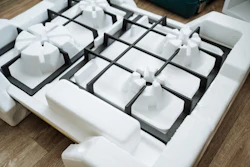
For pharmaceutical packaging, however, the limit introduces an interesting design consideration. A drone shipment isn't carrying only the medication. Its payload can include the primary and secondary packaging, insulated components, refrigerants or ice packs, cushioning, documentation, and the delivery container itself.
Testing Beyond the Expected Delivery Window
Temperature qualification also won't stop at the expected duration of the flight. BayCare's existing testing considers scenarios in which packages remain outside much longer than their planned delivery window. According to Carrasquillo, current temperature testing can cover approximately 18 to 20 hours even when the expected delivery itself is only around two hours.
"If there's a chance where a patient, while they thought they were going to be home between two and three, maybe had a family emergency or something else come up and had to leave, they can feel comfortable leaving it there," says Carrasquillo.
Drone delivery may help reduce that risk in the first place. Patients will opt into the service and can receive precise delivery windows and real-time tracking. Zipline can also deliver to backyards and other private locations, potentially reducing both package theft and the amount of time healthcare shipments sit unattended.
Creating a Better Handoff
Facility-to-facility deliveries present a different last-mile scenario.
BayCare anticipates using communication between facilities alongside notifications within Zipline's system to coordinate deliveries. The receiving facility would know a shipment is approaching and receive notification when the package arrives, allowing staff to retrieve it quickly.
The goal is what Carrasquillo described as a "soft handoff": combining physical delivery with digital communication to reduce the time a package sits unattended.
The BayCare network is expected to launch in Pinellas County and will be supported by two charging stations. Exact service areas are still being finalized, but BayCare anticipates individual operating areas of within roughly a 10-mile radius, with the combined network covering a larger area. Testing is expected to take place ahead of the planned late-2027 launch.
In the Midwest, the Cleveland Clinic has already begun utilizing Zipline to deliver medications to patients’ homes. The service is currently focused on deliveries that are within a five-mile radius of Cleveland Clinic’s Beachwood Administrative Campus, which serves as the drones’ home base.
Editor’s take: Drone delivery has already been utilized for things like Uber Eats and certain Amazon deliveries, thus medication feels like the next natural move. With proper temperature-controlled packaging and the opt-in service where patients pick their deliver time, I think this may enable patients to get their drugs faster and improve patient adherence by not missing a dose.