Cold chain logistics for pharmaceuticals and medical products faces growing challenges from weather, geopolitical disruptions, and capacity constraints. Companies are bridging these gaps through strategic partnerships, advanced technology, real-time visibility, and integrated packaging solutions that align all supply chain touchpoints.
- Key Challenge: Temperature excursions, delays, and data gaps occur at multiple handoffs across fragmented supply chains from manufacturing to patient delivery.
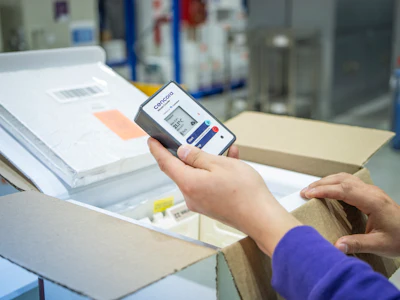
- Technology Solution: Real-time temperature monitoring, track-and-trace systems, and data loggers enable proactive risk identification and faster decision-making.
- Market Pressure: GLP-1 products saw nearly 40% annual prescription growth between 2022-2024, straining cold chain infrastructure capacity.
- Strategic Approach: Integrated models that align packaging, logistics, and fulfillment from the start reduce handoffs and improve consistency across all temperature ranges.
- Future Requirement: Real-time temperature visibility and reusable solutions are becoming must-haves, not optional features, for protecting patient safety and product integrity.
Venturing along the cold chain by land, sea, and air, many of today’s pharmaceuticals and other medical products require specific handling amidst a growing sense of volatile travel-related elements. Trucks can break down en route to or from a collection. Planes can be delayed or undergo unexpected maintenance. Geopolitical conflicts can cause restrictions through vital global trade-path waterways. And as the summer season wanes, the threat of dangerous weather conditions becomes more likely and difficult to prepare.
“That's become a bigger issue domestically as well as in North America because our weather has been so unpredictable,” says Eric Schier, director, global solution development and implementation, personalized supply chain, at World Courier, a Cencora company. These are the types of challenges that make our jobs a bit chaotic for products that have a ‘do not fail’ or ‘zero failure’ profile associated with them because many of them are going directly out of a patient or directly into a patient.”
Through extensive pre-planning and the use of advanced technology to assist in everything from temperature-controlled shipping and storage to data track-and-trace during transport and delivery, Schier and other experts say they have identified protocols that help mitigate impact from the unexpected and see a certain evolution unfolding as products become more environmentally sensitive and logistics become more daunting to monitor.
Logistical, Strategical Collaborations
Maintaining consistency across a highly fragmented supply chain where logistics involve multiple handoffs from manufacturing to distribution becomes increasingly delicate. Each transition raises the risk of temperature excursion, delays, or data gaps. Capacity constraints are also a growing concern, according to Justin Golden, chief executive officer of global packaging solutions provider Stephen Gould.
“ Stephen Gould
The emerging marketplaces of biotech and cell and gene therapy have also brought with them multiple temperature ranges that can be different in specificity but similarly restrictive in that they can’t be subjected to individual deviations, says Schier. With more legacy pharma companies today acquiring Phase I and Phase 2 “startups” that include cold chain assets within their portfolios, Schier says it will become more important for manufacturers to consider partnerships and collaboratives as opposed to integrator models for logistical management, such as what is offered through World Courier, one of the industry’s first international premium couriers.
“The days of where ‘you are the client, we are the vendor,’ and we'll talk to each other as such are gone,” he says. “Because if you don't look at this together from both sides of the table, you're doomed to miss something that could have been prevented. As a premium courier, we treat every shipment as a one-to-one opportunity. There’s intervention and pre-planning that has to be involved, because we have to predict what's going to happen out there before it does. Not all supply chain nodes are created equally.”
Characteristics of the World Courier model include discussing a multitude of best practices and risk assessments leading up to live shipments, such as temperature, packaging, shelf life, and lane qualification and validation. Schier says his team also assist clients in completing Failure Mode and Effects Analysis (FMEA) filings and Biologics License Application (BLA) procedures. “We're in a complete time crunch, and nothing moves from Point A to Point B without some type of intervention or pre-planning happening,” says Schier. “We conduct thorough research and we’re learning through the process while we're developing these supply chains. We have to plan out correctly to make sure we're not wasting material. The raw material is also a patient.” Cencora
“It’s not just about higher volumes, it’s the need to scale quickly while maintaining strict temperature control and consistency at every touchpoint,” he says. “We’re seeing greater demand for reliable, repeatable packaging solutions, along with tighter lead times, material availability, and distribution performance with less room for variability. This is driving a more integrated approach where packaging, logistics, and fulfillment are aligned from the start to support both speed and control as demand continues. This will inevitably provide a broader range of solutions across all cold chain markets.”
Evolving Customer Expectations
Despite the acknowledged uncertainties, expectations related to visibility, reliability, and accountability have created a standard for proactive monitoring, real-time insights, and the ability to quickly respond to potential disruptions. The focus on integration at World Courier has led to a philosophy that Schier describes as a “marrying” of packaging to the supply chain through each individual node as a method for evaluating the packaging.
“It’s not treating the packaging as if it is off to the side itself — it's the variables of our origin, our transit lane, our destination, our time that we think it's going to take, and our hold time that we have on that packaging,” explains Schier. “Whether it be packaging that’s 2-80C, dry ice, or liquid nitrogen, we don't segregate from the distribution strategy, the supply chain strategy, and the packaging strategy that have their own cost centers. We're marrying that all together because we understand that without these therapies arriving at the necessary temperature, then we don't have a therapy.”
At UPS Healthcare’s Labport complex, a $100 million medical testing and logistics facility that sits adjacent to the company’s Worldport air hub in Louisville, KY, an integrated solutions network aligns packaging, storage, visibility, and transportation for customers seeking a more coordinated system. This provides end-to-end control and consistency, says Jason Vaughn, vice president. “We offer solutions that support time‑critical diagnostics by reducing handoffs and improving control from collection through delivery,” he says. “We’ve invested in healthcare‑specific capabilities for more integrated solutions that align packaging, storage, visibility, and transportation.”
Another area of concern among customers is alleviating complexity and simplifying execution by reducing handcuffs and scaling in response to consumer demand, according to Vaughn. “The primary challenge is balancing speed with control,” he says. “We address this by managing the cold chain within a single, integrated network that decreases touchpoints and increases visibility, which allows for faster decisions and more consistent product protection.”
Vaughn says he expects continued growth in personalized therapies, faster diagnostics, and decentralized care models to increase the need for precision, flexibility, and data‑driven execution. “Products will become more sensitive, and tolerance for failure will continue to decline,” he says. “Preparation will require scalable packaging strategies, network flexibility, and stronger visibility tools that allow proactive management of risk. Our focus is helping customers build cold chains that can adapt to these demands while maintaining control and product integrity.”
Protecting patients against counterfeit through smart packaging and connected devices will also pose significant challenges as timelines become shorter, says Golden. Practical mitigation examples include temperature data loggers, freeze indicators, alarm-enabled monitoring devices, and more connected systems that track temperature and other conditions during shipment and storage. “These technologies allow for faster decision-making when issues arise and help reduce product loss by identifying risks earlier in the process,” he says. “More importantly, they create a stronger chain of custody, which is critical not only for compliance but for protecting patients and ensuring product integrity.”
Revolving Around Reusability
Track and trace from a real-time temperature viewpoint is an emerging concept that will continue to intensify in conjunction with the importance of reusability,” says Schier. “This is not a ‘nice-to-have.’ This is a must. And if something is not going to plan from a temperature deviation, our customers can see that before it happens. It's really the Amazon effect. If we can see where a toy set is all day long on a truck, we should be able to do that with these sensitive therapies that are going into patients.”