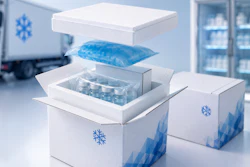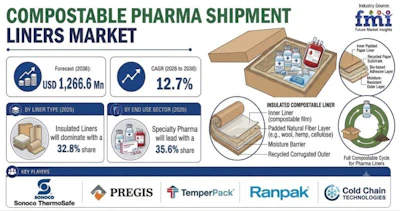
The global compostable pharma shipment liners market is expected to witness substantial expansion as pharmaceutical manufacturers, cold-chain logistics providers, and healthcare distributors accelerate the transition toward sustainable temperature-controlled packaging solutions. According to Future Market Insights (FMI), the market is projected to grow from USD 383.2 million in 2026 to USD 1,266.6 million by 2036, registering a strong CAGR of 12.7% during the forecast period.
Growing regulatory emphasis on sustainable packaging, increasing biologics and vaccine shipments, and expanding pharmaceutical cold-chain infrastructure are driving demand for compostable shipment liners. Manufacturers are focusing on advanced fiber-based insulation materials that deliver thermal protection while reducing plastic waste and supporting environmental compliance.
Key Market Highlights:
• Market Size (2026): USD 383.2 Million
• Forecast Market Size (2036): USD 1,266.6 Million
• Forecast CAGR (2026-2036): 12.7%
• Leading Product Type: Insulated Liners (32.8%)
• Leading Material: Cellulose Wadding (32.2%)
• Leading Thermal Performance: 2-8°C (33.1%)
• Leading End Use: Specialty Pharma (35.6%)
• Fastest Growing Country: India (11.7% CAGR)
Why Is the Compostable Pharma Shipment Liners Market Growing?
Demand for compostable pharma shipment liners is increasing as pharmaceutical companies seek sustainable alternatives capable of maintaining strict cold-chain performance throughout transportation. Buyers increasingly evaluate packaging based on thermal insulation, material certification, drop protection, compression strength, and regulatory compliance before supplier approval.
Key growth drivers include:
• Rising global demand for temperature-controlled pharmaceutical logistics.
• Expansion of biologics, vaccines, specialty medicines, and clinical trial shipments.
• Increasing adoption of compostable and fiber-based cold-chain packaging.
• Regulatory focus on reducing plastic waste and improving packaging sustainability.
• Growing procurement preference for certified, high-performance compostable materials.
Analyst Perspective:
"Pharmaceutical buyers increasingly prioritize shipment liners that combine verified thermal performance, sustainability credentials, and dependable supply capabilities. Suppliers that provide documented testing, certification, and application-specific performance are expected to strengthen their competitive position as global cold-chain requirements continue expanding."
Insulated Liners Remain the Preferred Product Type
Insulated Liners are expected to account for 32.8% of global product demand during 2026.
These liners continue to dominate because they provide consistent thermal protection, cushioning, and shipment reliability for pharmaceutical products transported under temperature-sensitive conditions. Their compatibility with existing cold-chain logistics systems makes them the preferred solution for healthcare packaging professionals.
Cellulose Wadding Strengthens Sustainable Material Adoption
Cellulose Wadding is projected to capture 32.2% of total material demand in 2026.
The material offers excellent insulation performance, recyclability, fiber availability, and compression resistance while supporting compostable packaging objectives. As pharmaceutical companies pursue more sustainable supply chains, cellulose-based insulation continues gaining commercial acceptance.
Among thermal performance categories, 2-8°C solutions represent 33.1% of market demand, reflecting widespread transportation requirements for vaccines, biologics, and temperature-sensitive medicines. Specialty Pharma remains the largest end-use segment with a 35.6% market share due to stringent cold-chain protection requirements and the high value of specialty pharmaceutical products.
Market Dynamics:
• Market Driver: The expansion of biologics, specialty pharmaceuticals, vaccines, and clinical research programs is driving increased demand for compostable cold-chain packaging that combines sustainability with reliable thermal protection.
• Market Restraint: Market adoption may be constrained if compostable shipment liners fail to meet strict pharmaceutical requirements for thermal stability, moisture resistance, transit durability, and regulatory compliance.
• Market Opportunity: Manufacturers offering validated thermal testing, certified compostable materials, transit performance documentation, and dependable global supply capabilities are well positioned to secure long-term pharmaceutical contracts.
Regional Outlook:
Asia-Pacific continues to represent the fastest-growing region as pharmaceutical manufacturing expands and sustainable packaging investments increase.
Country-wise projected growth includes:
• India - 11.7% CAGR
• China - 10.3% CAGR
• United States - 8.9% CAGR
• South Korea - 8.7% CAGR
• United Kingdom - 8.4% CAGR
• Germany - 8.0% CAGR
• Japan - 7.2% CAGR
India is expected to record the highest growth owing to expanding pharmaceutical production, healthcare investments, and cold-chain infrastructure development. China continues strengthening its position through large-scale pharmaceutical manufacturing, while North America and Europe remain significant markets supported by stringent regulatory standards and established pharmaceutical supply chains.