The global cold chain packaging market is projected to grow from $33.7 billion in 2025 to $93.1 billion by 2033, driven by pharmaceutical compliance needs, e-commerce expansion, and sustainability demands.
- Market projected to reach $93.1 billion by 2033 with a 13.5% compound annual growth rate from 2025 baseline of $33.7 billion
- Pharmaceuticals segment leading growth at 16.0% CAGR, driven by temperature-sensitive products like vaccines, biologics, and gene therapies
- Paper and paperboard fastest-growing material segment at 14.8% CAGR, replacing traditional expanded polystyrene (EPS) due to sustainability demands
- Technology innovations including vacuum insulated panels (VIPs) and integrated temperature-monitoring sensors critical for regulatory compliance and supply chain visibility
- Asia Pacific emerging as fastest-growing region, driven by expanding healthcare systems and e-commerce food delivery growth in China and India
Key Takeaways:
- The global cold chain packaging market is projected to grow at a compound annual growth rate of 13.5%, driven primarily by the complex logistical needs of the pharmaceutical and food industries.
- Sustainability is becoming a key competitive differentiator, fueling demand for recyclable materials like paper and paperboard, which is the fastest-growing material segment.
- Technology adoption, including vacuum insulated panels (VIPs) and integrated temperature-monitoring sensors, is critical for managing supply chain risks and meeting regulatory standards for high-value shipments.
The global market for cold chain packaging is expanding rapidly as industries from pharmaceuticals to food distribution grapple with increasingly complex global supply chains and stringent regulatory oversight. A recent analysis by Grand View Research projects the market will grow from $33.7 billion in 2025 to $93.1 billion by 2033, reflecting a critical need for advanced thermal packaging to ensure product integrity. This growth is not merely a function of volume but a direct response to business pressures, including the rise of sensitive biologic drugs, consumer demand for fresh food, and the logistical challenges of direct-to-consumer e-commerce.
Pharmaceutical Compliance Drives Innovation
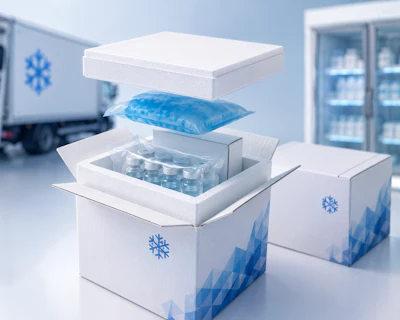
The biopharmaceutical sector is a primary catalyst for market growth. The increasing prevalence of temperature-sensitive products such as vaccines, biologics, cell and gene therapies, and insulin requires precise temperature control to maintain efficacy and meet strict regulatory mandates. According to the report, the pharmaceuticals segment is projected to grow at a CAGR of 16.0% through 2033. This has intensified the need for validated thermal packaging systems that can minimize the risk of temperature excursions across international distribution networks. In response, logistics providers and drug manufacturers are investing in high-performance packaging technologies to ensure product safety and quality.
E-commerce and Food Supply Chains Reshape Logistics
Beyond healthcare, the expansion of international trade in perishable foods and the rise of direct-to-consumer delivery models are creating new operational challenges. The growth of e-commerce grocery platforms and meal-kit services has shifted focus to last-mile delivery, where maintaining temperature control is uniquely difficult. This trend has created significant demand for packaging solutions that are not only effective but also lightweight and cost-efficient. As businesses aim to reduce spoilage and food waste, investments in insulated containers, advanced refrigerant systems, and thermal liners are increasing.
Sustainability and Technology as Strategic Priorities
Environmental sustainability has become a central concern within the industry, influencing material selection and product design. Companies are actively developing recyclable, reusable, and biodegradable packaging to meet corporate sustainability goals and address consumer concerns. While expanded polystyrene (EPS) accounted for over 38% of revenue in 2025 due to its insulation properties and low cost, the paper and paperboard segment is forecast to be the fastest-growing at a CAGR of 14.8%, driven by demand for sustainable alternatives.
Technological advancements are also shaping the competitive landscape. Innovations such as vacuum insulated panels (VIPs), which offer superior thermal efficiency for high-value shipments, are expected to grow at a CAGR of 14.2%. Furthermore, the integration of smart technologies like temperature-monitoring sensors and data loggers is providing companies with greater supply chain visibility, enabling proactive risk management and enhancing transparency.
Regional Market Outlook
North America represented the largest regional market in 2025, with more than 32% of global revenue, supported by its established pharmaceutical industry and robust cold chain infrastructure. However, the Asia Pacific region is expected to be the fastest-growing market, fueled by expanding healthcare systems, increased pharmaceutical production, and a rapid rise in e-commerce food delivery services in economies like China and India. The market remains moderately concentrated, with leading firms competing on thermal performance, regulatory compliance, and the development of sustainable solutions.