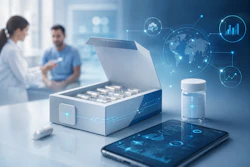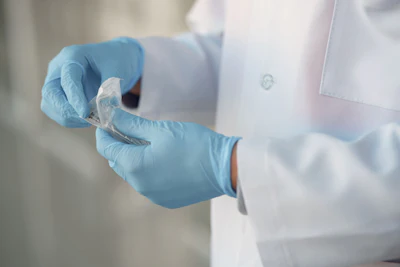
User experience design is critical for medical diagnostic packaging, but works differently for healthcare professionals versus patients. For professionals, packaging should be invisible and friction-free, while patient-facing kits like Cologuard must reduce anxiety and guide users through the screening process.
- Two-tier UX approach: Healthcare professionals need invisible, friction-free packaging that doesn't require thinking, while patient-facing kits must relieve anxiety and provide reassurance
- Cologuard example: Abbott's at-home colon cancer screening test ships directly to patients and requires design that alleviates fears about the screening process
- User research is essential: Gathering direct feedback from phlebotomists, pathologists, and patients reveals surprising insights that guide design improvements
- Early detection matters: Better packaging design that improves usability supports earlier cancer detection, leading to improved patient outcomes
- Multiple stakeholders: Effective diagnostic packaging must serve different users including healthcare providers, lab technicians, and patients with distinct needs
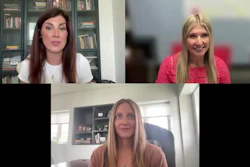
Liz Cuneo: Liz Cuneo here, Editor-in-Chief of Healthcare Packaging. I’m here with Melissa Carter from Abbott. Melissa, thank you for joining me today.
Melissa Carter: Thank you for having me.
Liz: Absolutely. I’m looking at your LinkedIn right now, and you have an interesting title and background. You are the principal director of service innovation at Abbott.
Before we get into what that means, I wanted to ask you a little bit about your experience, your college background, some of your first jobs, and how you got where you are today.
Melissa: I’ve had what I think is quite a career evolution. I can’t believe I am where I am today based on where I started.
My undergraduate degree is in advertising, and I earned that through a journalism school. One thing that was really important coming out of journalism school, and that I’ve carried with me today, is knowing how to ask questions and how to really listen to the answers.
That’s very important in my role, and it has carried throughout my career.
When I first came out of college, I was a graphic designer. I designed grocery ads as my first job for about three years. I had a few different graphic design roles and then was very fortunate to move to a medical device manufacturer, where I was also doing design.
It was a very open company, and I worked with some wonderful people who saw potential in me and were willing to let me try different roles.
That led to me moving into digital product management, which had a user experience focus, and then from there into customer experience.
I see the thread throughout all of my roles as being very user-focused. I’ve always been fascinated by designing something for someone and thinking about how they use it and interact with it. The scale has just become increasingly larger as my career has progressed.
Liz: That’s interesting. You went from grocery ads to medical devices. When you first made that switch, were you designing for the medical devices themselves, or were you doing graphics for the packaging or products?
Melissa: It was more advertising-related, including work for trade publications. I also designed booth graphics and things like that.
Liz: Interesting. Very cool. I noticed your path from being a graphic designer at Kroger and then moving on from there.
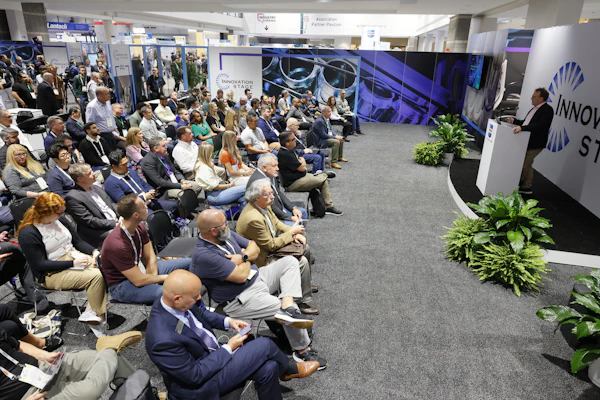
We met at PACK OUT, where you gave a really interesting presentation about what you’re doing now. I guess we can segue into where you are today at Abbott and what your current role involves.
Melissa: Right now, I work in service innovation for Abbott Cancer Diagnostics. We were formerly Exact Sciences. Our company was acquired by Abbott earlier this year.
What I do is look at our entire sample collection ecosystem: how we get sample collection kits out to providers, how providers or patients use them, and how they come back to us.
I look at the entire sample collection service. As part of that, I also examine what our kits do, how they are used, and how they are designed.
Liz: At PACK OUT, you talked about serving different customers or users. Hospital staff might be using the product, but they’re also using it with a patient. Who you have to design for can vary depending on the situation. I thought that was really interesting.
Going back to the early days, what did you want to be when you were a kid?
Melissa: I was a little bit all over the place as a kid. I’m very thankful to my parents for not encouraging my interest in becoming a professional mime, so fortunately, that did not pan out.
Among the more realistic options, I definitely thought about being a teacher. That was familiar to me because I have a lot of educators in my family.
I also thought about being an architect for a while, and I see that as being very related to what I do today. That interest in how people interact with a space is still very experience-driven.
I discovered an interest in advertising as a teenager by seeing what I thought were really cool ads in magazines like Rolling Stone and Spin. I wanted to make those.
I liked the idea of taking a brand or product and figuring out how to visually present it in a way that catches people’s attention and makes them more interested in the product. That interest stuck, and that’s what I pursued.
Liz: Very cool. When you finally got into packaging, was it a natural transition from advertising and graphic design?
Melissa: What I really like about service design and experience design is that they can be applied to many different disciplines and areas of business.
It was somewhat coincidental that I began working in packaging and sample collection. That was simply where someone was needed at the time.
However, I was already interested in interaction, and we’ve all had the experience of unboxing something that was really fun to open.
Having that user experience background made it natural for me to think about how someone interacts with packaging.
I also like working with physical things in addition to digital products, and this role is a great opportunity to do both.
Liz: In your professional opinion, how important is the user experience when we talk about medical packaging?
Melissa: I think it’s critical, but maybe not in the way most people would expect.
With consumer goods and packaging, you often want that wow factor during the unboxing experience.
With healthcare professionals, I think our job is to get out of their way.
When someone opens that packaging, there should be as little friction as possible. They really should not have to think about it. A good user experience with packaging should be invisible to our end users.
Liz: That’s interesting. For these collection products, is it primarily doctors or lab technicians who are actually using them?
Melissa: As you mentioned, we have quite a few different customers and users. Some are phlebotomists who draw blood for our blood-based tests. We also have tissue-based tests, which are used by pathologists.
Then we have some patient-facing kits as well. Cologuard is the major product. It’s an at-home colon cancer screening test that ships directly to patients, with no healthcare provider involved for the sample collection.
Every customer base has different needs and different things they’re thinking about, and that’s part of the fun as well.
Liz: I imagine that with Cologuard, the approach to packaging might be different because it involves a different user.
You said packaging should get out of the way of the user, but with that product, perhaps the packaging also needs to help guide and support the user. Doing something like that at home can be stressful.
Melissa: Definitely. Our job with patient-facing kits is to relieve that anxiety as much as possible.
You have to think about the patient’s mindset when they receive the kit. Maybe they’re screening for the first time and dealing with the possibility that the result could come back positive, along with all the stress that comes with that.
Whatever we can do through the design to alleviate those fears, make the process as easy as possible, and keep it from feeling like a daunting task can go a long way toward helping patients complete the test.
Liz: Absolutely. I was going to ask what makes a great user experience, and I think you’ve answered that in a few different ways. It really depends on who is using the product and who it is intended for.
Melissa: Exactly. It’s all about what they are trying to do at that moment and how we can best help them do it.
For the healthcare professional, that means getting out of their way. For the patient or person being screened, it means reassuring them and supporting them throughout their journey.
Liz: How does your background help you find solutions to usability problems in medical devices?
Melissa: Throughout my career, I’ve been listening to users and customers and learning how to listen beyond what they are saying.
What someone says they want or need is not always necessarily what they actually need.
The ability to ask the right questions, hear what they’re saying, pick up on small cues, and dig a little deeper has been a theme throughout my career.
Even in graphic design, someone might tell you they want certain colors or images. You have to understand what they’re really asking for and not necessarily just give them exactly what they requested.
It’s the same with product design and experience design. What are they really trying to accomplish? What questions can I ask to get to the root of that?
Liz: That’s a good point, and it goes back to your journalism background—asking the right questions and reading between the lines when someone gives you an answer.
What’s the most rewarding thing about your job?
Melissa: We’re helping people get screened for cancer and find cancer earlier. We know that early detection leads to better patient outcomes. It’s a huge responsibility, but also a huge reward.
Liz: That’s very meaningful. Did you have a mentor when you were in college or early in your career?
Melissa: Nothing formal, but I’ve been very fortunate to have managers and colleagues who were open about sharing their knowledge and offering support.
I’ve had some great managers who saw my potential before I did. They nudged me toward projects and roles that I didn’t necessarily think I was ready for but that ultimately set me up for success and contributed to the development path I’ve been on.
Liz: Do you think life sciences and user experience is where you see yourself staying for the rest of your career?
Melissa: I really enjoy it. Honestly, based on where I started and some of the roles I’ve held, I never would have thought I would end up in such a regulated industry.
But it’s incredibly rewarding, and I love having a job where I feel like I’m doing good in the community, giving back, and helping people improve their lives.
It’s a space that will always need improvement and is constantly evolving, so I could definitely see myself staying here for a very long time.
Liz: What does a typical day look like for you? Does it change every day? Are you mostly at a desk in front of your computer, or are you running around?
Melissa: It varies. I’m very fortunate to work remotely, so I’m on Teams calls quite a bit. What I’m doing usually depends on what phase of a project we’re in.
I may be out in the field conducting or supporting user research, either on-site or in a research facility, and putting prototypes in front of potential users.
I might be working with stakeholders, either in an in-person or virtual workshop, to define requirements and work through some of the more substantial problems we’re trying to solve.
Or I may step away from my computer for a while and think through the workflow, journey map, or process.
What does the solution really need to be? What are the potential pitfalls we may encounter?
That’s one of the things I like about the job. There are many different aspects to it, and what I’m doing depends on where the program is at the time.
Liz: Did you mention at PACK OUT that you also collect user feedback on some of the products? Is that something you do, or would that be handled by another team?
Melissa: We have a human factors engineer on staff who runs those programs, but because of my background, I support them as well.
I’m usually the person in the room taking notes and asking follow-up questions while someone else leads the session.
Then we take all the information we gather from those studies and use it to determine whether we should change direction or stay the course with the program.
Liz: How important is user feedback? I would imagine it’s important in almost any industry.
Melissa: It’s critical. In my opinion, you really should not be launching products without it.
We can rely on our own knowledge and experience and make our best educated guesses, but we are not the users.
Getting products in front of users and gathering their feedback can often be surprising. Because it is so often surprising, I would say it’s necessary.
Liz: That makes a lot of sense. As a wrap-up question, I usually ask what advice you have for a young professional who is just getting started.
I often talk to packaging engineers or people studying packaging engineering, which I know wasn’t your path. But what career advice would you offer someone who is interested in this space?
Melissa: Stay curious. Always think about your user, and always be open to the possibility that their needs and wants may be different from what you had in mind.
Don’t become too attached to your ideas. One of my favorite parts of my job is when I’m wrong about something.
I may have an idea about what we need to do or how we need to design something, and I love when a user proves me wrong because that creates an opportunity for improvement and growth.
Keep an open mind and stay curious.
Liz: That’s great advice. Packaging is always evolving, especially in a regulated space. It’s important to keep an open mind and remember who we’re creating the packaging for.
Melissa: Exactly.
Liz: Thank you so much for your time, Melissa.
Melissa: Thanks, Liz. Take care.