Integrated leaflet cartons, where the patient information leaflet is mechanically connected to the folding carton as a single unit, streamline pharmaceutical packaging operations by eliminating separate feeding steps, reducing downtime, and lowering overall production costs without requiring major equipment investments.
- Integrated leaflet cartons combine the patient information leaflet and folding carton into one unit, eliminating the need for a separate folding and feeding module.
- The solution reduces paper jams, feeding faults, and format change time, improving line reliability and reducing personnel costs.
- Although the integrated unit has a slightly higher per-unit cost than separate components, total process cost savings come from fewer faults, faster changeovers, and simplified material handling.
- Implementation improved overall equipment effectiveness (OEE), reduced setup times, and minimized disruption sources without requiring new plant technology.
- Beyond the packaging line, managing one unit instead of separate cartons and leaflets simplifies planning, goods receipt, inspection, and product switches.
For pharmaceutical packaging operations managing more product variants, smaller batches, and tight production schedules, frequent changeovers can increase both workload and opportunities for error. According to Faller Packaging, the growing variety of products, dosage forms, and country-specific packaging requirements is increasing the complexity of pharmaceutical production. In particular, smaller batch sizes and more frequent format changes place high demands on the flexibility of packaging lines.
At one international pharmaceutical company, a recurring source of disruption was the process used to feed patient information leaflets into the packaging line.
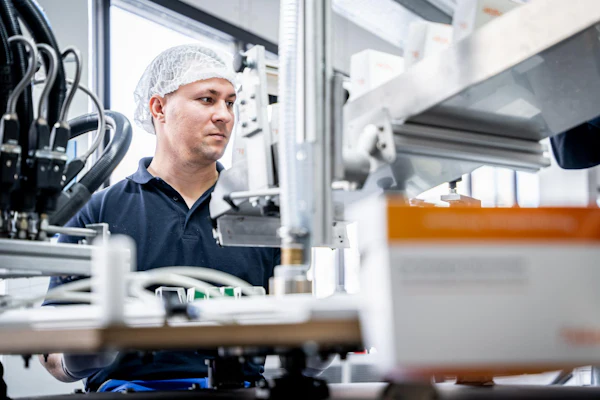
The manufacturer, who wishes to be unnamed, was processing folding cartons and leaflets as separate components. A dedicated folding module brought each leaflet into the required format before feeding it into the packaging process. Paper jams, feeding faults, and time-consuming format changes repeatedly interrupted production, costing time and limiting line performance.
Addressing the problem required a broader view of packaging costs, though various departments involved assessed the situation differently. Production focused on downtime, purchasing evaluated component prices, and quality assurance concentrated on potential sources of error. Those differing perspectives made it difficult to quantify the total expense of the packaging process. So, the company sought a way to simplify and stabilize operations without investing in new plant technology.
Combining the carton and leaflet
The pharma company, which produces medicines in therapeutic areas including oncology and rare diseases, as well as biopharmaceuticals, was already using Faller Packaging solutions at several of its European production sites. For this specific project, the solution was found in Faller’s Combi Pack, a preassembled folding carton with an integrated leaflet.
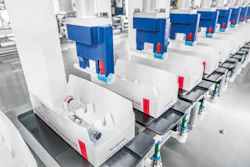
 The folding carton and the leaflet are mechanically attached to one another, but the leaflet can be easily removed if required.Faller Packaging
The benefits extended beyond the packaging line. Rather than ordering, storing, and inspecting cartons and leaflets separately, the manufacturer now manages one packaging unit. This simplified planning, goods receipt, handling, and material supply, while reducing coordination requirements and making product switches easier. According to a FalIer representative, in this specific project, the focus was on simplifying and stabilizing the packaging process.
Evaluating total process costs
The combined format has since proved its worth economically when viewed as part of the overall process. Although it carries a somewhat higher unit procurement cost than the separate components, a comprehensive view reveals clear advantages: fewer faults, more efficient changeovers, and lower overall effort along the line. The company also says it improved its overall equipment effectiveness (OEE).
In addition, setup times have been reduced, sources of disruption have been minimized, and material handling has been simplified.
“In the end, it wasn’t just about the price of individual components but about making the process on the packaging line simpler and more robust. That was precisely where our greatest leverage lay,” emphasizes Christian Klein, Head of Technical Sales at Faller Packaging.
 The Combi Pack combines a folding carton and a leaflet into a pre-assembled unit, considerably simplifying packaging processes.Faller Packaging
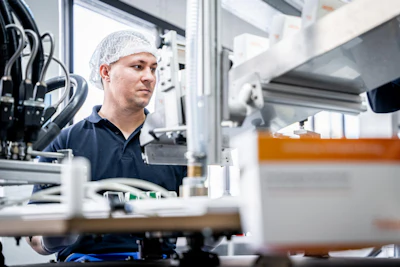
"Reducing line complexity is a key factor in improving efficiency and process reliability. Integrating the package insert into the folding carton eliminates the need for a separate feeding unit," says Faller. "This reduces potential sources of disruption, simplifies format changes, and lightens the workload for operating personnel. Fewer downtimes and reduced setup time improve system availability and have a positive impact on total cost of ownership."
The application illustrates how changing the configuration of packaging components can improve pharmaceutical packaging operations without a major equipment investment. By integrating the leaflet into the carton before it reaches the line, the manufacturer addressed a recurring production bottleneck while simplifying the work required to purchase, receive, inspect, and supply those materials.