OrthoPediatrics successfully converted its intramedullary nail implant portfolio from non-sterile to sterile packaging by redesigning over 1,300 SKUs and reducing carton configurations from more than 10 sizes to just 2, creating a scalable, validated system that improves hospital workflows and establishes a framework for future product conversions.
- OrthoPediatrics redesigned packaging for more than 1,300 SKUs across its IM nail implant portfolio
- Reduced packaging complexity from 10+ carton sizes to just 2 using perforated cartons and adaptable inserts
- Used 3D-printed prototypes to manage device variability across pediatric age ranges without handling all physical samples
- Created a fully validated sterile packaging system designed for regulatory compliance and scalability across future product lines
- Stakeholder education and validation protocols were critical to transitioning from non-sterile to sterile packaging processes
OrthoPediatrics Corp. is tackling the challenge of bringing sterile packaging innovation to the highly specialized pediatric orthopedic market. With a portfolio spanning more than 80 pediatric-focused device systems and more than 1.3 million children treated globally, the company recently undertook a large-scale conversion project to move a major implant portfolio from non-sterile to sterile packaging configurations.
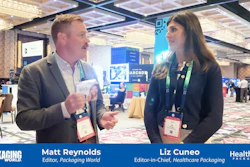
At The PACK Out last month, Tony Metzinger, Vice President of Engineering, Trauma and Deformity Correction, OrthoPediatrics and Devon Buckley, Engineering Manager, Packaging Compliance Labs shared details about their shared effort that required redesigning packaging systems for more than 1,300 SKUs while balancing regulatory compliance, usability, hospital workflow, and scalability.
 the PACK out
“Packaging is not just packaging, it is part of the device,” said Metzinger. “It’s become critically important for us.”
Addressing a Growing Need in Pediatric Orthopedics
Founded in 2007, OrthoPediatrics has focused exclusively on pediatric orthopedic devices, a segment company leaders describe as underserved due to its relatively small market size compared to adult orthopedics.
“The total market that we see globally for just pediatrics in the markets we serve is like $4.2 billion,” said Metzinger. “That’s pretty small when you look at the adult market, and in fact, a lot of companies are abandoning the pediatric space.”
As the company expanded through internal development and acquisitions, its device portfolio grew rapidly. However, most systems continued to rely on non-sterile delivery formats that required hospitals to perform terminal sterilization using large trays and instrument cases.
For implant systems such as intramedullary (IM) nails, sales representatives often delivered multiple trays containing a full range of implant sizes into the operating room. The process created storage challenges, increased handling complexity, and introduced sterility risks. The company identified sterile packaging conversion as both a clinical and operational opportunity.
Scaling a Sterile Packaging Conversion
Rather than attempting to convert all 80 systems simultaneously, OrthoPediatrics narrowed the initial focus to its IM nail portfolio. Even then, the project involved more than 1,300 SKUs with substantial variability in device dimensions and geometries.
Since pediatrics serves a range in ages of children, the smallest and largest implants in the portfolio differed dramatically in size, creating major packaging design challenges.
“We were dealing with devices that had quite a range in size,” said Buckley. “So really the scope of this came to be more about the ranges and how we were going to design for that.”
 the PACK out
Early feasibility testing became critical in identifying potential transit and validation issues before finalizing package designs. One key innovation of the project involved using perforated cartons and inserts that could adapt to multiple implant sizes. That approach allowed the team to reduce the number of carton configurations significantly.
“This allowed me to create two cartons for the entire nail system versus 10-plus for the different sizes that they had,” said Buckley.
Ultimately, the project resulted in seven packaging configurations spanning nails, screws, caps, and disposable instruments.
Validation and Education Go Hand in Hand
Stakeholder education became a major part of the collaboration, particularly as OrthoPediatrics transitioned from a predominantly non-sterile product environment into sterile packaging processes involving cleaning validation, sterilization validation, and worst-case methodologies.
“Budget time for education,” Buckley advised. “Education was all throughout the project. It grew our partnership overall, but it was a key piece of the project, not an afterthought.”
The company also faced practical manufacturing challenges, including generating enough production samples to support validation protocols. Because pediatric implant volumes are relatively low, dedicated production runs were required to obtain sufficient validation quantities.
The final outcome was a fully validated sterile packaging system designed not only for compliance, but also for scalability across future product lines.
Packaging as a Strategic Enabler
The transition from tray-based non-sterile systems to compact sterile packaging provides significant operational advantages for hospitals and surgical teams.
Instead of transporting multiple heavy implant trays into the OR, clinicians can now work with streamlined sterile systems that reduce storage requirements and simplify procedural setup.
The initiative also establishes a reusable framework for OrthoPediatrics as the company expands additional portfolios into sterile formats.
“We made a scalable framework to allow us to be able to take credit for a lot of the work that we had already done,” Buckley said.
For the healthcare packaging industry, the project demonstrates how packaging strategy increasingly intersects with device usability, supply chain efficiency, regulatory compliance, and patient care—particularly in specialized markets where customization and variability are unavoidable.
And for OrthoPediatrics, the mission remains centered on pediatric patients.
“It’s pretty easy at OP to get up every day and go to work because that is our mission—to take care of the kids,” said Metzinger.