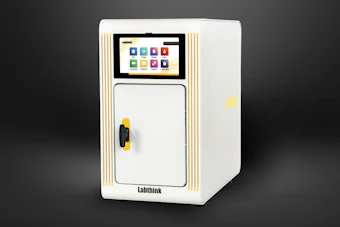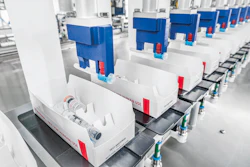
Smart packaging with embedded sensors and RFID technology captures real-time medication adherence data in clinical trials, helping researchers distinguish whether poor outcomes result from ineffective drugs or patient non-compliance.
- Adherence challenge: Traditional clinical trials rely on patient diaries and pill counts, which often miss missed doses and inconsistent medication use
- Smart packaging solutions: Embedded sensors, NFC chips, and RFID tags automatically record when investigational drugs are accessed and log time-stamped dosing events
- Data integrity benefit: Real-time adherence data allows researchers to correlate clinical outcomes with actual drug-use behavior rather than estimated adherence
- Broader applications: Connected packaging systems are expanding into mainstream healthcare through digital reminders, smart dispensers, and mobile app integration
- Regulatory support: The FDA's Drug Supply Chain Security Act (DSCSA) drives adoption of serialized, traceable, and digitally enabled packaging across pharmaceutical supply chains
Key Takeaways;
- Real-time adherence data from smart packaging helps researchers distinguish drug performance from patient behavior in clinical trials.
- Smart packaging supports remote monitoring, anti-counterfeit protection, and patient engagement.
- Smart packaging is rapidly transforming clinical trials from research models dependent on estimation and self-reporting into connected, data-driven systems capable of capturing precise investigational drug-use behavior in real time.
What was once considered simple pharmaceutical packaging is now emerging as a source of clinical intelligence. Embedded sensors, radio-frequency identification (RFID) tags, near-field communication (NFC) chips, and connected blister systems can capture when investigational drugs are accessed, helping researchers better understand whether trial data reflect true drug performance or participant behavior.
For pharmaceutical companies and researchers, this matters because study participant adherence remains one of the most persistent challenges in clinical research. Participants may miss doses, take the investigational drug inconsistently, or misinterpret dosing instructions. Traditional adherence measures such as diaries and pill counts often provide incomplete or imprecise information.
The result is a fundamental challenge: it is often unclear whether a therapy failed due to the investigational drug itself or because it was not taken as intended according to the protocol. Smart packaging helps close that gap.
Packaging That Records Investigational Drug Behavior
Modern smart packaging systems can automatically record when an investigational drug is accessed and whether dosing aligns with protocol requirements.
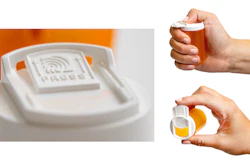
Smart blister packs embedded with sensors and NFC technology can detect dose removal events and transmit data to secure digital systems. This shifts adherence tracking away from self-reporting toward objective, time-stamped records of medication access.
Examples include platforms such as MEMS®-based solutions from AARDEX Group and Med-ic® smart blister systems from Information Mediary Corporation, which have been used in clinical research settings to monitor adherence patterns and support data analysis. These systems log dosing events, allowing researchers to compare clinical outcomes against observed investigational drug-use behavior rather than estimated adherence.
 Image generated by writer, prompt ChatGPT
Other RFID-enabled packaging systems assign unique digital identities to drug packages, supporting serialization, supply chain traceability, and authentication. While primarily designed for logistics and anti-counterfeit purposes, these capabilities increasingly intersect with clinical trial monitoring in decentralized study designs.
Together, these systems allow investigators to identify adherence issues earlier in a study, rather than only discovering them during final analysis.
Identifying Adherence Gaps and Improving Data Integrity
One of the most important contributions of smart packaging is improving the interpretability of clinical trial data. In traditional studies, poor adherence can distort outcomes, making a treatment appear ineffective or confounding the interpretation of safety events. Without clear dosing data, separating drug performance from participant behavior is difficult.
Smart packaging helps address this by providing a clearer link between dosing patterns and outcomes. For example, if a participant reports worsening symptoms but packaging data shows repeated missed doses, researchers can better contextualize whether the investigational drug itself is responsible.
Rather than relying on delayed or retrospective analysis, researchers can also monitor adherence trends during the study and respond more quickly when issues arise, an especially important capability in decentralized clinical trials, where site visits are limited.
Industry groups such as Thermo Fisher Scientific’s clinical research services have highlighted the role of connected technologies in improving adherence visibility and strengthening data reliability across distributed study populations.
At the same time, serialization and digital tracking systems, including those used in global supply chain platforms like Körber, support traceability and product integrity across increasingly complex trial networks.
Why This Improves Safety and Trial Predictability
The implications extend beyond data quality. When researchers can distinguish between drug performance and participant behavior, clinical trials become more stable, more efficient, and often safer.
Earlier identification of missed doses can improve participant monitoring and enable timely intervention when adherence issues emerge. It also strengthens confidence in efficacy and safety findings, supporting more reliable regulatory and development decisions.
This capability is increasingly relevant as healthcare systems and clinical research move toward decentralized and hybrid trial models, where participants are monitored remotely rather than in controlled clinical environments.
Companies such as Takeda have emphasized the importance of digital, participant-centered trial designs that reduce burden while improving engagement and retention.
Key benefits of smart packaging include:
- Improved adherence visibility
- Earlier detection of protocol deviations
- Stronger clinical data integrity
- Enhanced supply chain traceability
- Reduced risk of counterfeit or tampered product exposure
- More representative real-world evidence
Regulatory frameworks are also reinforcing this shift. The Food and Drug Administration’s Drug Supply Chain Security Act (DSCSA) continues to drive adoption of serialized, traceable, and digitally enabled packaging systems across manufacturers, distributors, and dispensers, supporting broader transparency and supply chain security.
 Image generated by writer, prompt ChatGPT
From Clinical Trials to Broader Healthcare Use
Clinical trials are increasingly acting as the proving ground for technologies that are now expanding into mainstream healthcare.
Connected packaging systems are already appearing in applications such as:
- Digital adherence reminder systems
- Smart pill dispensers
- QR-linked patient education tools
- RFID-based authentication and anti-counterfeit labeling
- Temperature and condition-monitoring packaging
- Remote care and digital health platforms
Some systems integrate directly with mobile apps and wearable devices to deliver reminders, adherence alerts, and patient-provider communication tools.
The Proteus Digital Health system, developed in partnership with Otsuka Pharmaceutical, takes technology further by using an ingestible sensor that activates in the stomach and transmits a signal to a wearable patch, enabling confirmation of ingestion rather than dispensing alone.
In recent years, AI-enabled packaging systems are beginning to combine sensor data, serialization records, and analytics to support pharmacovigilance, detect supply chain anomalies, and improve real-world medication insight.
What’s Next
Smart packaging is redefining the role of packaging in clinical research and healthcare delivery.
In clinical trials, it is helping reduce uncertainty around adherence, improve data reliability, and strengthen confidence in study outcomes. More broadly, it is shifting packaging from a passive container into an active data layer within the clinical evidence ecosystem, enabling continuous visibility into medication-use behavior across decentralized and hybrid study environments.
For sponsors, manufacturers, and healthcare providers, the trajectory is clear: future clinical systems will increasingly integrate regulatory compliance, real-time adherence intelligence, and patient-centered digital design into a unified, connected infrastructure that supports more adaptive trial design, faster decision-making, and improved engagement across the study lifecycle.