Derrick Teal: Hi. Welcome to the End of the Line podcast. I'm Derrick Teal, Editor-in-Chief of ProFood World, and I'm joined by a shortened cast today with Liz Cuneo, Editor-in-Chief of Healthcare Packaging, and Sean Riley, Editor-in-Chief of OEM magazine. Hi, guys. How are you doing?
Sean Riley: Pretty good.
Liz Cuneo: Yeah, I can't complain.
Derrick: I guess people are on vacation, which, you know, is allowed.
Sean: I mean, who knew?
Liz: Who knew, right?
Derrick: I always say you can't complain, but who's really going to listen to you if you do?
Sean: The thousands and thousands of listeners.
Liz: That's the thing with summer, right? I've noticed that as I'm trying to make interviews with people and schedule things, it's always, "I'm out this week," or "I'm out that week." Especially in the Midwest and the North, where it's cold most of the year, people really take advantage of the nice weather.
Derrick: That's all it is. We'll cut them some slack.
Sean: Yeah, we have nice weather in the Midwest.
Derrick: I don't know. It's been raining all week, and it's supposed to be really hot next week, isn't it?
Sean: Yeah, I think so, like mid-90s.
Liz: It's already been in the 90s here in South Carolina, so it's not too shocking, but it is going to be hot.
Derrick : Yeah, it would be a shock for us. We've been in the 70s for a while now. But speaking of Chicago, Sean, you were just at Automate, right?
Sean: I was. I have never been to Automate before. I don't know how that's possible.
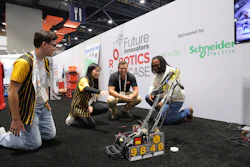
It's a fun show. It feels like one of those events that even if you weren't in the industry, you could attend just to see the robots—especially the humanoid robots. Casey was lucky, or maybe he'd be the judge of that, to really dive deep into those. They were literally doing flips and things that I don't know how they pertain to the workplace, but they were definitely interesting.
I'm sure Casey will have coverage that helps explain how they're going to help address workforce issues.
The interesting part about Automate is that it's so geared toward large-scale manufacturing that it's hard to dive deep into what applies specifically to food and beverage or to healthcare packaging. Everything is so industrial—you've got car doors spinning over your head.
There were a lot of AMRs—autonomous mobile robots—which definitely have applications in e-commerce and palletizing or depalletizing.
The sessions were really interesting. Honestly, I could have spent all three days just attending sessions. Our colleague Anne-Marie Mohan went to quite a few as well.
I came away with two main takeaways.
The first one really surprised me: we're way behind the rest of the world when it comes to robotics and automation. Especially in robots and physical AI. I assumed Asia would be ahead, but I figured North America would be much closer.
Instead, North America accounted for only 6% of global robot installations last year, while Asia accounted for 50%.
That's all of North America. China alone installed 2 million robots, and I believe the U.S. has only about 2 million robots total across all years.
It really shows how far behind we are from an automation standpoint. If you're talking about being competitive globally, we've got a long way to go. And I still think our industries represent an even smaller share of those numbers. Automotive probably accounts for a huge portion of the robots already installed.
Derrick: One of the biggest manufacturers—or testers—of humanoid robots, Boston Dynamics, is owned by Hyundai.
Sean: Exactly. So much of the technology has come out of automotive, at least from a North American perspective.
The other thing that really stood out to me was how everyone was talking about digital twins, or virtual twins, as being essential—not just for robotics, but for automation in general.
I'd wanted to cover digital twins over the past year, but everyone I talked to in our space—from OEMs to their customers—said they really weren't using them yet because they were more common at larger companies.
But in the sessions I attended, the message was that you're losing money if you're not using a virtual twin before implementing automation.
One example was Pepsi. Obviously, they're huge and can afford to do it, but they designed an entire plant virtually. They identified about 90% of the problems that could arise before laying a single piece of steel, and they achieved around a 20% increase in throughput.
So I asked whether this applies to small and medium-sized companies, not just the Pepsis of the world.
The experts—from Teradyne, Universal Robots, Siemens, and others—all said yes. They believe virtual twins are something even smaller companies should investigate because the return on investment is so significant. You'll save money by identifying problems before installing automation instead of fixing issues after the fact.
Those were my two biggest takeaways from Automate. Overall, it was a very cool show and definitely something worth attending, even if you aren't directly in the industry.
Derrick: Yeah, and I know Casey definitely has some insights regarding humanoid robots. Not necessarily the ones working in plants today, but the ones designed to work in plants and what role they'll play going forward. I won't steal his thunder because we talked about it earlier this week, but we'll definitely have to get him on.
Liz: Packaging World has been covering humanoid robots for a while, and it's one of those topics that sounds really cool. You wonder, "Is this the future?"
I talked with a couple of people at different trade shows, and someone made an interesting point: the human body has limitations, which is why we created robots. So why are we creating robots that mimic the limitations of the human body?
I thought that was an interesting way to look at it.
Of course, the difference is they don't get tired. There are definitely applications where it makes sense, and maybe others where it doesn't. We'll see how many plants eventually have humanoid robots walking around—or even robot dogs.
Sean: Spot.
Liz: Yes, Spot.
Sean: There were a lot of robot dogs running around at this show.
Derrick: Oh, really?
Sean: Yes, a lot of them. Again, seeing a robot dog do a backflip is awesome, but how does that help put something in a package?
Derrick: From what I understand, Spot is already being used by some CPG manufacturers. I can't say who, but I know of plants that have implemented them. They're designed to patrol facilities, identify inefficiencies, detect leaks, and find areas that need maintenance. They're not just monitoring production equipment—they're also inspecting HVAC systems and other facility infrastructure.
The challenge, from what I understand, is that they generate a tremendous amount of data. The question becomes: how much of that data is actually actionable? And do companies have the financial resources to make all of the recommended repairs, especially considering the robots themselves are still fairly expensive?
Sean: From what I've seen, yes, they're designed around the human body, but some of them can do things people can't. For example, their fingers can rotate and essentially become hands on the opposite side. They're kind of double-jointed and can adapt in ways humans can't. They're humanoid in appearance, but capable of movements we aren't.
Derrick: So, Liz, what's new with you?
Liz: It's a tough segue from humanoid robots to what I have to say. But I did a really interesting interview this week with two companies: SmartSolve and Safetec.
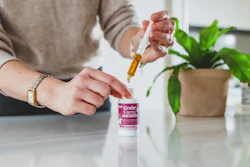
Safetec manufactures medical waste management products, and they're using a SmartSolve dissolvable film to help clean up blood in operating rooms.
It's something I never really thought about before, but turning over an operating room takes a lot of time and can expose workers to blood and other bodily fluids.
Traditionally, someone has to empty the contents of a pouch into a container where it quickly solidifies.
What Safetec has been using is a SmartSolve absorbent product that turns blood into a solid brick.
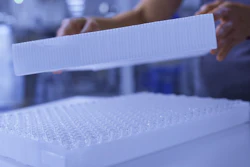
The new product is even more interesting. The pouch itself dissolves, so you simply drop the entire package into the container of blood. The pouch dissolves instantly, the material solidifies the blood, and it can be removed without splashing.
It's cleaner, protects healthcare workers, speeds up operating room turnover, and helps prevent contamination before the next patient.
It's a really cool technology that lends itself to a lot of other applications.
It reminds me a little bit of laundry pods—not because it's the same thing, but because of the dissolving film concept. The difference is this is paper-based, not plastic.
I'm going to include a video interview with the article, and they also sent me a demonstration video showing how it works. It's pretty fascinating to watch.
It's not something we've covered much in Healthcare Packaging, but it definitely fits because it's packaging, and dissolvable film technology is always interesting.
So look for that story soon.
Sean: Can it be used for spills?
Liz: Yeah, absolutely.
Sean: Does it have to be blood?
Liz: No. It works with all kinds of hospital fluids.
They also make the material in sheet form. She mentioned it's used in places like morgues, underneath bodies. It's an extremely absorbent material that solidifies liquids into something that's almost like a gel.
We cover a lot of medical device products for the operating room, so this gives us another angle—helping clean up and turn over ORs more efficiently, which is incredibly important.
Derrick: Yeah, we don't often talk about bodily fluids on End of the Line.
Sean: That's probably a first.
Derrick: Venturing into new territory here.
Sean: Wow. Okay, cool.
Liz: I'm glad we get to do that once in a while.
It was definitely an interesting topic this week for Healthcare Packaging. Between bodily fluids and humanoid robots, it's been quite the week.
Derrick: Well, what do I have? Modularity.
I was thinking about it while Sean was talking about humanoid robots because we have an article coming out in the August issue by Jamie Valenti-Jordan. It's focused on construction trends for small manufacturers and processors—basically companies under $10 million.
One of the major themes is flexibility.
A lot of what he recommends reflects where the industry is heading if companies want to stay profitable.
One thing I've seen in plants is the use of interstitial space—the attic of the factory, essentially. It's the space above the plant floor but below the roof.
That's where mechanical, electrical, and plumbing systems are run. If you want to expand later, you can simply route utilities up to a wall, knock the wall out, and extend the building without disrupting production below.
You can also work on those systems without shutting down production or introducing contaminants into the food and beverage process.
If you're installing a new line, you can prepare everything overhead, then simply run the utilities down through the ceiling and connect the equipment.
For small and mid-sized manufacturers, that's especially important because many of them rely on co-manufacturing to remain profitable.
Whether they're building a greenfield facility or renovating a brownfield site, they need flexibility so they can expand and take on additional business.
That flexibility applies to production lines, facility layout, and mechanical systems.
Until Sean mentioned Automate and robotics for smaller manufacturers, I hadn't really connected all of that.
Pretty much every plant I've visited has emphasized operational flexibility.
Beyond simply doing more with less, flexibility is probably the defining trend in food and beverage processing right now.
Liz: Wow. What a revelation here on End of the Line.
We've got bodily fluids, humanoid robots... It's awesome.
Derrick: Yes. Very cool.