Liz Cuneo: OK, well, thank you both for joining me for this interview. We can kind of start out by, you could take turns introducing yourself, your role at the company, and maybe if someone can give like a five-minute elevator pitch of the company.
Ian Speers: Sure, yeah, nice to be here. My name's Ian Speers, I'm one of the co-founders and the CEO of Pacto Medical. I'll hand it over to Robert and then I can do more of an intro about what we do.
Robert Halvorsen: Yeah, my name is Robert Halvorsen. I am the CTO of Pacto Medical. And I think to get us started on what we do, it would actually be good to start at the beginning. And the beginning is Ian's domain. Ian and I have been friends since undergrad. We were freshman floormates. And he gave me a call a couple of years ago, but I'd love for him to give that little spiel, and then I can talk about the tech.
Speers: Sure, yeah. My background's in public health and medical logistics and emergency medical services, so I actually started off working as an EMT and search and rescue technician.
And used a lot of healthcare products, including pre-filled syringes. I always thought they were great — they're easier, faster to use, more accurate and sterile than drawing up from vials and ampules — but I didn't really ever think I was going to make a career around pre-filled syringes. Then I moved into the nonprofit sector doing more program management and medical logistics, supply chain management, mostly in low-resource and disaster settings around the world, primarily in Africa and the Middle East.
And I started to realize all those products that I was used to seeing weren't showing up in these other contexts. And I started to ask, why is this?
And realized that a lot of care was being challenged. The care that we wanted to deliver was being challenged by the actual availability of the products, and I started to realize, hey, what a product looks like and the amount of space it takes up and how much it costs to move from the point of manufacture to the point of care delivery really matters, and really ends up impacting what happens at the end of the line, impacts health equity, health access, all sorts of really important things.
And I started to dive further into that for pre-filled syringes specifically, because I realized every time I'd open a box of pre-filled syringes, they were huge. There were only 30 in a given box, and we'd go through them really, really quickly, and I figured, wow, we're taking a lot of time, effort, money, and carbon to move each of these boxes through the system.
What if we could make that more efficient? Could that help us deliver care in a more effective and affordable manner?
And so I came back from those experiences, started grad school, and kind of had a little bit more time to dig into this page of frustrations that I had accumulated over the years, and I realized that I really needed an engineer to help me create a lot of these products.
I could bring a lot of frustrations and experiences, but I needed someone who could translate that into a physical product that could address those issues, and I immediately thought of Robert because he's the most creative person I know for sure.
And I gave him a call and pitched him on a couple of the ideas, pre-filled syringes included, and I'll pass it back over to him actually.
Halvorsen: Yeah, so when Ian called me from his time abroad, he was talking about backpacks that were generators and medical bags that had refrigerators on them, and it was incredible, the ideas, but I can't build that in my garage.
And then he told me about these prefilled syringes, and he's like, these prefilled syringes, that plunger rod sticks all the way out, we gotta do something about them.
And I said, that is something that I can prototype.
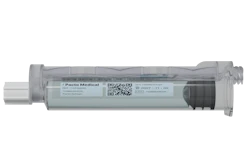
So we took this concept of somehow making this plunger rod smaller, and three years later, we have a product that for the same dosage of medication is half the size.
And when you're ready to use it, you just take this off, install it, and then you're ready to go and ready to use it like you would any other prefilled syringe.
But when you are in a medical bag, a kit, something like that, the space that you save allows you to fit this medication and other medications in when you wouldn't otherwise be able to do it.
So I've been doing the engineering for this, making all of these prototypes in my garage, and we are well on our way to getting this into the hands of clinicians, having it FDA approved, and getting this out there to first aid kits and medical bags and carts, and we're really, really excited about being able to take this out of the garage and into the real world.
Cuneo: That's great, Robert. Now, what was your background at the time, or I guess I should ask, were you designing other things for work at the time? Anything else?
Halvorsen: Yeah, great question. I was a mechanical engineer. I was working on projects for Amazon and for Ember, which makes coffee mugs that keep the coffee at the perfect temperature.
And I got laid off, and right around the time that I got laid off was right around the time when this started to get momentum. We'd done a couple of pitch competitions. We'd said, hey, this thing might have legs.
So the layoff was a happy accident, and it allowed me to focus all my time on this.
And yeah, I was doing mechanical engineering is the short answer to your question.
Cuneo: OK, yeah, I guess I'm wondering, what other kind of products have you been designing in the past? Sounds like the Ember mug, maybe that kind of project.
Halvorsen: Yeah, a lot of consumer electronics, consumer products, factory hardware products for Amazon, but this is our first foray into medical devices, and boy is it a lot.
Cuneo: Yes, I'm sure you guys are learning the amount of regulatory paperwork and considerations, but it's definitely an interesting project. So, would you say the number one challenge it solves for is really the space?
Halvorsen: OK. So this is a regular 10 mL saline flush, and whether this goes into somebody's pocket or somebody's fanny pack and it's overflowing and spilling, or you're trying to get a syringe like this into an IV start kit.
So if you need to set an IV, you need to flush that line in order for the IV to go through.
And if you are in a disaster setting or you're a combat medic, you don't have space in your kit for something this big because you have to carry it with you.
So they'll either not include these syringes at all, or they'll compromise and have these really tiny ones, or they'll take a bunch of these, they'll unscrew the plunger rod, throw them away, duct tape five or six of these together, and then have one plunger rod that just slaps onto all of them.
And if they lose the plunger rod, they'll use a finger, they'll use a pen. It's not clinically the best.
So our goal is to provide compact medications for kits, emergency uses, and then that can expand to vaccines and vaccine storage.
Not only are we helping to make prefilled syringes themselves more compact, but we're also providing a compact alternative to something like a vial or an ampule, which themselves are compact. They just have the medication in the case, but you have to withdraw the medication, you have to have a bunch of extra steps and extra risk of error when you take something out of a vial and into a patient.
So we're trying to make pre-filled syringes more compact and more accessible.
And I think what's nice is the space-saving aspect ends up causing a lot of other downstream benefits as well.
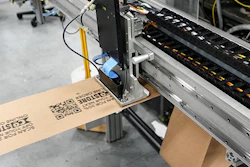
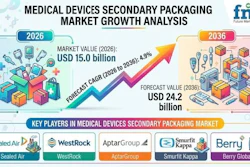
So when we take up less space, we're able to use less secondary packaging, we're able to use less space and therefore less money and less carbon to move things through the supply chain.
And so at the same time as just making it more efficient for folks at the end of the supply chain, we make it more efficient and cost effective and environmentally friendly to move through that supply chain.
For example, for supply chain costs, we cut the supply chain costs by around 35% by reducing the packaging footprint by around 40%.
Cuneo: Awesome. It reduced weight, I'm assuming, correct? And just fitting more on a pallet potentially.
Halvorsen: Yeah, the weight is actually the same.
And we were surprised that certain packagers prefer dense things rather than light and fluffy things, because if they can fit more on the boat, then they're just going to fill that thing to the brim.
So we're the same weight because we have the same amount of plastic as a standard prefilled syringe, but that's more concentrated and it allows you to be more efficient with your truck space, with your ship space, etc.
Cuneo: Yes, that makes perfect sense. And then we talked about sustainability, which is something that we're hearing about for every industry, but for packaging definitely. So, when we talk about sustainability, is that again going by the weight, or is it using less materials overall?
Halvorsen: Yeah, great question. The material use is dramatically reduced because these are stored in plastic. I have a box over here. This is an example of a plastic container for one of these syringes, and our plastic is half the size.
So you're using less material to package the syringe, and then that means that the boxes that you're storing them in are also smaller.
So from a pure material perspective, the environmental benefits are pretty substantial.
And when you're able to more efficiently pack a truck or a boat or even a plane, then the per-unit amount of carbon that that truck, plane, or boat uses is reduced, because you can more efficiently ship the entire cargo of the plane.
Cuneo: OK, yeah. Awesome. And now, it sounds like it's nurses and doctors who this is created for, right? Not so much at-home consumer use for a diabetes medication or anything like that. That's correct?
Halvorsen: That's correct. Our primary starting point is pre-hospital and hospital use, but we realize that the same packaging and shipping constraints that affect the hospital and pre-hospital supply chain also affect the at-home supply chain.
And if you have a medication that is arriving in a vial due to the packaging constraints, and you have to learn how to withdraw it from the vial, calculate the dose, we believe that there are certain applications, and we're pursuing a few applications where moving to a compact prefilled syringe would not only help on the cost front, but also make the patient experience better.
Cuneo: OK. And yeah, I mean, how important is the patient experience at this point, or in this case, the nurse or the doctor, right? There's a lot going on when we talk about having to administer medicine.
And I know, Ian, some of your content on your website is kind of an emergency situation, right? Or different settings, I should say, outside of the hospital when you were doing your work overseas. So how does that change what the device should look like being in a different setting like that?
Speers: Yeah, different settings definitely call for different needs and they have different pain points.
I would say it's been fascinating for us to learn how a lot of those pain points do translate from pre-hospital or emergency or humanitarian settings into hospital settings, even in higher-resource facilities. They are still constrained by budget, still trying to reduce waste, still trying to fit more in an automated dispensing cabinet, like a Pyxis or an Omnicell, but it's not the best fit for every specific product.
And so a lot of our work now is talking with folks and understanding where the biggest value add is, and starting with that.
That's why we're generally starting with pre-hospital meds and then focusing on cold chain and other products in which the space constraint and the cost challenges are most extreme.
Cuneo: OK, yeah. Let's see, so we talked a little bit about sustainability, we talked about supply chain. On your website, you said something about lowering supply chain costs. Is that going back to shipping, the more efficient shipping for these products, or is there anything else that affects supply chain?
Halvorsen: Yeah, a big piece is the sterilization.
When these medications are sterilized, they go through chambers, whether it's a gas sterilization or an electromagnetic sterilization like an X-ray or a gamma ray or something like that. Those are all done in chambers that have a particular size associated with them.
And if your product is bulky, you need more runs through those chambers to get your full batch.
And if we can be more efficient with packing those chambers, the sterilization costs will reduce.
We've talked about planes, trains, and automobiles. We have not talked about the cold chain, and many of these drugs are required to be shipped at very cold temperatures.
And those shipping boxes are expensive. Those trucks are very expensive to keep a large volume of stuff cold.
And if we can be more efficient in packing those cold shippers, the savings are 10 times, 50 times higher than a standard warm supply chain.
Cuneo: OK, yeah, of course. We write a lot about cold chain, the issues with temperature control, all the new technology for really monitoring that throughout the supply chain. It's pretty interesting to see, as well as some sustainable alternatives, which is always fun.
So I think changes are coming in cold chain, which will be interesting to see down the road.
So what have you guys learned through this journey, if I can ask that question? I'm sure so much, right?
Do you have a takeaway for, let's say there's someone else watching that's like, I wanna start a medical device company. What have you guys learned so far?
Halvorsen: At a very high level from an entrepreneurship perspective, surround yourself with people who are excited about what you're excited about.
Go to the entrepreneurship clubs at your local university. It doesn't even matter if you go to the university.
Ian and I were very lucky to have great university-sponsored programs that we attended, but now I live in San Diego, and UC San Diego is right down the street. I've never been. But I gave them a call, their entrepreneurship program, and they've included me in a number of their events that they do, even though I'm not a student.
So reach out, find people who are excited about what you're excited about, and if you project your excitement into the world, other people will respond to that and give you advice that you didn't know you needed.
Having a great advisor is incredible, and there's no magic formula to that. You're just going out and talking to people, and folks who love what you're doing are like, sometimes I advise companies, do you want to give me a call and we can see how things are going.
So it's just being open and honest about what you're excited about, and then the opportunities will come.
Speers: I might add, especially for medical devices, really knowing your regulatory pathway, and really understanding how you can make it something that will actually be adopted and manufactured, rather than just a cool poster or presentation or science project, right?
What you need to understand is, what are the constraints and the challenges that are going to keep something like this from being adopted, and we spent a lot of time trying to reduce the barriers to adoption and increase manufacturability by making sure that we're not changing the whole prefilled syringe.
So we actually don't touch anything on this side of the house. We use the same barrels, the same plunger stoppers, the same tip caps.
We don't change any of that, we don't change anything that touches the medication itself, because we know if we do, the regulatory burden immediately goes way up.
Also, just the cost of doing new tooling for those things increases the cost of the end product, which is not our goal. We want to reduce the cost of the end product.
So instead we've said, we're just going to innovate on the plunger rod. That's the only thing that we're going to change.
And then it's going to interface directly with the off-the-shelf components, so that we don't need to change the whole manufacturing line. We just change how the plunger rod is attached to the end.
We don't need to go back to square one for regulatory approvals. We can just do a prior approval supplement, for example, to change the packaging.
And so really, if we made different decisions, this would absolutely never see the light of day. It would be too expensive and too risky to adopt.
And so we've spent a lot of time thinking about how the folks at pharmaceutical companies and at pre-filled syringe manufacturers think about and understand risk and investment in a new technology, and we try to make it as easy for them to say yes as possible.
Cuneo: Yeah, that's awesome. I know there's a ton of regulatory hurdles, and if you change anything, it's big news and it's big money and big paperwork. So it's an interesting consideration just sticking with the one part. So where are you guys at, I guess, with bringing this to scale? What are your next steps?
Halvorsen: Yeah, we are going to market with a 10 mL saline flush, and we are doing that through a partnership with a saline flush manufacturer, and our goal is to get these saline flushes into high-value kits that emergency physicians and medics need to use, whether that's an IV start kit or an individual first aid kit.
And we chose that segment because the regulatory burden for saltwater is a lot lower than the regulatory burden for ketamine.
And the production value is all there. All we need to do is swap out this plunger rod with this plunger rod.
So it's a relatively easy manufacturing lift, and the volumes for this are tremendous. This is the single most common prefilled syringe in the world, the 10 mL saline flush.
So we are generating adoption. We're showing the FDA that this is something that will work.
And from there, after we get our feet wet with all of the steps required to create a medical device that is FDA approved, we can then have a much easier time expanding into other drugs in other sizes.
We have a whole suite of sizes and different products that are in our pipeline, and we're working on many of them in parallel.
But the initial push is with that 10 mL saline flush, getting those into emergency kits.
Cuneo: That's great. That's exciting. Do you have a time frame for that?
Halvorsen: Hopefully between 12 and 18 months from now, you will see these fully in kits.
Cuneo: That's awesome. Thank you. Anything else you guys are working on, of note for the company?
Halvorsen: Yeah, we actually have an additional product that is designed to help reduce the cognitive load of providers when they are in a stressful situation.
So the product itself is a dosing clip that can adjust its location based on the desired dosage that you want to apply.
And what that does is prevents you from having to calculate how much of a dose you need to deliver, whether it's to one patient over time, or to one patient where you need a smaller subset of the dose that you're given.
Pediatrics is a great example for this, where if you have an infant versus a six-year-old and they're knocked out, the dose that you need to deliver to them is wildly different.
If we put the size scale for these kids on this plunger rod, you don't have to do any mental math. You just slide it to the appropriate spot for their size and weight, and then you can just deliver that dose confidently without having to worry.
About 25% of those pediatric resuscitation doses are misdosed, and we think there's a big impact to be had by reducing that cognitive load for those providers because they have enough to think about without having to do the mental math.
Cuneo: Yeah, that's cool. I don't think I've seen anything like that.
Halvorsen: Thanks. We're still in development for it, and one of the most important things that we're doing with this, and that has been hugely important for our products as a whole, is getting feedback early and often.
When we give these to the nurses and the care providers, they will tell us immediately whether or not it's a good idea.
It took about a year to optimize this design.
And that optimization came in fits and starts, and every new piece of innovation did not come from me thinking really hard in my chair.
It came from going out and giving it to a nurse and watching them play with it.
And we've gotten to the point now where we've gotten this feedback a few times. They'll say, “Was that it?”
Yes, it's supposed to be that simple, but it took us that amount of time to go to the nurses and iterate and get feedback to make it that simple.
It did not come this simple out of my mind.
Cuneo: OK, right. And that kind of goes into, I know Ian mentioned you have a human factors background, or that's your core focus. So I was gonna ask about how important is that in general, and accessibility, right? Because that's who's working with it, right? We might have an idea, but we're not anyone that would be using it, and you guys maybe aren't either, right? So getting that feedback is super important, as I'm sure you've learned along the way.
Halvorsen: It's hugely important, and we recently went to Mass General Brigham and did a full design-a-thon with 50 or so nurses and healthcare practitioners.
And the biggest complaint we hear from them is that the big shots tell them what to use. Nobody asks them anything.
And so even us just being there was refreshing for them, and they were able to give us feedback that we wouldn't have gotten any other place.
Speers: Yeah, they helped to steer us toward and away from a variety of different use cases, and they were able to tell us immediately what medication to put inside it to save them the most time, hassle, and headache, and that's super valuable.
But I think a lot of folks maybe just go ahead and think they kind of know what clinicians or end users will say, but we continue to learn so much.
We've done that with nurses and clinicians at Mass General, but we've also just gone to nursing conferences, set up a table, and done real-time non-clinical user testing with them in fun ways too.
We've set up speed activities for them to figure out how fast they can assemble this with no instructions, having never seen it before, and it gets them excited about it, gives us valuable data, and we just learn so much from looking and watching them and then talking with them afterwards.
So I think as soon as we stop interacting with end users, we'll fall right on our face, and so it's always our goal to continue to be as close to the problem as we possibly can.
Cuneo: Yeah, that's an awesome take. It's interesting when you talked about people just doing it how they want to. I always think of people doing it how it's always been done, right? Well, that's what a prefilled syringe looks like. That's what the plunger rod is, right? It's long, that's what it is. So it's cool when someone was like, well, does it have to be? So I appreciate that push on the status quo.
Speers: Yeah, I think the plunger rod is often an afterthought, unfortunately.
We spend an immense amount of time and money and scientific thinking about a prefilled syringe, but almost all of that goes into the barrel and the plunger stopper, and then at the end we say, oh right, we need to have a plunger rod too.
And we're trying to shift that conversation and narrative to say, hey, what if the plunger rod could work for you instead of work against you, or instead of just being an afterthought.
Cuneo: Yeah. And then at the same time, solving the challenges that the industry faces, which Ian, your story is so interesting with, I believe it's humanitarian work, correct? That kind of led you to find a need for this type of product.
Speers: Yeah, yeah. And that's why I'm willing to spend so much time and energy and go through the ups and downs of this because it's not just creating a product to create a product.
I never really wanted to necessarily be an entrepreneur. That was not something I was shooting for. Robert as well.
But we started to see this is a real problem, there's real benefit to be had here, and we didn't see others working in this space.
And so at the end of the day, I'm still trying to have the same, or potentially even ideally a larger impact than I could by continuing to work in the humanitarian sector and optimize downstream.
I spent a lot of years trying to optimize downstream, and then I realized, hey, a typical public health metaphor is go further upstream to the root of the problem.
And I think that's what we're doing here, is we're going further upstream than a lot of folks might, because a lot of folks say, hey, that's not your place.
But we're saying, no, no, no, we're going to get to the heart of this, we're going to go upstream to where design and manufacturing decisions are being made, and we're going to get into those rooms and provide a better alternative, which will then cascade those benefits down, so that people like me in humanitarian settings or disaster settings or pre-hospital settings have something that is designed for them, with them.