The global injectable drug delivery market will grow from $655.1 billion in 2026 to $1.1 trillion by 2033, driven by wearable injectors and the shift toward home-based patient care.
- Market projected to reach $1.1 trillion by 2033, growing at an 8.8% annual rate from 2026 baseline of $655.1 billion
- Wearable injectors are the fastest-growing device segment, enabling large-volume biologic delivery outside clinical settings
- Over 537 million adults globally live with diabetes, driving sustained demand for injectable therapies like insulin pens and prefilled syringes
- Europe is the fastest-growing region through 2033, supported by favorable regulatory and reimbursement policies for self-administered treatments
- Leading players including Becton Dickinson, West Pharmaceutical, and Baxter are investing in patient-centric innovation and digital health integration
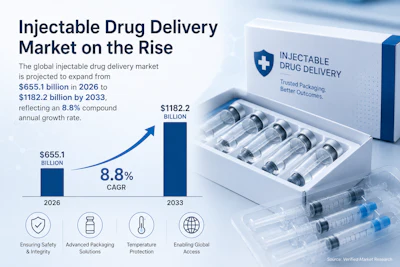
- The global injectable drug delivery market is projected to expand from $655.1 billion in 2026 to $1182.2 billion by 2033, reflecting an 8.8% compound annual growth rate.
- Wearable injectors are poised to be the fastest-growing device segment, facilitating the transition of large-volume biologic drug administration from clinical infusion centers to patients’ homes.
- While North America currently holds the largest market share, Europe is forecast to be the fastest-growing region, supported by favorable regulatory and reimbursement policies for self-administered therapies.
The global market for injectable drug delivery is undergoing a significant expansion, driven by the dual pressures of rising chronic disease rates and a structural shift toward home-based healthcare. According to a recent market analysis by Persistence Market Research, the sector is expected to grow to $1182.2 billion by 2033. This growth presents strategic challenges and opportunities for pharmaceutical companies, device manufacturers, and supply chain partners as patient care moves increasingly from the clinic to the home.
Chronic Disease and Biologics Fueling Demand
A primary driver of market growth is the increasing incidence of chronic conditions that require long-term treatment. The report notes that diseases such as diabetes, cancer, and autoimmune disorders are creating sustained demand for injectable therapies. For example, the International Diabetes Federation reports that more than 537 million adults globally live with diabetes, a key patient population for devices like insulin pens and prefilled syringes.
In parallel, the expanding pipeline of biologic drugs, particularly in oncology and immunology, is reinforcing the need for advanced delivery systems. Many of these complex therapies cannot be administered orally and require subcutaneous or intravenous injection, making delivery technology a critical component of treatment success and commercial strategy.
Self-Administration Technologies Redefine Patient Care
The trend toward decentralizing healthcare to reduce costs and improve patient convenience is accelerating the adoption of self-injection technologies. This shift is creating strong demand for devices such as auto-injectors and wearable injectors that allow patients to manage their treatments independently.
While prefilled syringes remain the leading device type and account for approximately 38% of total market revenue, wearable injectors are projected to be the fastest-growing segment. These devices enable the subcutaneous delivery of large-volume drugs that would have previously required lengthy visits to an infusion center. This technology is increasingly integrated into the commercialization strategies for new biologic therapies, supported by reimbursement policies in North America and Europe that favor home administration. The integration of digital health features, such as Bluetooth connectivity for adherence monitoring, further enhances the value proposition for providers and payers.
Regional Markets and Strategic Imperatives
From a geographic perspective, North America currently represents the largest market, accounting for about 38% of global revenue due to high healthcare spending and rapid adoption of biologics. However, Europe is projected to be the fastest-growing regional market through 2033, benefiting from harmonized regulatory frameworks and strong reimbursement systems for self-administered treatments. Meanwhile, the Asia Pacific region, particularly China and India, presents a significant expansion opportunity driven by modernizing healthcare infrastructure and growing patient populations.
Leading industry players, including Becton Dickinson, West Pharmaceutical Services, and Baxter International, are focusing their business strategies on patient-centric device innovation, manufacturing expansion, and digital platform integration. Success in this evolving market will likely depend on the ability to form strategic partnerships with pharmaceutical companies and develop delivery systems that improve treatment adherence, safety, and convenience for a growing population of patients managing chronic conditions at home.