Liz Cuneo: Yeah, we write a lot about sustainability and human factors, and much of it comes down to balance—bringing all those elements together to create both a strong product and a compelling story.
Do you see more of an emphasis on sustainability overall in the segment—for medical devices and pharma? And is it getting easier to be sustainable? I know there are always roadblocks, but would you say the industry is moving forward?
Andy Burns: Yeah, I think it is. Certainly in Europe, sustainability is seen alongside other factors as a competitive advantage, not just an obligation. The days of being able to put anything into the environment without consequence are gone—we have to be much more mindful. I was at a sustainability conference recently where these topics were front of mind from both a government and big pharma perspective, as well as across the broader market.
Environmental sustainability criteria are definitely becoming more important. From a client perspective, companies increasingly want to work with partners that have progressive sustainability policies—not just in formulation, but in what they’re doing beyond the product itself. Obvious examples include installing solar panels on factory roofs to balance energy sources and increase the use of renewables. It’s becoming increasingly important, for sure.
Cuneo: It’s interesting you brought up solar panels. Sustainability really has so many pillars within a company—manufacturing and energy sources, propellants, and sustainable materials in packaging. It’s fascinating to see how many areas companies can address.
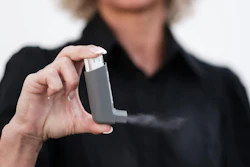
Burns: Yeah, absolutely. Recycling, for instance, is an area where the metered-dose inhaler (MDI) industry hasn’t fully capitalized yet, but there’s growing discussion around it. How do we ensure that the polymers and plastics we use can be repurposed—maybe not into pharmaceuticals again, but into other industrial applications? For example, how do we take actuators—the plastic part of an inhaler—and turn them into something like a chair? You don’t need pharmaceutical-grade integrity for that, but you can avoid single-use waste.
Cuneo: And you’re talking about the inhaler itself, right?
Burns: Yes. An inhaler has two main parts: the aerosol component and the actuator, which is the plastic housing. The aerosol part includes stainless steel, aluminum, and some elastomeric components, while the actuator is made of various grades of plastic. Because there are so many different materials, it’s not easy to recycle them by simply throwing everything into one bin. It requires more effort and thought about what that part of the value chain should look like. I don’t think we’ve fully figured it out yet, but it will become an increasingly important part of the conversation.
Cuneo: That makes sense. You mentioned recycling programs—maybe something like a takeback program?
Burns: Exactly. Getting people on board with returning products is one challenge, and then processing those materials is another. But it’s definitely an interesting direction.
Cuneo: Are there other sustainable initiatives you’re working on in the injectable or dermal space?
Burns: I’m probably not the best person to speak on that since I’m 100% focused on MDIs. But as a company, we’re relatively new—we’ve only existed since 2020. We were divested from 3M and then merged with another divested Pfizer business to form the company you see today. So we’re still developing many of these policies as we grow.
From an MDI perspective, though, reducing the carbon footprint of an inhaler by 90% is a huge step for us. That’s where our focus is right now. Once we achieve that, we’ll expand into other areas. We’re absolutely committed to our sustainability journey—it just happens that the green transition is where we’ll see the biggest gains in the short term.
Cuneo: That’s great. Can you share what percentage of inhalers you manufacture globally? And as someone who uses an inhaler myself—would mine have a green propellant? How would I know?
Burns: It’s unlikely your inhaler has a green propellant right now. Only one has been approved in the UK, and there haven’t been broader approvals yet. Ask me again in five years, and I’d hope the answer would be yes.
Most inhalers today—like Ventolin—use current-generation propellants. As for our market share, we’re probably in the 5–10% range. From a commercial perspective, we want to grow that by helping other companies bring products to market while also serving as their contract manufacturer.
At the same time, being responsible environmental stewards is hugely important to us.
Cuneo: Definitely. You’re doing great work in that space—thank you.
Burns: No problem at all.