Low-global warming potential propellants are replacing traditional HFC propellants in inhalers to reduce their significant environmental impact. This transition requires complete product redevelopment and balances climate goals with patient needs and regulatory requirements.
- Inhaler propellants account for up to 95% of an MDI's formulation and contribute 3% of global emissions
- The Kigali Amendment mandates a global phase-down of HFCs, with Europe requiring 80% propellant volume reduction by 2027-2029
- Low-GWP propellants have different physical and chemical properties, requiring full product redevelopment rather than simple substitution
- Only one product has been approved globally so far, with widespread adoption expected over the next decade
- Low-GWP propellants could reduce inhaler carbon footprint by up to 90%, making them the biggest lever for sustainability
Key takeaways:
· A new generation of low–global warming potential (GWP) propellants is emerging.
· Low-GWP propellants require full product redevelopment.
· Success depends on balancing climate goals with patient needs and business strategy.
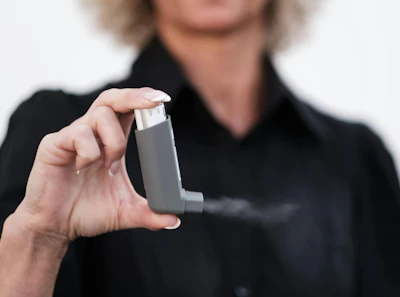
As sustainability pressures intensify across healthcare, one often-overlooked component is taking center stage: the propellant inside metered dose inhalers (MDIs). While invisible to patients, these propellants account for up to 95% of an inhaler’s formulation—and a significant share of its environmental footprint.
Now, a new generation of low-global warming potential (GWP) propellants is emerging, prompting a complex industry-wide transition that touches formulation, manufacturing, regulation, and packaging.
Andy Burns, Vice President of Business Development for MDI at Kindeva, a drug delivery CDMO that specializes in injectable, inhalation, and dermal products, explains what’s driving the shift, and what it means for pharma and packaging stakeholders.
Why Propellants Matter
“In a metered dose inhaler, the propellant is essentially the engine,” says Burns. “It’s what turns the API into a mist that can be delivered deep into the lungs.”
Historically, inhalers relied on chlorofluorocarbons (CFCs), which were phased out under the 1987 Montreal Protocol due to ozone depletion. They were replaced with hydrofluorocarbons (HFCs), which solved the ozone issue, but introduced a new challenge.
“HFCs don’t damage the ozone layer, but they are potent greenhouse gases,” Burns says. “So now we’re going through another transition, this time driven by climate impact.”
Since inhalation devices contribute 3% of global emissions, it became a problem that needed a solution. That transition is being formalized through the Kigali Amendment to the Montreal Protocol, which calls for a global phase-down of HFCs (and eventual phase out) in favor of alternative propellants with significantly lower GWP.
A Global Shift—But Not a Uniform One
While the direction is clear, the pace of change varies widely by region.,
Europe is leading the charge, with F-gas regulations set to reduce allowable propellant volumes by roughly 80% between 2027 and 2029. In contrast, the U.S. currently lacks a unified federal mandate, though states like California are moving ahead with phase-out timelines in the early 2030s.
“It’s a mixed bag globally,” Burns notes. “Some regions are moving quickly, others are still evaluating how to implement the transition.”
For packaging and device manufacturers serving global markets, that variability adds another layer of complexity.
Not a Simple Swap: Implications for Formulation and Manufacturing
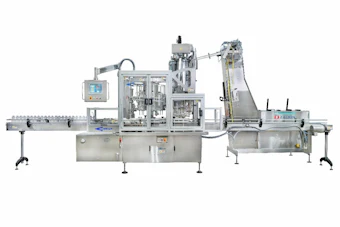
Yet another complexity is the manufacturing. Despite the appeal of “drop-in” sustainability solutions, transitioning to low-GWP propellants is anything but straightforward.
“The new propellants have different physical and chemical properties, density being one example, which impacts the formulation,” says Burns. “This isn’t plug-and-play. You’re effectively redeveloping the product as if it were new.”
This has cascading implications including a formulation redesign to ensure consistent drug delivery, device compatibility considerations wince the new propellant has different characteristics, and finally regulatory uncertainty, as agencies like the FDA and EMA refine their expectations.
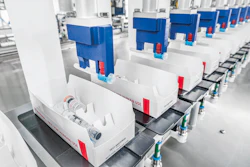
From a packaging standpoint, while the core MDI architecture remains familiar, subtle changes in formulation behavior may influence container closure systems, valve performance, and long-term stability considerations.
The Business Case: More Than Sustainability
While environmental impact is a key driver, Burns emphasizes that sustainability alone doesn’t justify the investment.
“This is really a Venn diagram,” he says. “You have sustainability, patient needs, regulatory compliance, and commercial opportunity, all overlapping.”
In the pharmaceutical space, patient care remains the top priority. MDIs remain the preferred option for many asthma and COPD patients, and ensuring access to these devices—rather than forcing a switch to alternative formats—is a major consideration.
At the same time, companies that move early in adopting low-GWP propellants may gain a competitive edge.
“This transition is an opportunity for us to lead the market, just like the shift away from CFCs in the 1990s,” Burns adds.
While propellants are currently the biggest lever for reducing inhaler carbon footprint—potentially by as much as 90%—they’re only part of the broader sustainability equation.
“There are multiple pillars,” says Burns. “Energy use, materials, packaging, and end-of-life considerations all play a role.”
And in today’s market, sustainability is more top of mind than ever before. According to Burns, their clients want to work with a company that has a progressive sustainability program that reaches beyond the packaging. Part of the program can include alternative energy sources, solar panels, and a company’s focus on the environment.
One emerging area of focus is recyclability. MDIs are composed of multiple materials—aluminum canisters, stainless steel components, plastics, and elastomers—making them difficult to recycle through conventional streams.
“There’s growing interest in takeback programs and material repurposing,” Burns says. “For example, how do we reuse plastic components in non-pharmaceutical applications?”
For packaging professionals, this raises important questions around design for disassembly, material selection, and circularity strategies.
Where the Industry Stands Today
Despite growing momentum, green propellant adoption is still in its early stages.
“Right now, only one product has been approved in the UK, and there are no widespread approvals globally,” Burns notes. “Most inhalers on the market today still use traditional HFC propellants.”
That’s expected to change over the next decade as regulatory pressure increase, and more products move through development pipelines.
“We’re at the beginning of a major shift,” Burns says. “The companies that invest now, both in technology and sustainability, will be the ones shaping the future of inhalation therapy.”