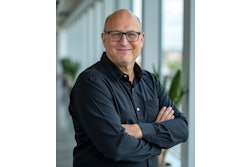
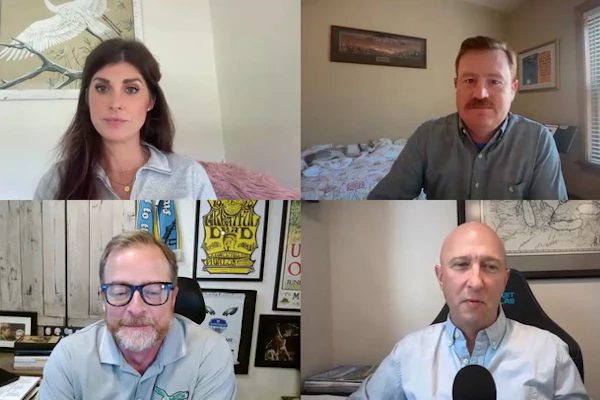
Medical device packaging has evolved far beyond its traditional role of simply protecting a product. Today, it sits at the intersection of patient safety, regulatory compliance, sustainability, and user experience. Few understand that balance better than Paul Marshall, Global Director of Packaging and Labeling for Zimmer Biomet, a global medical technology leader offering innovative implants and digital technologies across all stages of the patient journey.
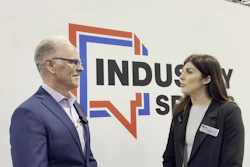
Liz Cuneo: Thank you, Paul for meeting with me today. Let’s get started. Can you tell me about your background, your current role, and the path that led you into packaging engineering and development?
Paul Marshall: Sure. My name is Paul Marshall and I’m the Global Director of Packaging and Labeling for Zimmer Biomet. I’ve been with Zimmer Biomet for about eight years and am based in Warsaw, Indiana.
My path into packaging engineering was an interesting one. I didn’t start out in packaging. I graduated with a mechanical engineering degree and began my career in that field, doing contract work that included packaging projects. I found packaging particularly interesting.
My younger sister was attending Michigan State at the time and mentioned their packaging program. That sparked my curiosity, and I eventually pursued a second degree in packaging from Michigan State. Since then, my career has been in packaging across several industries before I landed in medical devices.
Cuneo: How long have you been in the medical device space, and was that always your goal?
Marshall: I worked in several industries before medical devices, including aerospace, retail, and semiconductor. I eventually transitioned into medical devices and have been in this space for about 24 years. Once I found my niche, I stayed with it.
Cuneo: On LinkedIn, you describe yourself as a passionate advocate for medical device packaging, focused on innovative and compliant solutions that drive patient safety. Is that your primary focus?
Marshall: Absolutely. I consider myself an innovative risk taker, and innovation isn’t always heavily emphasized in this space. That said, patient safety is always the top priority for any medical device company.
For me, innovation means delivering better packaging systems and solutions that enhance the user experience and help facilitate the use of the device. That’s a main driver for me—balancing innovation with compliance and safety.
Cuneo: How does sustainability factor into your work?
Marshall: As a global company, we see stronger sustainability initiatives in Europe, which influence our global strategy. Sustainability is certainly part of our focus in medical devices. That said, it’s a balance. Implementing new or recycled materials is challenging because of regulatory requirements and validation processes. There’s significant work involved in gaining approvals.
In the near term, our primary focus is reducing material usage—streamlining packaging, making it smaller, and thinning materials where possible. Alternative materials often require longer timelines, so we’re taking both short-term and long-term approaches.
Cuneo: It sounds like there’s a balance between sustainability, regulations, and patient safety.
Marshall: Exactly. Patient safety and compliance always come first.
Cuneo: What do you see as major opportunities for innovation in medical packaging over the next decade?
Marshall: One key opportunity is greater direct engagement with end users. In my experience, packaging has often been somewhat removed from direct customer interaction. Medical device manufacturers do an excellent job collecting voice-of-customer data for the product itself, but packaging plays a critical role as well.
Packaging serves many stakeholders—from supply chain and manufacturing to distribution, hospital staff, nurses, and surgeons. Collecting voice-of-customer input from all those groups can drive meaningful innovation and improve the overall experience for everyone who interacts with the packaging.
There’s often a disconnect between meeting technical requirements and optimizing usability. If packaging maintains sterility, survives distribution, supports shelf life, and enables aseptic transfer, it checks the regulatory boxes. But that doesn’t necessarily mean it’s optimized for usability. There’s significant opportunity to improve how packaging facilitates product use.
Cuneo: How do you see AI, machine learning, and data analytics influencing your work?
Marshall: We’re actively exploring AI solutions that allow engineers to focus more on engineering. AI can help eliminate redundant tasks, such as label verification and content review, and reduce human error.
AI will likely play a larger role than we fully realize today. In packaging engineering, there’s opportunity in predictive modeling. FEA analysis has been used for decades, but integrating AI could make those models more predictive.
Packaging is still very hands-on, so I don’t see AI replacing engineers. Instead, it will complement their work.
Cuneo: What are some of the biggest challenges in labeling?
Marshall: Labeling is highly complex and less harmonized globally than packaging. Packaging standards are largely aligned around ISO requirements, but labeling often varies by country. There are differences in symbology, UDI requirements, and regulatory nuances.
Reviewing thousands of labels manually has limitations. AI could help translate requirements into label content and verify compliance more efficiently.
Cuneo: Do you see a future for digital labeling?
Marshall: We’re currently exploring direct print on packaging to eliminate separate labels while maintaining required content. Fully digital labeling presents challenges because customers must have the capability to access electronic information. Even 2D barcode adoption isn’t universal yet, so widespread digital solutions may still be some time away.
Patient implant cards are a similar example—they could be digital, but not everyone has reliable electronic access, so paper remains necessary.
Cuneo: What has changed most in the industry over the past 20 years?
Marshall: Regulatory requirements for packaging and labeling have become much more stringent. There’s increased scrutiny around DHF documentation, user validations, and EU MDR compliance.
One thing that has surprised me is that testing methodologies haven’t evolved as much as I expected. Many test methods have been in place for decades. With advances in AI and predictive modeling, I would have anticipated more innovation in testing approaches—for example, predictive tools that could supplement or reduce reliance on traditional vibration testing.
Cuneo: Finally, what advice would you give to young engineers entering medical device packaging?
Marshall: Don’t be afraid to ask questions or challenge the status quo. Many processes exist simply because they’ve always been done that way. Bringing a fresh perspective is valuable.
Leverage your technical background. The tools you’re comfortable with may have applications others haven’t considered.
Build a strong professional network. Engaging with peers across companies can influence harmonized approaches and shape industry standards.
And don’t be afraid to fail in development. Failure is part of learning and growth. Even though setbacks near product launch are difficult, those experiences build stronger engineers and better processes.
Cuneo: I’ve noticed the strong collaboration within the medical device community. It’s encouraging to see.
Marshall: It really is.
Cuneo: Thank you for your time.
Marshall: My pleasure. Great talking with you.