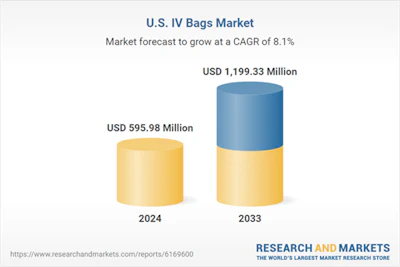
The U.S. IV bags market is expected to grow from $596 million in 2024 to $1.19 billion by 2033, driven by rising chronic disease rates, expanding outpatient care, and a shift toward safer non-PVC materials.
- Market size projected to reach $1.19 billion by 2033, nearly doubling from $596 million in 2024
- Chronic disease prevalence affects approximately 129 million U.S. citizens, driving sustained demand for IV therapies
- IV hydration spa market growing from $1.35 billion in 2025 to $2.56 billion by 2033 as part of wellness trend
- Hospitals increasingly prefer non-PVC alternatives due to microplastic contamination concerns and regulatory scrutiny on phthalates
- Key challenges include supply chain constraints and stringent FDA compliance requirements affecting production costs
Key Takeaways:
· The United States IV bags market is expected to grow substantially, increasing from $595.98 million in 2024 to $1.19 billion in 2033.
· IV hydration spas are a growing segment of the booming medical spa market and contributing to overall growth in the IV bag segment.
· Phthalates and plasticizers migrating out of PVC products have caused regulatory authorities to tighten scrutiny, while hospitals increasingly prefer non-PVC alternatives.
IV bags are used to deliver fluids, medications, nutrients, and blood products directly into a patient's bloodstream. They are used for a plethora of occasions like treating severe dehydration, supporting blood loss, and administering long-term treatments like chemotherapy or antibiotics. ResearchAndMarkets.com announces research into the segment in a report titled, the "United States IV Bags Market Report by Material Type, Capacity, Chamber Type, States and Company Analysis, 2025-2033."
According to this research, the U.S. IV bags market is expected to grow substantially, increasing from $595.98 million in 2024 to $1.19 billion in 2033. The major drivers for this growth are the rise in healthcare requirements, technological improvements in IV bags, and the growing need for intravenous treatments.
Growth Driver 1: Increasing Incidence of Chronic Diseases
The key growth driver for the U.S. IV bag segment is increasing chronic disease. As defined by the U.S. Department of Health and Human Services, approximately 129 million U.S. citizens have at least one major chronic disease (heart disease, cancer, diabetes, obesity, kidney disease). An aging population further drives demand, as well as use of high-tech therapies like parenteral nutrition and biologic drug infusions.
Growth Driver 2: Outpatient and Homecare Market Expansion
Outpatient treatment and homecare services expansion is driving IV bag demand in the U.S., according to Research & Markets’ report. Patients are increasingly being treated with infusion therapies at home, facilitated by advancements in portable medical equipment and healthcare services.
Another growth driver is the increasingly popular IV hydration spas, part of the booming medical spa market. GrandView Research estimates that the North America IV hydration therapy market size was estimated at $1.35 billion in 2025 and is projected to reach $2.56 billion by 2033. The market is primarily driven by heightened consumer emphasis on proactive health management, the shift toward preventive wellness, and increasing demand for convenient, on-demand healthcare services.
Health Concerns Push the Shift Toward Non-PVC IV Bags
With widening use and rising familiarity with IV bags in outpatient and homecare seatings, physicians and patients are increasingly aware of some of the associated health risks.
Modern research shows that microplastics are present in IV infusions used in medical treatments. The research, published in the ACS partner journal Environment & Health, found that, after filtering, infusion solutions from PP bottles contain thousands of plastic particles. “The scientists estimate that a single 250 mL IV infusion bottle could introduce thousands of microplastics — ranging from 1 to 62 micrometers in length — directly into a patient’s bloodstream.”
Growing and changing the overall U.S. IV bag market is the shift from standard PVC-based IV bags to safer, more environmentally friendly materials such as polyethylene and polypropylene. Phthalates and plasticizers migrating out of PVC products have caused regulatory authorities to tighten scrutiny, while hospitals increasingly prefer non-PVC alternatives. Non-PVC IV bags minimize the risk of contamination and drug interaction, rendering them safer for patients while supporting sustainability efforts.
Opportunities and Challenges
Challenge 1: Supply Chain and Raw Material Constraints
Raw material reliance and supply chain disruptions are one of the biggest challenges faced by the IV bags market, according to Research & Markets. The majority of IV bags are made out of polymers, and changes in raw material availability or cost may lead to production bottlenecks. The COVID-19 pandemic proved weaknesses in the global supply chains, resulting in shortfalls of critical medical supplies, including IV bags. Balancing cost with consistent supply continues to be a significant challenge for manufacturers.
Challenge 2: Stringent Regulatory Compliance
The U.S. healthcare industry imposes stringent regulatory requirements to guarantee product quality and safety. IV bags, due to their direct use in patient treatment, are subject to FDA approvals and stringent quality testing. This drives higher costs of compliance and reduces the speed of new product launches. Suppliers must make ongoing investments in research, testing, and certification, which can be capital hungry.
Opportunity 1: Portable Solutions
Because of the various locations IV bags are being used in (like home care and med spas), IV bag companies are emphasizing convenient and portable solutions. The focus on value-based care and convenience-oriented delivery of health care will further drive IV bag adoption beyond the confines of hospital care.
Opportunity 2: Environmentally Friendly Options
While there are available options on the market already, there is much opportunity for environmentally friendly alternative materials. As stated, hospitals increasingly prefer non-PVC alternatives as they minimize the risk of contamination and drug interaction, rendering them safer for patients while supporting sustainability efforts.