Medline implemented packaging automation using Ranpak's right-sizing and case erector systems to eliminate manual pack-out bottlenecks, improving cycle time by over 50% while reducing packaging materials and handling more than 10,000 cartons daily.
- Medline reduced box sizes from 14 different sizes to just 4 tray sizes, covering a wide range of products
- Cycle time improved by more than 50% while maintaining next-day delivery capability
- The automated system handles over 10,000 cartons per day with consistent quality standards
- Eliminated air pillows and reduced corrugated usage, creating 30-40% shipping volume reductions with logistics partners
- Integration of picking, right-sizing, and case erection systems created cascading efficiency gains across end-to-end operations
Key Takeaways:
- Medline turned to Ranpak Holdings Corp. to eliminate a growing bottleneck at pack-out.
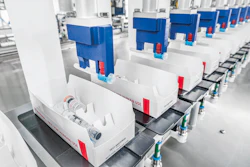
- The company now picks directly into a tray that’s automatically formed, then sends it downstream where it’s lidded and completed, eliminating the manual pack-out step.
- The automation flow was able to uphold a consistent standard for each box, as well as optimizing volume and material usage to promote high-quality packaging for each end-customer.
Medline Industries, a large provider of medical-surgical products and supply chain solutions serving all points of care, is turning to packaging automation to streamline its operations, reduce material use, and keep pace with growing order volumes.
“We’re the biggest medical company you’ve probably never heard of,” says Daniel Schwartz, vice president of engineering, operations at Medline, noting the company’s portfolio of more than 300,000 products used across hospitals, nursing homes, and physician offices. “Our mission is to make healthcare run better.”
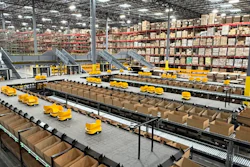
To do that, Medline turned to Ranpak Holdings Corp., a global leader in sustainable packaging automation technology and solutions, to eliminate a growing bottleneck at pack-out. Medline had already invested in high-speed picking using an AutoStore AS/RS goods-to-person system, but downstream processes lagged. “We were picking at a pretty high volume throughput but then sending items in totes to a manual packing area,” says Schwartz. “That created a bottleneck.”
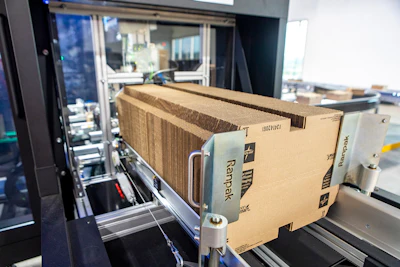
Enter Ranpak’s right-sizing machine, Cut’it!™ EVO, and Form’it!™ case erector – two automated packaging systems designed to modernize end-of-line packaging. Together, they provide a scalable solution that optimizes throughput, improves labor efficiency, and enhances sustainability across Medline’s high-volume outbound operations.
The Cut’it!™ EVO advanced automated right-sizing system optimizes the height of shipping boxes after items have been picked and packed to minimize void and automatically closes and seals them. While Form’it!™ automated case erector forms and seals corrugated boxes from flat blanks to deliver consistent, ready-to-pack cartons at high speed.
A significant share of Medline’s products now move through these automated packaging systems, especially the smaller, everyday items such as gloves, syringes, and personal care products. “When we’re selling less than case—which is a majority of the line volume—we’re running those products through this system,” Schwartz explains.
The new system eliminates the bottleneck issue by changing the line flow entirely. “We now pick directly into a tray that’s automatically formed, then send it downstream where it’s lidded and completed,” explains Schwartz. “We’ve eliminated that manual pack-out step.”
While automating pack out was the main goal of the project, Schwartz says that they’re seeing other benefits. For instance, the company can now handle more than 10,000 cartons per day while maintaining operational flexibility to support future needs. Additionally, the cycle time of an order improved by more than 50%.
Reducing Materials and Improving Efficiency
The shift to right-sized packaging has also delivered material and sustainability gains.
“We got rid of the air pillows we used before,” says Schwartz. “You don’t need that with this solution because it eliminates empty space and prevents items from shifting.”
At the same time, Medline has dramatically simplified its packaging footprint. “We used to have about 14 different box sizes,” he says. “Now we’re down to four tray sizes that cover a wide range of products.”
Finally, by replacing manual box erection, the automation flow was able to uphold a consistent standard for each box, as well as optimizing volume and material usage to promote high-quality packaging for each end customer.
That reduction in corrugated use, combined with smaller package sizes, is driving downstream logistics benefits as well. “We’re more cubically efficient,” Schwartz notes. “That means fewer trailers going out, especially with partners like FedEx.”
Automation as a System, not a Point Solution
For Ranpak, the project highlights a broader industry challenge: aligning packaging automation with upstream and downstream systems.
“You can’t look at automation as a pocket of efficiency,” says Bryan Boatner, Ranpak’s chief revenue officer. “You have to analyze how it fits into the overall flow.”
That’s especially true as more warehouses adopt automated picking systems. “Companies are gaining efficiency in picking but then hitting a manual pack-out process and stalling,” says Boatner. “Integration across systems is critical.”
Ranpak’s approach combines automation with software-driven rightsizing. “We use software tools to determine the ideal case or tray footprint, and then dynamically adjust packaging to match how items are packed,” Boatner says. “That reduces volume and enhances sustainability.”
Managing Change and Scaling Results
As with any automation project, implementation required careful coordination.
“The biggest challenge was integration—making sure all the systems were talking to each other,” says Medline’s Schwartz.
The team also made incremental improvements to simplify operations. One example: automating barcode printing directly onto trays. “It sounds like a small step, but it made change management much easier,” Schwartz says.
And with Medline’s continued growth, labor has been redeployed rather than reduced. “We didn’t eliminate roles, we moved people to other parts of the operation,” says Schwartz.
But, the most significant outcome has been improved speed.
“The biggest benefit is cycle time,” says Schwartz. “It allows us to hit our cutoff times and maintain next-day delivery for the majority of our orders.”
That capability is critical in healthcare distribution, where speed and reliability are essential. Any type of automation can improve overall system efficiency.
“There’s a cascading effect,” Boatner says. “You’re reducing labor, improving the customer experience, and cutting shipping volume, often by 30 to 40%.”
Schwartz adds that companies should take a holistic view when evaluating automation. “Don’t just look at averages, look at peak demand and variability. And think about the full end-to-end system. That’s where the real value comes from.”