STRAP is an emerging solvent-based recycling technology that selectively separates individual polymers from complex multilayer healthcare plastics without chemically breaking them down, offering a promising solution for medical materials that are difficult to recycle through conventional methods.
- What STRAP is: A solvent-targeted recovery and precipitation process that uses carefully chosen solvents to dissolve and separate individual polymers from mixed or multilayer plastics through shredding, dissolution, filtration, precipitation, and extrusion.
- Why it matters: Healthcare plastics like sterile packaging, bioprocess bags, and pigmented materials are difficult to recycle through conventional systems due to multiple polymer layers, additives, and design requirements for sterility and safety.
- Environmental impact: STRAP generates approximately 60% fewer greenhouse gas emissions than producing virgin plastics at comparable estimated production costs.
- Current progress: Research began in 2020 at the University of Wisconsin-Madison, with a pilot plant at Michigan Technological University expected to begin operation in 2027.
- Real-world applications: Researchers successfully recovered polyethylene and ethylene vinyl alcohol from multilayer films with mechanical properties comparable to virgin materials, and are investigating methods to remove contaminants and pigments.
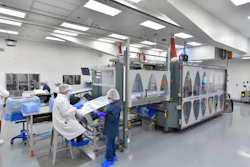
Healthcare plastics can present unique recycling challenges. Many products rely on multiple polymer layers, pigments, labels, adhesives, and other materials to meet strict requirements for sterility, safety, and performance. Those same characteristics, however, can make the materials difficult to process through conventional recycling systems.
At the Healthcare Plastics Recycling Council’s (HPRC) Fall Full Council Meeting, George Huber of the University of Wisconsin-Madison introduced members to Solvent-Targeted Recovery and Precipitation (STRAP), an emerging solvent-based recycling approach designed to recover individual polymers from complex plastic waste. The presentation offered HPRC members an opportunity to explore how new recycling technologies could potentially address some healthcare plastic streams that have historically been difficult to recycle.
Why Healthcare Plastics Present a Challenge
Plastics play an essential role in healthcare, helping protect products, prevent contamination and support safe delivery of care. As HPRC works to improve the recyclability and circularity of these materials, one persistent challenge is determining how to recover plastics that were designed for performance rather than end-of-life separation.
Some of these difficult to recycle materials include multilayer sterile packaging and single-use bioprocess bags containing different polymers, pigmented materials such as blue sterilization wrap, films with labels and adhesives, and mixed streams containing multiple resins and additives.
These materials illustrate why expanding healthcare plastics recycling will likely require a range of solutions. Mechanical recycling remains an important pathway, but emerging approaches may provide additional options for materials that are difficult to separate or process using conventional methods.
What is STRAP?
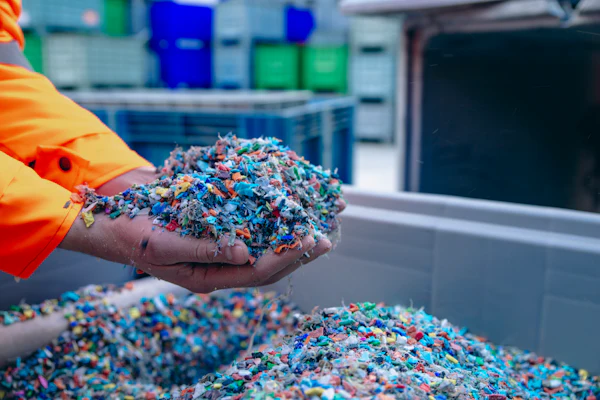
STRAP uses solvents to selectively dissolve and separate individual polymers from mixed or multilayer plastics. At a high level, the process involves shredding, dissolution, filtration, precipitation, and extrusion, without chemically breaking down the polymers. By targeting a particular polymer for dissolution in a carefully chosen solvent, the process can separate materials that would otherwise be difficult to recover from one another.
The technology is being developed through research at the University of Wisconsin-Madison that was initiated by the Center for the Chemical Upcycling of Waste Plastics (CUWP), a multi-university research center focused on developing chemical pathways for transforming waste plastics into higher-value materials.
Research presented to HPRC demonstrated several applications with potential relevance to healthcare. In one example, researchers used STRAP to separately recover polyethylene (PE) and ethylene vinyl alcohol (EVOH) from multilayer single-use technology film. Testing indicated that mechanical properties of the recovered PE films were comparable to cast LDPE films.
The presentation also highlighted work involving contaminants and pigments. Researchers used filtration to remove paper and other insoluble impurities from post-consumer shrink wrap and are investigating methods for capturing and removing pigments from plastics. While those results do not yet demonstrate a solution for every healthcare stream, they provide insight into how solvent-based recycling could address some of the characteristics that complicate healthcare plastics recycling today
What STRAP Could Mean for Healthcare Plastics
STRAP focuses on retaining the value of the materials in order to return them to the value chain, rather than disposing of them via landfill or incineration. These high-quality recycled resins then have the potential to replace virgin plastics in healthcare packaging.
That potential is particularly relevant for HPRC because successful healthcare plastics recycling requires more than collecting material. Recovered plastics also need viable processing pathways, sufficient material quality, and end markets capable of putting those resources back to productive use. Notably, also has substantial promise to lower the environmental impact of plastics use, with estimates indicating that the process generates about 60% fewer greenhouse gas emissions than producing virgin plastics at comparable estimated production costs.
Development of the STRAP technology began in 2020, and the research team is now working toward larger-scale validation, including a pilot plant at Michigan Technological University expected to begin operation in 2027.
The Role of Research and Collaboration in Advancing Plastics Recycling
No single solution will work for every healthcare plastic. Better design, effective collection and sorting, established recycling systems, and viable end markets all matter, and so does continued exploration of new technologies.
Research such as STRAP gives HPRC members another avenue to explore how to turn difficult to recycle materials into valuable feedstock.
By bringing together healthcare facilities, manufacturers, recyclers and researchers, HPRC can help test emerging approaches against real-world materials and challenges, helping the industry better understand where new recycling technologies can make a meaningful contribution to healthcare plastics circularity.
Allison Burditt is the Healthcare Plastics Recycling Council Marketing and Communications Director