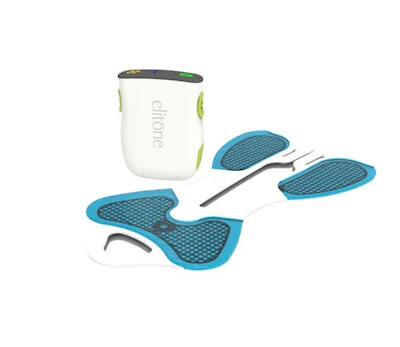
Elidah received FDA clearance for Elitone for Men, a non-invasive at-home neuromuscular therapy that treats urinary incontinence after prostate surgery. The device is available over-the-counter and covered by Medicare, launching for U.S. distribution in April 2026.
- Up to 80% of men experience urinary incontinence immediately after prostate surgery, a significant complication lacking active at-home treatment options.
- Elitone for Men uses neuromuscular stimulation to strengthen pelvic floor muscles with just 20 minutes daily treatment outside clinical settings.
- The device qualifies as both an over-the-counter product and Medicare-covered therapy, removing financial and accessibility barriers for patients.
- U.S. distribution begins April 2026 with preorders currently available through Elidah's platform.
- This represents a broader industry shift toward decentralized, at-home medical therapies that reduce clinical facility burden while empowering patient-led recovery.
Key Takeaways:
- Elidah has received FDA clearance for an over-the-counter (OTC) device, streamlining market access by removing prescription barriers for a common post-surgical condition.
- The product's eligibility for Medicare reimbursement is a critical financial driver, creating a viable pathway for patient adoption and revenue generation in a key demographic.
- The launch represents a broader industry trend toward decentralized, at-home medical therapies that reduce the burden on clinical facilities and empower patient-led recovery.
The market for post-surgical rehabilitation technologies is shifting toward home-based care, driven by patient demand for convenience and payer pressure to reduce clinical costs. In this landscape, Connecticut-based medical device company Elidah has announced it received Food and Drug Administration (FDA) clearance for Elitone for Men, a non-invasive, at-home therapy for urinary incontinence following prostate surgery.
The condition is a significant complication for a large patient population, with the company noting that up to 80% of men experience bladder leakage immediately after surgery. The newly cleared device utilizes neuromuscular stimulation to strengthen pelvic floor muscles, offering a structured rehabilitation option outside of a clinical setting. The therapy is administered via an external device for 20 minutes per day.
A key component of the company's commercialization strategy is the device's dual accessibility as both an over-the-counter product and a Medicare-covered therapy. This approach simultaneously lowers the barrier to entry for patients and provides a clear reimbursement channel, addressing two major hurdles in the medical device market. "Recovery improves with active rehabilitation, especially in the early weeks after surgery," says Dr. Joseph Renzulli, a urologist at Yale Medicine, in a statement. "Elitone for Men delivers structured at-home therapy that helps patients regain continence and get back to normal faster."
The clearance positions Elidah to compete in a market where patients have traditionally had few active, at-home treatment options. "For too long, men facing urinary incontinence after prostate surgery have had limited options to actively improve their recovery, making it one of the most frustrating parts of the process," states Eric Kolb, co-founder of Elidah. He positioned the device as a solution that gives "patients a way to actively support their recovery, rather than waiting and hoping it improves."
Elitone for Men is currently available for preorder, with U.S. distribution expected to begin later in April 2026. The product joins Elidah's existing platform of non-invasive therapies for pelvic floor disorders, which includes solutions for women and other applications targeting symptoms of overactive bladder.