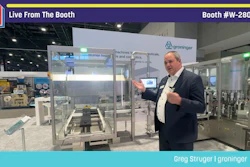
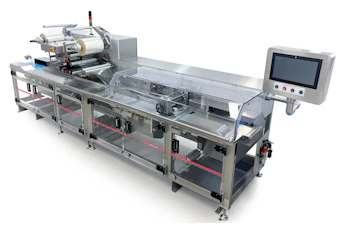
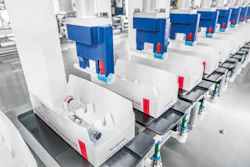
Hi, my name is Greg Struger from groninger. I'm one of the sales directors here at groninger USA, and I'm here to talk today about our plunger rod insertion labeling machine. So what this machine will basically do is take your syringe that's been filled, and then eventually apply the plunger rod as well as the label in this process.
So in this process here, we're actually taking from the tub, there's the individualized nest. The nest is basically carried down, and then we have a carrier assembly that picks them up row by row and puts them into our buffering system. This is the buffering system that will then feed into the plunger rod insertion and labeling machine.
As we walk around, we have our labeling system here and at this juncture, basically your syringe barrels come down here, your plunger rods come from this orientation. We have an inspection system to confirm that we have the needle shield or the lure lock on the actual syringe itself. At this point in time, when these two assemblies come together, that is an electronic clutch.
It holds this plunger rod by vacuum, and then if we see back here, if we look up high, the actual label impression is done by a belt system there. So we're rotating the syringe barrel, and we're monitoring the torque so that we do not over-torque the actual plunger rod itself.
As we slide over here, we'll actually look at how we apply the label. So we have the ability for a single roll configuration, we can do a dual roll configuration, or even an auto-splicing system.
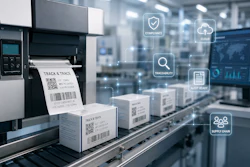
At this point in time, the labels will pass through coding capability. What we're showing here is a thermal transfer over printer, but we can also do laser coding as a capability. Camera systems, also barcode systems capability, and then the label will actually pass through.
We have a vacuum roller type of assembly, so the label actually dispenses onto the vacuum roller and applies the actual label, and then we have basically confirming that the label is on, is skewed. We have those capabilities as well, and ultimately, we feed out, and then this would go down to further downstream processing.