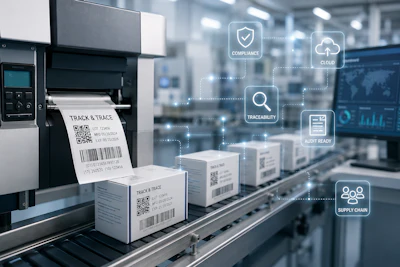
The global print label market is projected to grow from $50.6 billion in 2025 to $68.6 billion by 2034, driven by e-commerce expansion, adoption of smart labeling technologies like QR codes and RFID, and increasing regulatory requirements in food, beverage, and healthcare industries.
- Market size forecast: $68.6 billion by 2034, up from $50.6 billion in 2025, with a 3.40% compound annual growth rate
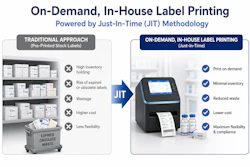
- Digital printing technologies reduce costs and turnaround times for short-run label production while enabling customization
- Smart labeling features including QR codes, RFID, and NFC technologies enhance inventory tracking, anti-counterfeit measures, and customer engagement
- Food and beverage, healthcare, and pharmaceutical sectors drive demand for labels meeting compliance, authentication, and supply chain traceability requirements
- Sustainability initiatives including recyclable and compostable materials are becoming competitive differentiators in the label industry
The global market for print labels is projected to reach $68.6 billion by 2034, up from $50.6 billion in 2025, according to a new report from ResearchAndMarkets.com. This growth, representing a 3.40% compound annual growth rate, is propelled by the rapid expansion of e-commerce, greater consumer demand for product information, and the increasing integration of smart labeling technologies across global supply chains.
As businesses adapt to shifting consumer behaviors and stricter regulations, labels have evolved from simple identifiers to critical components for logistics, brand communication, and regulatory compliance.
Compliance and Transparency Drive Sector-Specific Growth
The food and beverage industry remains the largest end-use segment, where labels are essential for communicating nutritional information, ingredients, allergen warnings, and expiration dates to meet both consumer expectations and regulatory mandates. Similarly, the healthcare and pharmaceutical sectors are significant contributors to market growth. In these industries, labels are critical for conveying dosage, composition, and safety precautions while also enabling product authentication and supply chain traceability. The report notes that anti-counterfeit features and serialization are becoming increasingly important for manufacturers and distributors.
Digital Printing and Smart Labels Enhance Efficiency
Technological advancements are transforming label production. Digital printing processes, including inkjet and electrophotography, offer lower setup costs and faster turnaround times compared to conventional methods. This allows companies to produce customizable, short-run labels more efficiently, responding quickly to market changes and demand for personalized products.
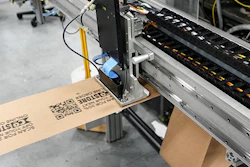
Beyond production, smart technologies are expanding the function of the label itself. The adoption of barcodes, QR codes, radio frequency identification (RFID), and near-field communication (NFC) technologies is improving supply chain operations. These features support enhanced inventory management, product tracking, theft prevention, and interactive customer experiences.
Sustainability Emerges as a Key Competitive Factor
Environmental considerations are increasingly shaping business strategy within the print label industry. Growing consumer and regulatory pressure is accelerating investment in sustainable solutions, including labels made from renewable, recyclable, or compostable materials. According to the report, manufacturers are focusing on developing linerless label formats and adopting resource-efficient printing processes to reduce waste and lower energy consumption. Companies that successfully integrate sustainability with performance and regulatory compliance are expected to gain a competitive advantage.
The Asia-Pacific region currently holds the largest share of the global market, driven by population growth and robust manufacturing sectors. Prominent market participants, including Avery Dennison Corporation, CCL Industries, and WestRock Company, are investing in digital technologies, smart labeling, and sustainable materials to meet evolving industry requirements.