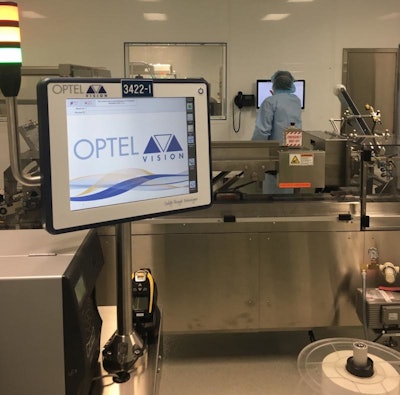
“We’re almost six months into the 2018 serialization deadlines in the United States, but what have pharmaceutical companies gained from such a large investment?” asked Ian Miller, Account Director at Optel, in his Interphex presentation, “Lessons Learned: An Industry Post-Serialization.”
While pharmaceutical companies likely won’t see large returns on their investment, they have a unique opportunity to start monitoring metrics such as OEE, product loss, and dwell time as a result of their serialization timestamps and can accumulate historical data which can help with OEE and continuous improvement metrics.
If a pharmaceutical company decides to look at this data, they may find really valuable pieces of information, such as patterns that can help anticipate customer purchasing behavior and future inventory demands. It can also help identify line inefficiencies and offer insight for where to add or change maintenance schedules. An organization should be open to evaluating this information in an effort for continuous improvement.
From an aggregation standpoint, a challenge has emerged, and that challenge is human intervention. Standard operating procedures need to be very strict for manual aggregation.
When serializing and aggregating, the system will kick out rejected product and humans will often recommission, when the product should ultimately be rejected and destroyed. Ejection stations need to be locked and there should be higher levels of alarms for critical errors to avoid confusion and derailing serialization and aggregation efforts.
Scott Comeau, Senior Construction Manager at IPS, suggested that while SOPs are critical, getting engineers and operators involved in the early stages of serialization and aggregation is an even more effective approach. Education is key to understanding and if the operators understand the detriment to the line, they’ll be less likely to interfere.