The global cap and closure market will grow from $85.3 billion in 2026 to $131.2 billion by 2036, driven by stricter EU and FDA regulations requiring sustainable, tamper-evident packaging and high-speed automation compatibility.
- Market projected to reach $131.2 billion by 2036 from $85.3 billion in 2026, representing a 4.4% compound annual growth rate
- EU Packaging and Packaging Waste Regulation (PPWR) takes effect August 2026, requiring recyclable and waste-reducing closure designs
- Plastic closures dominate with 60.7% material market share due to cost efficiency and lightweight properties, with heavy investment in recycled content
- Closures between 20-60 mm account for 52.3% of market, widely used across beverage, food, and pharmaceutical applications
- Competitive advantage shifts to companies investing in lightweight materials, automation-compatible designs, and mono-material solutions for efficiency and sustainability
Key Takeaways:
- The global cap and closure market is forecast to expand from $85.3 billion in 2026 to $131.2 billion by 2036, reflecting a 4.4% compound annual growth rate.
- New regulations, including the European Union's Packaging and Packaging Waste Regulation (PPWR) and U.S. FDA tamper-evident requirements, are compelling manufacturers to prioritize recyclable and secure packaging designs.
- Competitive advantage is shifting toward companies that invest in lightweight materials, automation-compatible closures, and mono-material solutions to meet efficiency and sustainability goals.
The global cap and closure industry is navigating a period of significant transition, driven by stricter regulations and evolving demands for both sustainability and high-speed production. A report from Future Market Insights (FMI) projects the market will grow to $131.2 billion by 2036, a substantial increase from its 2026 valuation of $85.3 billion. This growth is underpinned by rising consumption of packaged foods and beverages, alongside increasingly stringent safety standards in the pharmaceutical sector.
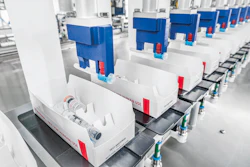
Manufacturers are now focusing on technological advancements to stay competitive, including optimizing closure geometry, engineering lightweight resins, and developing barrier-enhancing liner materials. The push toward automation on filling lines requires closures that can perform reliably at high speeds, while consumer and regulatory pressure is accelerating the adoption of recyclable, mono-material formats.
"The cap and closure market is transitioning toward a phase defined by automation compatibility, sustainability compliance, and application-specific engineering," says FMI analyst Ismail Sutaria. "Companies combining lightweight material innovation, regulatory alignment, and high-speed manufacturing efficiency are expected to strengthen market share during the forecast period."
Regulatory and Strategic Pressures
Two key regulatory frameworks are reshaping packaging design. The European Union's Packaging and Packaging Waste Regulation (PPWR), with provisions taking effect in August 2026, is intensifying the need for recyclable and waste-reducing closures. In the United States, the FDA's tamper-evident packaging requirements (21 CFR 211.132) continue to drive demand for certified safety systems, particularly in the pharmaceutical industry.
In response, brands and packaging manufacturers are prioritizing advanced closure systems. However, the industry faces persistent challenges, including resin price volatility, the high cost of sustainability compliance, and the technical complexity of material recycling. There is also constant pressure to reduce packaging weight without compromising seal integrity or product safety.
An analysis of the market reveals several key trends:
Plastic Dominance:
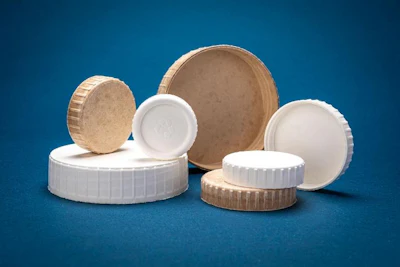
Plastic closures command 60.7% of the material market share due to their cost efficiency, design flexibility, and lightweight properties. Manufacturers are investing heavily in recycled content integration and advanced polymers to improve performance.
Key Diameter Range:
Closures between 20 and 60 mm account for 52.3% of the market, a reflection of their widespread use across beverage, food, and pharmaceutical applications.