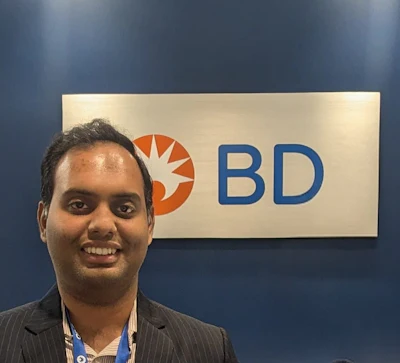
PMMI’s Inaugural CPG NexGen Award winners are delivering measurable advances in automation, productivity, sustainability, and packaging to transform how CPG products are made. One of these 10 rising innovators is Supradeep Vankayala, lead design engineer, R&D, Becton Dickinson. He has developed a PFAS-free, recyclable, and sterilizable packaging solution and helped prevent the rejection of approximately two million products. We reached out to him to get the scoop.
HCP: How long have you been in your current role?
Vankayala: One year in the current role (Lead Design Engineer), but for the past two years I have been in Senior Design Engineer role. I have been in the industry for eight years now. My six-year journey with the organization reflects a path of steady growth, commitment, and professional development. Beginning as a Design Engineer, advancing to Senior Design Engineer, and now contributing as a Lead Design Engineer, I have embraced every opportunity to learn, innovate, and create meaningful value through my work.
HCP: How did you end up in packaging? What school did you attend?
Vankayala: I hold a degree in Electrical Engineering, but from an early stage in my career, I was drawn to the idea of creating something tangible and seeing it come to life in the marketplace. The ability to transform an idea into a real product that people interact with every day fascinated me. Although I was initially unsure about pursuing a career in design, my perspective was heavily influenced by my father, who worked in the packaging industry. Growing up, he often took me to packaging conferences and industry events, where I was exposed to the world of innovation, creativity, and problem-solving. Seeing how a simple concept could evolve into a product on a store shelf sparked my curiosity and passion for packaging.
What inspired me most was the thought of designing something that would eventually be held and used by consumers. Knowing that a package I helped create could reach millions of people was both exciting and rewarding. Those experiences played a significant role in shaping my career aspirations, and I remain deeply grateful to my father for introducing me to the industry and encouraging my interest.
Determined to build a career in this field, I pursued a Post Graduate Diploma in Packaging from the Indian Institute of Packaging (IIP), one of India's premier institutions for packaging education and a recognized member of the global packaging community. I completed my studies at the Hyderabad Centre, where I gained a strong foundation in packaging technology, design, sustainability, and innovation. This educational journey provided the perfect platform to combine my engineering background with my passion for design and ultimately launch my career in packaging.
HCP: What do you enjoy most about your job?
Vankayala: What I enjoy most about my role in the medical device packaging industry is the opportunity to create solutions that directly contribute to patient safety and healthcare outcomes. Packaging in this industry goes far beyond containing a product. It plays a critical role in maintaining sterility, protecting device integrity, ensuring regulatory compliance, and enabling healthcare professionals to use products safely and effectively. Knowing that my work ultimately supports clinicians and patients gives me a strong sense of purpose.
I am particularly passionate about the journey of transforming an idea into a real-world solution. From the initial design concept to testing, validation, manufacturing, and market launch, I enjoy being involved in the entire development process. It is incredibly rewarding to see a packaging design evolve from a concept on a screen to a finished product that is used in hospitals and healthcare facilities around the world.
Another aspect I enjoy is the blend of engineering, innovation, and problem-solving that the profession offers. Every project presents unique challenges, whether it involves improving usability, enhancing sustainability, meeting regulatory requirements, optimizing manufacturing processes, or ensuring product protection throughout the supply chain. Finding solutions that balance all these requirements keeps the work engaging and continuously pushes me to learn and grow.
Perhaps the most fulfilling part is knowing that the packaging solutions I help develop can make a meaningful difference in healthcare. Seeing a product successfully reach the market and understanding that it plays a role in delivering safe and reliable medical care is a source of great pride. The ability to combine technical expertise, creativity, and innovation to create products that have a positive impact on people's lives is what I enjoy most about my job and what continues to motivate me every day.
HCP: PMMI just awarded you a 2026 CPG NexGen award for developing a PFAS-free, recyclable, and sterilizable packaging solution and helping prevent the rejection of approximately 2 million products. Tell me about that project and its impact on the company.
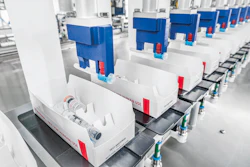
Vankayala: We have a Urine Kit product which has Urine Cup and Tubes within for Urine Culture and they are packed in a pouch. The pack is made up of Linear Low-Density Polyethylene (LLDPE), which is a single polymer which makes it easy to be sorted in the recycling stream and recycled. The polybag used is made PFAS (Perfluoroalkyl and Polyfluoroalkyl Substances) free.
PFAS is known as a forever chemical and poses hazards to human body and environment. Removal of this additive and having single polymer family based primary packaging makes it a sustainable solution.
This initiative helps position healthcare organizations to be better prepared for evolving sustainability and packaging regulations, including the requirements emerging from the Packaging and Packaging Waste Regulation (PPWR) framework. While regulations related to recycled content continue to evolve, our objective was not simply to meet current requirements but to stay ahead of future expectations and contribute positively to environmental stewardship.
What makes this project especially meaningful to me is the opportunity to demonstrate that sustainability and performance can go hand in hand. By developing a PFAS-free, mono-material packaging solution, we were able to maintain product protection while advancing our commitment to environmental responsibility, helping create a packaging solution that benefits customers, patients, and the planet alike.
Secondly, there was an issue with a product while shipping from one location to another where the initial recommendation was to scrap the affected products, which would have resulted in significant material waste and unnecessary costs.
By applying structured root cause analysis, conducting simulations, and collaborating closely with cross-functional stakeholders, we identified the true cause of the issue and demonstrated that the products did not require disposal. This prevented unnecessary scrap, avoided substantial costs, and eliminated material waste. The experience reinforced the value of data-driven decision-making, effective collaboration, and engineering problem-solving in delivering both business and sustainability benefits.
HCP: How has AI changed your day-to-day job? How welcoming of AI have you and/ or your company been?
Vankayala: AI has had a significant impact on my day-to-day work by helping improve productivity, accelerate decision-making, and reduce the time spent on routine tasks. In my role, AI assists with activities such as researching technical information, summarizing large documents, generating first drafts of reports and presentations, brainstorming ideas, and analyzing data more efficiently. This allows me to spend more time on higher-value activities such as problem-solving, innovation, stakeholder collaboration, and strategic thinking.
From an engineering and packaging perspective, AI has become a valuable tool for exploring design alternatives, supporting root cause investigations, identifying trends in data, and streamlining documentation.
Our company has been very welcoming of AI and recognizes its potential to enhance both efficiency and innovation. There is a strong focus on adopting AI responsibly, ensuring that it is used in a way that supports quality, compliance, data security, and regulatory requirements. The emphasis is on empowering employees with better tools so they can focus on creativity, critical thinking, and solving complex challenges.
Looking ahead, I believe AI will become as commonplace in the workplace as email or spreadsheets are today. Those who learn how to effectively collaborate with AI will be able to unlock new levels of productivity and innovation.
HCP: How do you see the pharma and medical device industry changing in the next 5-10 years?
Vankayala: Over the next 5 to 10 years, I believe the pharma and medical device industry will be shaped by patient-centric innovation, digital transformation, sustainability, and supply chain resilience. One of the most significant shifts will be the movement of healthcare beyond traditional clinical settings, with more care being delivered directly in patients' homes. Advances in diagnostics, remote monitoring, telehealth, and connected medical devices will enable patients to receive high-quality care from the comfort of their homes, reducing the need for frequent hospital visits while improving accessibility and convenience.
From a medical device and packaging perspective, sustainability will become an even greater priority. We will see increased adoption of recyclable materials, PFAS-free packaging solutions, and designs that support circular economy principles while maintaining product safety, sterility, and regulatory compliance. Organizations will also continue to innovate in response to evolving environmental regulations and sustainability expectations.
The industry will also experience greater integration of automation, artificial intelligence, and data analytics across product development, manufacturing, quality systems, and supply chain operations. These technologies will improve efficiency, enhance traceability, support faster decision-making, and help organizations respond more effectively to changing market needs.
Finally, recent global disruptions have highlighted the importance of resilient and agile supply chains. Companies will continue investing in supply chain visibility, risk management, regional manufacturing capabilities, and digital tools to ensure uninterrupted access to critical medicines and medical devices.
Overall, I see the future of the industry being driven by a combination of innovation, sustainability, digitalization, and a shift toward home-based healthcare, ultimately improving patient outcomes while making healthcare more accessible, efficient, and environmentally responsible.
HCP: What has the biggest impact on company packaging decisions? Consumer preference, regulations, sustainability pressures, or something else?
Vankayala: In the medical device and pharmaceutical industry, packaging decisions are typically driven by a combination of factors, but patient safety, regulatory compliance, and product protection remain the highest priorities. Packaging must ensure that products maintain their integrity, sterility, and performance throughout their shelf life and supply chain journey.
That said, the industry is evolving, and sustainability is becoming an increasingly important consideration. Companies are actively looking for ways to reduce environmental impact through recyclable materials, PFAS-free solutions, material optimization, and packaging designs that support circular economy principles, all while maintaining the rigorous performance standards required for healthcare products.
Consumer and customer expectations also play a growing role. Healthcare providers, patients, and procurement organizations are increasingly seeking products that are not only safe and effective but also environmentally responsible. As healthcare continues to extend beyond hospitals and into patients' homes, packaging must also become more user-friendly, intuitive, and convenient to support home-based care.
Ultimately, the most successful packaging solutions are those that balance safety, compliance, sustainability, usability, and cost-effectiveness. Rather than a single factor driving decisions, it is the ability to meet all these requirements simultaneously shapes packaging innovation in today's healthcare industry.