Medical device packaging is a regulated discipline where engineers apply ISO 11607 standards and rigorous validation to protect patients by ensuring sterile barrier integrity, process capability, and sustainable design throughout the product lifecycle.
- ISO 11607-1 and 11607-2 are the primary regulatory standards driving medical device packaging design, specifications, and validation activities
- Packaging engineers must evaluate seal strength testing, material characterization, transit simulation, aging studies, and sterile barrier integrity to qualify suppliers and ensure patient safety
- Sustainability in medical packaging has two dimensions: material sustainability (recyclable secondary/tertiary packaging) and process sustainability (designing for consistent manufacturing and operator usability)
- Innovations like adhesive-coated Tyvek and paperboard inserts improve aseptic presentation, reduce environmental impact, and enhance patient outcomes including reduced operating room noise and anxiety
- Packaging engineers should master ASTM D4169, ISO standards, control charts, and SPC while building cross-functional collaboration with R&D, quality, and regulatory teams
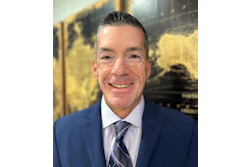
For Ashim Moona, packaging engineer at Evergen, the field of medical device packaging is far more than cartons, trays, and pouches. It is a tightly regulated discipline defined by ISO 11607, ASTM standards, process capability, validation activities, and—above all—the responsibility of protecting patients.
“Patient care is the biggest why,” Moona says. “It has to be inherent to every single step of packaging development. If it’s not, you run into issues at the end-user stage—and you never want that in healthcare.”
With just over three years at Evergen, a global Contract Development and Manufacturing Organization (CDMO) focused on patient-first innovation, Moona has already become deeply embedded in the company’s new product development (NPD) pipeline. His journey into the field, however, began long before his first day on the job.
“I always knew I wanted to be an engineer,” he says. “In middle school I was learning Autodesk Inventor. I developed this big passion for 3D modeling and spatial visualization.”
After attending two summer camps in hospitals, this openeind his eyes to a career sin healthcare and different ways he can help serve patients. -based summer programs that drew him toward healthcare. After starting college in aerospace engineering—and hitting burnout—he discovered the packaging systems and design program at Virginia Tech.
“When I saw the curriculum, it resonated,” Moona recalls. “It was engineering, design, materials, manufacturing. My very first class had us redesign a soapbox in CAD. That moment I knew—I was back to doing what I loved.”
From there, everything aligned: his interest in engineering, his desire to work in healthcare, and his talent for technical design converged into a clear career trajectory.
Inside Evergen’s NPD Workflow: Standards, Specs and Cross-Functional Pressure
Today, as part of Evergen’s operations engineering team, Moona supports packaging for multiple device programs. His work touches nearly every step of the NPD cycle.
“I work with R&D engineers, quality, regulatory—pretty much every function,” he says. “My job is to understand the packaging design requirements based on product needs, quality needs, and regulatory needs. For us that means ISO 11607-1 and 11607-2 are driving almost everything.”
Weekly cross-functional touchpoints are routine. “We’re always asking: what product iterations will impact packaging? What’s changing in the design history file? What do we need to update in our packaging specifications or process validations?”
While he’s not modeling trays himself, his background enables him to quickly evaluate supplier designs.
“I don’t build every 3D model anymore,” he explains. “But when a supplier sends a tray model, I can dissect it immediately because I’ve done that work. That experience really helps.”
Learning from the work
One of Moona’s most formative technical challenges came early in his tenure: qualifying an additional sterile barrier pouch supplier amid ongoing supply chain disruptions.
“Scoping that project was massive,” he says. “Meeting every requirement of ISO 11607 was overwhelming at first. I remember thinking, ‘Where do we even begin?’”
The effort required understanding seal strength testing, material characterization, transit simulation, aging studies, and sterile barrier integrity requirements.
“It became an evergreen teacher,” he says. “That project helped me understand not just the text of 11607-1 and 2, but how to apply them. I still reference those learnings on almost every packaging project I touch.”
The experience also taught him the value of asking questions. “People had gone through it before me,” he says. “Realizing that some work was already accomplished—especially on post-market packaging—was huge.”
Sustainability: Both Material and Process
When asked how sustainability gets factored into medical design, Moona shared how sustainability in medical packaging has two equally important dimensions.
1. Material & Environmental Sustainability
“When we talk sustainability, people think recyclable materials, circular economy,” he says. “That’s definitely part of it—especially in secondary and tertiary packaging.”
He cites RAPAC foams and molded pulp as materials that reduce environmental impact while offering protection in transit testing governed by ASTM D4169.
“Healthcare is stringent,” he adds. “Primary sterile packaging can’t always be recyclable. But where we can implement curbside-recyclable solutions, we absolutely should.”
2. Process Sustainability
The second, often overlooked dimension is operational.
“Process sustainability is a huge factor,” Moona explains. “If you control the design from the earliest feasibility stage through mass manufacturing, it sets operations and manufacturing up for long-term success.”
This includes ensuring proper tray tolerances, ergonomic loading forces, seal consistency, and operator usability—elements that directly affect process capability (Cp/Cpk) and packaging validation.
“You don’t want something so tight an operator can’t load it consistently,” he says. “That creates defects. Sustainability means designing a process that can be repeated and improved.”
Advancing Patient Care Through Packaging Engineering
Packaging’s role in patient care is often underestimated.
“Everything we do—the shelf-life testing, the transit simulation, the sterile barrier checks—is about patient safety,” Moona says. “Packaging is part of the product.”
He points to a recent industry innovation: adhesive-coated Tyvek.
“It reduces fiber tear, improves aseptic presentation, and—something I never thought about—reduces noise in the operating room. That can actually lower patient anxiety. It’s a perfect example of mechanical innovation having a human impact.”
Moona also highlights structural innovations such as paperboard inserts inside pouches, which stabilize products, reduce carbon emissions in transit, and streamline pre-surgical activation.
“Those solutions check so many boxes—performance, sustainability, usability, patient care,” he says. “That’s where the future is headed.”
Sustainability may be one part of the future of medical device,s but AI and digital tools are already shaping how work gets done. Moona graduated just before AI tools really surged, but data analytics had already shaped his work.
“One of my courses at Virginia Tech was entirely about interpreting data—control charts, SPC, the whole package,” he says. “Now I use Power BI pretty much every day.”
While he doesn’t yet leverage AI directly on production lines, he uses it as a decision-support resource.
“It helps me reconsider decisions or find gaps in what I don’t know,” he says. “It’s not making decisions for me, but it points me toward what to investigate.”
Though early in his career, Moona offers grounded, technical guidance to students entering the field:
- Careers aren’t linear. “Burnout can be a sign you need a different direction.”
- Let passion drive excellence. “I want excellence, not just success.”
- Master the standards. “Understanding ISO 11607-1 and 2 puts you ahead immediately. Same with ASTM D4169 and D3A. These aren’t optional—everyone has to follow them.”
- Ask questions constantly. “People around you want to help. Take advantage of that.”
- Work through imposter syndrome. “Focus on your weaknesses and build from them.”
Above all, he encourages new engineers to embrace the learning curve. “If you truly have a passion for medical device packaging,” he says, “you’re going to have to learn the standards—the easy way or the hard way.”
From supply chain-driven validations to sustainability initiatives to early-stage NPD design inputs, Moona is part of a new generation of packaging engineers supporting Evergen’s mission to put patients first.
“I’ve only been in the industry three years,” he says, “but the potential I see—machine learning, better materials, smarter structural design—is incredibly exciting. Every improvement ultimately helps the patient. That’s what makes this work meaningful.”