Liz Cuneo: OK, hello. I am here with Jodi Scott, founder of Green Goo, a sustainable plant-based first aid company, and we're going to talk about some of your products, the packaging, of course, and your move toward plant-based ingredients, so thank you for joining me, Jodi.
Jodi Scott: Thank you for having me. It's such a treat to spend time with you.
Cuneo: So we'll kind of kick off, you know, you can tell us a little bit about Green Goo, and then more specifically what inspired you to have this plant-based ingredient line, especially where it's traditionally a synthetic product category like first aid and personal care items.
Scott: Yeah. So, it's been quite the journey. My sister, mom, and I started this company almost two decades ago. My sister is an herbalist and a midwife, and I was pre-med, got my master's in health psychology, specialized in psycho neuroimmunology, and was training resident physicians on the biopsychosocial model. It was very science, data driven, and then my sister being into Eastern medicine, natural medicine. And when she was going to herb school and studying to be a midwife, she started to learn the practice of making tinctures, supplements, and topicals with plants. And at this time, we were living very healthy lives. We're very cognizant of ingredients, sustainability, and packaging. But where we were making the exception though was our first aid cabinet.
So great having clean shampoo and organic foods, but if you opened up our first aid cabinet, it was all the exceptions. One time use products, no sustainability, and, you know, all the chemicals. So when she first started formulating, I was like, this is very interesting because perhaps we could be making medicinal plant-based first aid products. So, we started making them, using them personally, loved them, and so we're like, ‘well, let's just go to the farmers' market and see if this resonates with anyone.’
And a couple months into it, we recognized we had the longest line. People were coming up to us and sharing with us that their son who has eczema is willing to go to school now, he's not embarrassed, or someone who was suffering from chronic pain was now out there enjoying their outdoor adventures. They're showing us different gashes that they have and how quickly the first aid formula sped up the healing. And so I started looking at the first aid OTC space more specifically, and I recognized we were not alone.
The natural consumer was willing to abandon their natural ethos because they thought these traditional chemical laden products were the only products that could get the job done. And then the traditional consumer was like, I don't care about the packaging, I don't care about the ingredients. I just want something that works better. And so we looked at each other and said, well, what if we can make a plant-based first aid that is superior in efficacy first, and oh by the way, plant-based natural sustainable ingredients, and move away from one time use and see if we can have more multi-use functionality so that by the time you go back to your first aid cabinet, you don't have product that's expired, and you can really reuse it throughout the year. So that's how Green Goo was born.
Cuneo: Oh, that's amazing, that's so exciting. It's so nice to see that positive feedback, right? Like right away at the farmers' market. How do you ensure the same product efficacy and safety standards when switching to sustainable materials, and that can be ingredient side or packaging side, how do you work around it? I'm sure it's different, right, than traditional manufacturing and packaging.
Scott: So much so. What is very unique to Green Goo is that we still make the ingredients ourselves. We started in our humble kitchen, growing the herbs, drying the herbs on old kitchen door racks, and then taking them through an infusion cycle and then making the products. We wanted to maintain that because the efficacy is why these products work so well. So, we still bring the plants to our manufacturing facility in their raw form, take it through extraction process, yield high amounts of these medicinal properties, and then these custom oils go into these products. And there's a lot of work into that consistency in terms of making that happen.
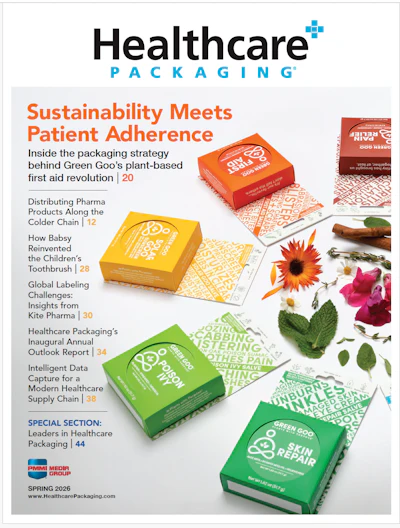
Now, we used to have some plastic in our portfolio. We’ve been moving away from plastic, but we always started out with glass and aluminum tins. And so thankfully, it's a material that is very consistent, still the top two renewable packaging materials that are there on the market and makes it incredibly friendly for our salves.
So we don't have to worry about different kinds of leaching and other issues that you may run into, so we end up with a very consistent process, but we had to build that process by bringing these plants in and having these, you know, big vats for extraction and so forth in terms of being able to make that happen.
Now our products are registered with the FDA. So, the FDA has a specific process that they follow in terms of reliability, consistency, sterility, you know, the traditional stuff that you would normally see in terms of not just packaging, but a stable formulation as well.
Cuneo: OK. Yeah, and you mentioned the FDA. So is there testing or validation processes that you have to go through to have these products FDA certified or approved to meet like healthcare grades, sterility, and safety?
Scott: They are registered with the FDA and what's really interesting about the FDA is that they only recognize certain plants as having active ingredients. So we have to specify only those herbs in the way that they recognize them. So for example, calendula flowers. Is antimicrobial, anti-yeast, anti-fungal, it's also a moisturizer, but the FDA recognizes it as an astringent, so we can only call it out for what it is.
And if it is not recognized as an active ingredient by the FDA, it needs to be in the inactive ingredient position. And then we have to know exactly what your various percentages in each one of these ingredients are, so it's very science based in terms of how these formulas are made and then how that is tested in the final product. But we have a number of testing that happens throughout the production process, whether it is first testing the packaging, testing the ingredients, making sure they all have their Q of A.
When they come in, which is their certificate of analysis, then going through the process, making sure that the formula is matching the formula, then putting it on the line, taking batch samples as it's being pulled from the line, testing each of those batch samples, and then having another process where they go through a variety of quality assurance processes to make sure that every step the way it has been able to meet the requirements and then stability testing and so forth before it makes it to the consumer. And then these batch samples have to be saved for a number of years before they can be discarded as well. So it's very much following that process, which is very similar to GMP practices as well. FDA just has a handful more steps that we have to follow to continue to stay that compliance.
Cuneo: OK, and I know you said that you're making the formulas still, right? You and your family, by hand or are you just very present in the process. Are you packaging by hand or do you have any automation there?
Scott: No, everything is at the manufacturing facility. From making the materials themselves that's actually going in the salves, then producing the salves, all of our materials get imported from all over the world. And then from there it goes into the products and tested so we don't get to touch any of it until it is a final product. And then that product gets sent to us.
We have an internal SOP in terms of making sure that, we get batch samples before it even goes out to the public. So, on a very regular basis, we're receiving samples from our manufacturer. And we're testing like the tins. Are the lids slipping on correctly? Is this our jar? And at one point, when we were using sugar cane packaging, we had to test that as well because the sugar cane packaging was very new to the market when we first started using it for our toothpaste. So doing a lot of internal quality assurance to just make sure that it was consistent and we were happy with it before it hits the market.
So there's testing, but there's also, does it smell right? Does it look right, is the consistency right? And so there we have sort of an internal checklist that our manufacturer and I have to follow before any of that goes out the door.
Cuneo: OK, and this is kind of probably a long question or a long answer, but you know, you talked about being at the farmers' market and now you have a manufacturing off site. What was the timeline or what did that process look like? I'm sure it was a lot.
Jodi: It was a lot, and especially because our process is so unique. And we didn't want to compromise the process but it went out of a typical scope of work or process that a typical manufacturer would do. So, we were meeting with manufacturers and they're like, can't we just get pre-made extracts that are already on the market? And we're like, no, because the efficacy gets compromised.
So there was a number of manufacturers where we just did not fit into their model. And what happened ultimately is that we were at a trade show and someone came to visit us at our booth, and their son had eczema. He got a sample of our dry skin formula, and he called us about a week later and he said, ‘You know what? I actually manage a manufacturing facility, and we do something very different, but my son has never had anything like this in terms of relief and especially over the counter.’ He's like, the world needs these products. He's like, we are going to figure out a way to make this happen. And so, we built a dedicated line, a dedicated team, and an entirely dedicated process at this facility who is still and continues to be our manufacturing facility today.
Cuneo: Oh wow, that's great. That's excellent. Right place, right time, huh?
Scott: Yeah, and that product is now used by John Hopkins and their scleroderma skin condition department for over a decade. So the number of people that have been able to get relief as a result of that one special encounter is pretty cool.
Cuneo: Yeah, that's really cool. So you talked a little bit about sugar cane, and as far as I understand, you no longer use that for the toothpaste, correct? Or do you not make toothpaste?
Scott: We just ran out of toothpaste and we haven't refilled the next batch. I'm very curious now that we're out of stock and we've seen the advancement of sugarcane packaging if we will continue there. So we were one of the very first, and what happened was, it was actually COVID that happened. And we had sanitizer and toothpaste in our portfolio. And the sanitizer was going out the door like crazy. And I was like, all of this plastic goes against our sustainability benchmark. We need to look at an alternative.
And so in doing so, we found a sugar plastic alternative material that could work for both sanitizer and for toothpaste. And sanitizer obviously has, you know, you're talking about a high level of alcohol that can degrade packaging. So it was really important that we had packaging that could hold up with the sanitizer, and it did. And so it was really cool to bring that into the mix and you can literally throw it in your garbage can, and the composting; I can't remember how long it took, but the composting process was like a fraction of obviously what we're seeing with plastic today.
Cuneo: Yeah, what partnerships or collaborations have been key to achieving your sustainability goals, as far as we can say as far as packaging or on the materials or manufacturing side?
Scott: Well, for us, I mean we have a number of partnerships. We work fair trade, we're certified cruelty free, we have been a B Corp for a very long time. What I really like about the B Corp community is that you not only, and this is how I actually learned about some of the sugar cane packaging is that you're not only going through a checklist and saying, OK, what is my community contribution?
What is my philanthropic contribution, my, social efforts, even just within building your organization and then your sustainability and clean ingredients and impact. But going through that process, you learn other opportunities where you can do better, be a better steward of the environment. So every year we would come out of that recertification process and we would take like 5 to 10 new action items and say, OK, next year we want to try to implement these practices so that, yes, it's not just about meeting the score, it's about doing more and really being a good steward of that.
And so, I always encourage people, even if you don't become a B Corp, reference their site and you can get to know some of their different metrics. And it's a great opportunity where you can still be incredibly, cognizant, and informed on ways that you can build a more sustainable company, discover other packaging networks, because they have, they have really great contacts within the community of, you know, for example, emerging packaging companies that are looking for people just like us who want to find alternative packaging and willing to make that extra expense.
Because really, it takes us making that extra expense when it first comes to market for that price to come down to really make it more attainable for some of these other, other brands.
Cuneo: Yeah, I've heard that before at events or conferences that it really has to be a collaboration in the beginning, right? Because there's some sacrifice on both ends to get it on a larger scale for other companies to follow suit, so I think that it's definitely important work.
Scott: It's really fun. It's fun to learn more and, you know, for example, our metal aluminum tins were tins when we first started because there wasn't sustainable alternative packaging to your traditional OTC tubes that were on the market.
And so we're aluminum tins were the easiest things to use. And then what was interesting is every year we would go back to the drawing board and say, is this still the best material that we should be using? And every year we're like, wow, fast forward, you know, 15 years, it's still the best material and it's still the best packaging. And so it gives you an opportunity to go back and revisit that as well.
Cuneo: Yeah, totally. So are you seeing trends in consumer behavior? Are you seeing like a shift toward greener personal care, healthcare products, like OTC products? I'm sure, some of that is probably what influenced the boom of your business? There must be a shift in that space.
Scott: You know, what's interesting is that we've been in the OTC space for, like I said, almost two decades, and I am not seeing a shift in that space for sustainability or clean ingredients yet. It just hasn't quite had its tipping point. So I always tell my team, we're still a part of the plant-based renaissance and forging the path.
Now, if you go into personal care, baby products, you see that health and beauty, you're starting to see that. And I think, it used to be that they were a smaller part of the market share, but now it is the fastest growing part of the market share. And you're also seeing trends, kind of come and go to see what sticks. For example, there was this time where cardboard packaging for deodorant in the last handful of years was kind of a hit, but in practice, it's not really great, you know, it starts to fall apart if it gets wet.
You know, so it was a great try, but I don't think it's gonna stick around for the long term and continuing to modify it. I think for plastic... they're getting better at finding plastic that is from renewable resources and I think we're going to start seeing more of that instead of, some of these alternative materials, just really bringing them in to the recycling funnel and reducing just use.
I wish we could say, you mail us the empty tin and we'll reuse them. Unfortunately, we've done the math over and over again, and by the time you ship it in the carbon footprint, it really doesn't, it doesn't make sense. But we have a great movement.
We're like, everyone, show us what you're using your tins for. I was on the plane, it was like 3 months ago, and I was working and, and this guy sitting next to me goes, 'I'm so sorry. I have to ask you. And I know it kind of feels nosy cause I know what you've been working on, but are you with Green Goo?'
And I was like, yes, my mom, sister and I started this company, and he pulls out his tin out of his backpack, and he's like, I love Green Goo. My whole family loves it.
And he goes, and let me tell you, I've been using this for 10 years and now I have a 2 year old and a 6-year-old. And he goes, When I want to tell him to go play outside, I just give him a bunch of empty tins and they go and they fill them with dirt and they play with them. And I'm like, that's great. You know, just other ways that you can be using the materials within your home so that you're just reducing your footprint.
Cuneo: Oh yeah, that's awesome. And I know that aluminum is very recyclable, are they recyclable like for at home?
Scott: 100%. So it's super easy to just throw in your recycle bin and you're good to go.
Cuneo: Yeah, that's great. So, how do you educate consumers and maybe they're your customers or or consumers at large about the differences and benefits of plant-based packaging versus traditional plastics.
Scott: It's moments like this, spending time with people in the industry and sharing that and then being able to share that through the various platforms. I think we're in an environment where people are really hungry for the information and so it's just finding more ways that people can have access to that information, and, and know that those options are there, because, for example, you don't start thinking about every time you throw that tube of toothpaste away, you know, how that adds up or your toothbrush and throwing that away and and how that adds up.
And so you can make these small incremental changes without disrupting your whole life, you know, you can pick one, pick two. And so we'll share this up on our website through our different social media platforms and just give fun sound bites where we're not overwhelming anyone, but at least giving the container for being able to share really fun information.
Cuneo: Yeah. Are you noticing other retailers carrying your product and maybe a bunch of other similar products? I guess, are you seeing more competition in the space?
Scott: Not in first aid specifically, but I am seeing that what I like where retailers are going, I mean, Walmart's been a great one in terms of incentivizing their vendors to be more sustainable. And I wish they shared more with with the community that they're doing this. I mean, they were one of the first companies to collect rainwater and recycle their hangers and take the hangers through a recycling process. And so, I'd like that retailers are starting to incentivize or reward vendors, like, I'll give you more shelf space, or I'll I won't charge you as many fees for for partnering with us so that they, they can be a part of the sustainability shift.
We're starting to see Amazon, you know, make different decisions and, provide different offerings. For example, where you can reduce your carbon footprint and have all of your stuff shipped in one day instead of 3 different shipments. And so, those little things. Things get the customer going, oh wait, that actually like is more environmental. Our subscription, like when you subscribe and you buy 3 months' worth of green goo, it's not just that you get a 10% savings, you're also reducing your footprint because you're doing one shipment instead of 3. And that's just a small ship that you can make.
And, and I think from a competitive standpoint, You know, I wish more brands were doing this. There's definitely lots of brands that are leaning more into sustainability, but the chemical brands, they're the ones who have the market share. So, I hope to see that if we, every, I tell my customers every time you purchase you're voting, so just keep voting because eventually, you know, the bigger companies are gonna have to start, start, participating.
Cuneo: Yeah, there you go. So let's kind of leave, with parting wisdom, for listeners or readers. What lessons have you learned that could help larger manufacturers or startups integrate sustainability faster?
Scott: So some lessons would be, well, don't give up. I can't tell you how many different kinds of packaging and processes I've shared with my manufacturer to explore those various options. And what's been really great too is sometimes when you're a smaller piece of the puzzle, you can pitch to your manufacturer.
I can't buy 20,000 of these sugar cane tubes, but would you mind putting it in front of some of your other vendors to see if they would be interested in going in on this packaging with me so that we can make that happen and just kind of like thinking outside the box, so that you can somehow maybe have access to some packaging that perhaps you would not have been able to because the MOT was so high.
Cuneo: Interesting. Yeah, again, I feel like it comes back to a little bit of that collaboration. If other people are willing to kind of all pitch in to make it happen, so that's really neat.
Scott: Exactly.
Cuneo: Awesome. Well, thank you, Jodi, I appreciate your time.
Scott: Oh, it's wonderful to be here with you.