Create a free Healthcare Packaging account to continue reading
Live from East: Training Gaps Threaten Line Performance
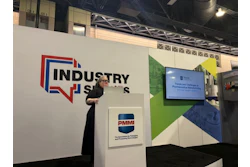
At PACK EXPO East’s Vision 2030 session, PMMI’s Jorge Izquierdo challenged OEMs to rethink operator training as a productivity issue and a competitive design opportunity.
Ineffective operator training and high employee turnover are eroding packaging line performance, but the real problem is low adoption of digital training tools that OEMs already offer. Operators want short task-based videos and on-demand troubleshooting instead of printed manuals.
Operator turnover has accelerated dramatically—employees now stay two to three years instead of decades, making traditional six-month training programs impractical
Printed manuals remain the dominant training resource on plant floors despite being rated among the least effective methods available
OEMs offer digital manuals, HMI-based troubleshooting, and remote support tools, but adoption remains limited due to implementation gaps
Operators request short task-based videos, on-demand troubleshooting clips, QR-code guidance, and bite-sized learning modules tailored to specific equipment
Equipment performance is now inseparable from workforce enablement—OEMs integrating digital knowledge tools gain significant competitive advantage
The Vision 2030 session at PACK EXPO East in Philadelphia opened with data challenging OEMs and end users to confront a persistent issue quietly eroding line performance: ineffective operator training.
Building on recent PMMI research, including insights from previous Vision 2030 sessions at PACK EXPO events and live audience polling during this session, Jorge Izquierdo, VP of Market Development at PMMI, emphasized a harsh reality that worsens the effects of ineffective training: high turnover continues to strain operations, especially among line operators and technicians.
Where operators once stayed in roles for decades, today’s employees may remain only two to three years.
“You can’t spend six months training someone who might be there for two years,” Izquierdo said. “We need to shorten that learning curve and empower them to do the job properly.”
Printed manuals remain the dominant training resource on the plant floor, yet are rated the least effective.PMMI Vision 2030Training tools aren’t the problem; Adoption is
Perhaps the most striking insight came from comparing the tools OEMs offer with the resources end users actually use. Printed manuals remain the dominant training resource on the plant floor, and at the same time, they were rated among the least effective.
“There are a lot of missed opportunities,” Izquierdo said. “OEMs are offering digital manuals, HMI-based troubleshooting, and remote support tools, but adoption is limited. We have to reimagine how training is delivered.”
What operators say they want is far more practical and immediate:
· Short, task-based videos
· On-demand troubleshooting clips
· QR-code-triggered guidance at the machine
· Bite-sized, topic-specific learning
“These aren’t rocket science solutions,” Izquierdo added. “When an OEM comes to train your people, record it. Make short videos. It’s your equipment, your plant, your staff. Plan for it in the RFP.”
For OEMs, the message was clear: equipment performance is now inseparable from workforce enablement. Machines that integrate digital knowledge tools, intuitive troubleshooting aids, and embedded training resources may offer a significant competitive advantage as customers grapple with turnover and skills gaps.
Turning conversation into action
The Vision 2030 session finished with a roundtable discussion, asking participants to identify the single biggest factor limiting operator training effectiveness in their own operations.
The goal was to spark industry-wide collaboration between OEMs and their customers, rather than any expectations of a finished solution.
“This isn’t a complete resolution of the topic,” he told attendees. “It’s a way to warm up the conversation and help you start thinking about what you’re going through in your own operations.”
As Vision 2030 discussions continue through 2026, one theme is emerging clearly: solving workforce challenges isn’t just an HR issue. It’s a performance issue and increasingly, a design opportunity for OEMs willing to rethink how knowledge moves across the packaging line.
Fresh from the show floor: pharma packaging innovations for 2026
Serialization mandates. Containment demands. Sterile barrier requirements. Our editors found the pharma packaging innovations addressing your biggest challenges at PACK EXPO Las Vegas. Get your free curated report now.
See What’s Possible in Life Sciences Packaging at PACK EXPO International
Explore new machinery & materials from 2,600 exhibitors. Gain insights from 150+ free educational sessions. Find solutions to tackle the toughest challenges—for life sciences & beyond—at North America’s largest packaging & processing event.

 Printed manuals remain the dominant training resource on the plant floor, yet are rated the least effective.PMMI Vision 2030
 Printed manuals remain the dominant training resource on the plant floor, yet are rated the least effective.PMMI Vision 2030