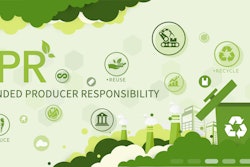
Extended Producer Responsibility (EPR) programs can stabilize recycled plastic prices and unlock billions in recycling infrastructure investment by providing steady funding regardless of commodity market swings. This structural reform reduces price volatility and creates predictable markets that encourage long-term capital spending in collection, sorting, and reprocessing facilities.
- EPR programs cover collection, hauling, education, and end-market development costs even when commodity prices are weak, ensuring stable revenue for MRFs and haulers.
- Estimated $60–200 million annually in education and outreach funding from EPR programs will reduce wish-cycling and improve feedstock quality across early adopter states.
- PCR price volatility driven by virgin resin costs, consumer demand, and trade policy has historically frozen capital spending and discouraged long-term infrastructure investments.
- Steady producer funding through EPR creates predictable pricing and demand conditions that enable manufacturers to invest confidently in recycling infrastructure.
- Brand-specific voluntary programs will continue alongside EPR, with both approaches working together to develop end markets and support circular packaging systems.
Markets for recycled materials have long been defined by boom-and-bust volatility. Prices swing with changes in virgin resin costs, consumer demand, trade policy, and global economics.
For recyclers, when recovered material values spike, facilities expand. When they fall, capital spending freezes and system upgrades stall. And when PCR prices run high, end markets shrink as manufacturers revert to cheaper virgin.
It’s a tangled web—and price uncertainty remains one of circularity’s biggest barriers. MRFs and reprocessors would welcome long-term off-take agreements and steadier pricing, but those simply haven't been a market reality.
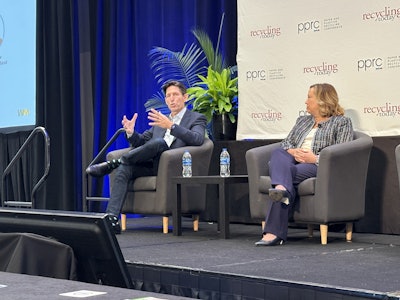
Today at the Paper and Plastic Recycling Conference, hosted by Recycling Today, Jeff Fielkow, CEO of Circular Action Alliance (CAA), made the case that extended producer responsibility (EPR) could finally break that cycle.
“One of the best features of a well-structured EPR program,” Fielkow said, “is to help the industry smooth out the parts that have always caused the invest/don’t invest, the feast and famine of the industry. The high volatility has always created problems for long-term investments.”
Under EPR, producers pay into a system that covers the net cost of collection, hauling, education, and end-market development, even when commodity prices are weak. That steady flow of funding helps ensure that MRFs and haulers remain profitable and can continue processing materials into consistent, high-quality bales.
Fielkow also highlighted a coming wave of funding for education and outreach, estimated between $60–200 million annually across the first EPR states. Those dollars will help reduce “wish-cycling,” improve feedstock quality, and make bales more valuable and predictable for end markets.
“If we can get this right… this is a collaborative effort,” he said. “We have the ability to learn and work with each of the local ecosystems for recycling and improve.”
Lynn Dyer, Executive Director of AMERIPEN, added that brand- or material-specific initiatives—like those that built cup and carton recycling end markets over the past decade—still play a crucial role.
“Those voluntary programs don’t disappear,” she said. “There’s still going to need to be specific work on specific materials.”
So EPR could act as a structural reform agent that could to de-risk recycled material supply. Stable demand and predictable pricing create the conditions for true circular packaging, where yesterday’s container is more likely to become tomorrow’s.