Orics Industries is a family-owned packaging machinery manufacturer founded in 1990 that specializes in modified atmosphere packaging equipment and custom automation solutions for food, produce, and medical device applications. The company's innovative MAP technology extends refrigerated shelf life more efficiently than competitors.
- Founded in 1990 by Ori Cohen with a $20,000 investment, Orics grew from a Flushing machine shop to a leader in modified atmosphere packaging (MAP) equipment
- Orics' backflush MAP technology achieved 40-day refrigerated shelf life for ready meals compared to Nestle's 14 days using traditional methods
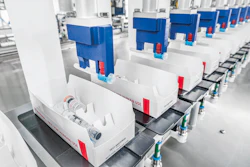
- The company builds complete packaging lines including de-nesters, fillers, sealers, and robotic pick-and-place systems customized for meat, produce, dairy, and medical devices
- Won PMMI Technology Excellence Award in 2006 and was a finalist in 2019 for precision liquid unit-dose packaging technology
- Orics hires young talent from job fairs and develops workforce organically in-house rather than recruiting experienced workers
Family-owned and operated since its founding in 1990, Orics Industries remains a key supplier of packaging machines for just about any product that is packaged in tubs, trays, or cups. De-nesters, fillers, and sealers are at the heart of the firm’s offerings, though in recent years horizontal form/fill/seal machines and robotic pick-and-place systems have been added to the mix. Also playing a central role in the firm’s origins and continued growth is modified atmosphere packaging (MAP) equipment.
Speaking of Orics’ origins, they were humble to be sure, says founder and president Ori Cohen. Fresh out of engineering studies in his native Israel and equipped with two years of experience in the sprinklers and irrigation industries, he got a student visa to further his studies at Farleigh Dickinson University and then Columbia University Graduate School of Engineering. Soon he found himself working in the Long Island town of New Hyde Park in the engineering department of Autoprod, a packaging machinery manufacturer that specialized in cup filling and sealing equipment. When that firm was acquired and relocated to Florida, Cohen chose not to go. Not entirely sure what his next move should be, he was approached in 1991 by a food manufacturer that had been working with Autoprod on equipment capable of producing the kind of MAP packages that were just then being introduced by firms like Nestle for refrigerated ready meals with extended shelf life. “I told them I have no machinery manufacturing capabilities whatsoever, but they wrote me a $20,000 check anyway and told me to make it happen,” he recalls.
 The Orics R-50 rotary cup filling system has dual filling stations for products like yogurt that also include a fruit puree on the bottom.Photo courtesy of Orics
“They were essentially retired but continued to operate the shop largely as a place to cook and smoke and drink coffee and argue,” says Cohen. “After listening to me describe what it was I’d been asked to build, they made a space for me in their shop and said they’d make the machine parts I required. And that’s how I built my first MAP packaging machine. Part of the process was acquiring quantities of aluminum in Flushing at Davidson Aluminum and Metal, strapping it to a roof rack on my Chevy, and driving it back to the shop. ”
One huge advantage Cohen had going for him was that part of the engineering work he’d done in the past revolved around the distribution of fluids for sprinkler and irrigation systems. Some of the same principles apply when it comes to distributing gases in MAP systems, so he came to the task of building MAP systems with a leg up on whatever competition was out there. And there wasn’t very much since MAP was still quite new. In any event, the machine he designed and built for his very first customer used a special sprinkler to backflush the gas only at the head space of each individual package rather than in a large enclosed chamber. This approach meant that the system was capable of eliminating residual oxygen levels so efficiently that ready meals got a 40-day refrigerated shelf life while Nestle with all of its millions of dollars in R&D wasn’t getting more than 14 days.
 Depositing systems like these have long been a specialty at Orics Industries.Photo courtesy of Orics
By 1994 Orics Industries had grown to about 15 employees and it was time to move out of the Flushing machine shop to a bigger facility in College Point—still in Queens. It was around that time that supermarkets started carrying fresh refrigerated salad mixes from companies like Fresh Express and Tanimura & Antle. Once again the MAP machinery from Orics tended to be the best option when it came to efficiently extending the refrigerated shelf life of these backflushed trayed products with heat-sealed flexible film lidding. All of which led to the firm buying two buildings in Farmingdale, N.Y., and fitting them out for further growth. That was in 2008, and that’s where the firm resides to this day.
Steady growth in MAP
“We were growing steadily as fresh salads and ready meal products and things One of the many MAP tray sealing systems built by Orics over the years.Photos courtesy of Orics
When asked what Orics’ mission is, Cohen says it’s to provide technology and solutions for customers who need to automate their production line and to do it with the best performing equipment with minimum investment. So what makes Orics different than the competition? Engineering manager Shlomi Daniel says a big part of it is their ability to adapt their machines to a variety of industries from meat to produce to dairy. “We need to be very attentive to how specific product requirements shape each machine,” says Daniel. “Essentially we build custom equipment. There may be a basic machine platform that we call an R20 or a S30, but the machines that go to each customer are often very different.”
Even makers of orthopedic implants—think knees and hips—discovered that Orics machinery fit their needs because it can eliminate residual oxygen down to less than one-tenth of one percent. “Some of those implants include UHMW (Ultra-High Molecular Weight) polyethylene, which is capable of absorbing oxygen,” explains Cohen. “If that happens, the part can be compromised from a sterility and sanitation standpoint.”
Cohen says another defining characteristic of the firm is that the OEMs Orics competes with tend to specialize on one or two machines in three or four models. “We build entire lines from denesting, to feeding, to scaling, to depositing, to sealing,” he says. He’s the first to admit that designing and manufacturing in so many machinery categories and customizing to the extent the firm does is not the most efficient or business-like manner in which to run things. “I guess it has a lot to do with me being more of an engineer who runs a business than a businessman running an engineering company,” he says. “As a group, we seem to thrive on engineering challenges.”
One other distinguishing characteristic of Orics Industries is its approach to new hires. “Seems like when I hired people with experience in the working world I had arguments all day long,” says Cohen. “Now I go to school-sponsored job fairs and hire electrical and mechanical people and bring them in so they can learn in-house. It’s a matter of finding out who has engineering skills, who has manufacturing skills, who is good at sales, and who likes to travel. We build our workforce organically that way.”
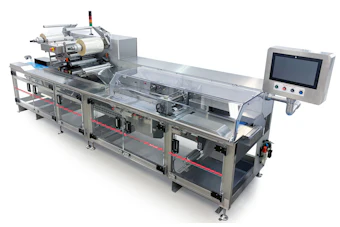
Orics has won its share of awards over the years, including a PMMI Technology Excellence Award in 2006 for a MAP dog food package. In 2019, the firm was named a finalist in the same competition for a horizontal form/fill/seal machine for liquid unit-dose oxycontin that was accurate to within plus or minus 0.1 mL. That machine represented a departure for the firm, which, until then, had only offered tray and tub sealing equipment as opposed to equipment that formed and sealed. Another new machinery category that Orics entered about a year ago is pick-and-place robots that it makes in-house.
As for the future, two sons are part of the firm and plan to continue the manufacturing work their father began so improbably so many years ago. “Personally, I like that concept of a small, family-owned, American business that stays in business for more than one generation,” Cohen adds.