Foster Corp., producer of custom polymers for medical devices, introduces a new line of color concentrates using FDA 21CFR 73 subpart D pigments for medical device applications.
In support of medical customers in early stages of product development, Foster’s MediBatch™ color concentrates will be available in quantities as low as a single lb.
Medical devices often use custom-colored components for branding, aesthetics, or functional purposes. Color concentrates, blended with unpigmented polymers, are widely used as an economical alternative to pre-colored formulations for injection-molded or extruded plastic components. Pigments used for device components that contact the human body, such as catheter tubing, require documentation to be submitted as part of device approval by the FDA. The use of pigments that have been previously evaluated for use in medical devices may reduce the FDA review time for a new device and expedite the approval process.
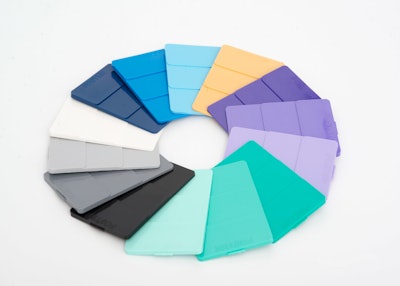
MediBatch color concentrates are formulated using FDA 21CFR 73 Subpart D listed pigments and a polymer carrier that is compatible with a wide range of base resins, including nylons and polyurethanes. Twelve standard concentrates, including green, red, yellow, blue, violet, black and white, are available from stock in 1-, 5- and 10-lb quantities. Custom-colored concentrates are also available on a made-to-order basis.
MediBatch color concentrates were specifically created with medical device product development in mind. By using FDA 21CFR 73 Subpart D pigments and packaging in small quantities they are ideal for use in early stage development and prototyping operations. Single-lb quantities available from stock can pigment up to 25 lb of natural polymer, and allow for engineers to rapidly prototype new components without the need to purchase large amounts of material.