Pillumina and Parcel Health have developed sustainable alternatives to plastic prescription bottles using recyclable aluminum and compostable paper-based materials. These innovations address healthcare's significant plastic waste problem while meeting FDA regulatory standards and consumer demand for eco-friendly packaging.
- Pillumina manufactures aluminum prescription bottles in standard pharmacy sizes (20-, 25-, 30-dram) that are infinitely recyclable and maintain their atomic structure through repeated melting and reformation
- Parcel Health's Tully Tube vials are comprised of paperboard with compostable coating and food-safe inner lining, reducing plastic content by up to 71 percent compared to standard bottles
- 70 percent of consumers seek products in sustainable packaging, with over 80 percent willing to pay more for environmentally friendly options
- Pilot programs show 80 percent of patients prefer paper bottles over plastic and report more positive emotions about pharmacies using sustainable packaging
- Both solutions comply with U.S. Pharmacopeia standards, FDA Code of Federal Regulations 21 Parts 210/211, and Consumer Product Safety Commission requirements for child-resistant packaging
Key Takeaways:
· Many consumers remain confused about how to safely dispose of pill bottles, which tend to be too small for recycling trommels and not suitable for curbside collection.
· Tully Tube vials from Parcel Health are comprised of a proprietary ParcelCoatTM tech stack with a paperboard core layered with a compostable coating that repels moisture and a food-safe inner lining of paper and fiber.
· Pillumina was launched with the goal of developing an aluminum-based solution for single-use plastic prescription bottles.
With a few years of education remaining before becoming licensed, Melinda Su-En Lee was not as enthusiastic about her future as a pharmacist as she wanted to be. Despite an eagerness to enter the field, she had concerns about contributing to the global plastic crisis. It was 2018, and China’s “National Sword” policy had recently resulted in more refuse being redirected to Malaysia — her native land. “Here I was, dispensing thousands of plastic bottles every week and recognizing that many of them were being siphoned to where I grew up and to other developing countries,” says Su-En Lee, a 2021 graduate from University of Michigan. “A lot of this waste was destined for our waterways and landfills — and that just didn't sit well with me. Knowing this started a journey of investigating what could be done to lower this pollution burden.”
Some 2,000 miles west, Peter Daheb, a business development professional and entrepreneur, was similarly at a loss as he pondered the destination of his own prescription bottles. At the time, he had begun serving an advisory role at PATH water, a company based in Fremont, CA, that produces, markets, and sells reusable aluminum bottles as a means of replacing consumption of single-use polyethylene terephthalate (PET) plastic bottles. “I began to wonder about what happened with these pill bottles when I recycled them,” explained Daheb. “And as I started to research, not only did I learn about the growing volume of prescription medications dispensed in the United States, but that the majority of these bottles are made with a polypropylene plastic that has one of the lowest recycle rates of different families of plastics.”
Today, both Daheb and Su-En Lee have channeled their curiosities into manufacturing alternatives for prescription packaging and distribution through their respective organizations, Pillumina and Parcel Health, both of which have begun innovating bottles composed of more environmentally friendly materials and serving a growing stable of customers.
Plastics’ Perils
The consequences associated with plastic throughout the healthcare industry are numerous, but not always well addressed. While more people are becoming better educated on dangerous microplastics, many consumers remain confused about how to safely dispose of pill bottles, which tend to be too small for recycling trommels and not suitable for curbside collection. Even before factoring in recyclability, microplastic consumption is associated with ingesting pills from today’s plastic containers, says Daheb. “There’s just an inherent leaching of plastic into food and beverage. It's microscopic, but over time it leads to health issues.”
Truly recycled plastic is also complicit, as, depending on the plastic type, materials will degrade into unusable status due to compromised quality, strength, and purity on a variable timeline, with PET and high-density polyethylene offering the most longevity. “But at some point in their lifecycle, they end up in the trash and can no longer be recycled,” said Daheb.
 At the Pittsburgh, PA-based Parcel Health, Su-En Lee and co-founder Mallory Barrett have launched a line of paper-based containers available in four sizes ranging from 20-75 drams and are sealable with one standard cap. Parcel Health
There is also growing consumer demand for products in sustainable packaging. A global report published in 2023 found 70% of consumers seek products sold in sustainable packaging while more than 80% will pay more for it. Considering the healthcare industry remains one of the largest contributors to plastic waste, there’s likely to be considerable concern over time, especially in progressive regions. “Here in Northern California, we're already a little bit more in tune to what's happening with environmental waste and the impacts it has,” said Daheb. “I wanted to create a solution that reduces environmental impact without disrupting pharmacy operations or patient experience.”
A Sizable Contribution
Facing zero restrictions for recyclability, Daheb set out to produce the most used sizes among U.S. pharmacies, which include volumes of 20-, 25-, and 30-dram bottles. Each is 38 mm in diameter, standing 70, 80, and 90 mm high, respectively. As more insurance companies and pharmacy benefit managers elect to fill extended-day supplies, there are more requests today for larger bottles, said Daheb. “Additionally, we've been approached by vitamin and supplement companies,” he said. “We are rounding out our portfolio this year.” Beginning in April, Daheb anticipates offering sizes in 40 and 60 dram with a diameter of 53 mm and heights of 90 mm and 110 mm that can hold enough medicine for up to 4 months while accommodating larger-sized pills.
Daheb expects additional options later in the year as Pillumina continues to customize inventory. The company also manufacturers multiple cap options to meet varying pharmacy and patient needs, including standard child-resistant caps, convertible safety caps, and easy-open metal caps for seniors. “We recently brought to market the first all-aluminum safety cap to provide a full recyclable product,” said Daheb. “Many of our pharmacies also continue to use the same caps they’ve been using with plastic bottles. The standard 38-mm diameter bottle works with the majority of threaded caps available in the market. Each is designed for usability, compliance, and safety while maintaining compatibility with aluminum bottles. This range allows pharmacies to choose the best combination for their patients and operational requirements.”
Among Pillumina’s early adopters is Koshland Pharm, a compounding pharmacy based in nearby San Francisco affiliated through Pillumina’s collaboration with parent company PCCA, a network of more than 3,000 pharmacy members throughout the U.S., Canada, Australia, and other countries. “We're in the process of flipping 100% to utilizing all of their bottles as they become available,” said Peter Koshland, PharmD, chief executive officer. “For our customers in the Bay Area, the idea that these bottles are recyclable is a really nice idea to solving this ecological disaster. And it also fits the brand of our business to be responsible to the community.”
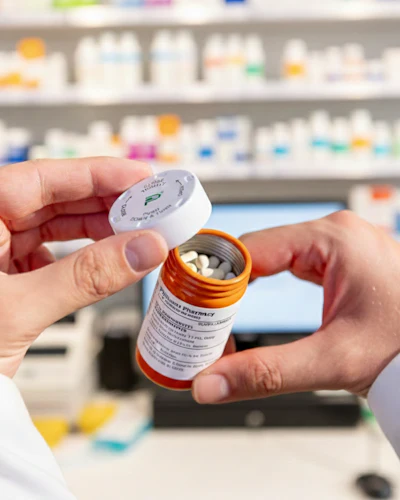
At the Pittsburgh, PA-based Parcel Health, Su-En Lee and co-founder Mallory Barrett have launched a line of paper-based containers available in four sizes ranging from 20-75 drams and are sealable with one standard cap. These Tully Tube vials are comprised of a proprietary ParcelCoatTM tech stack with a paperboard core layered with a compostable coating that repels moisture and a food-safe inner lining of paper and fiber. Although the cap and “capdapter” that holds containers together are plastic, the entire product is constructed from recycled materials and considered completely compostable and recyclable after a simple separation, says Su-En Lee. “We’ve engineered our pill bottle to have the least amount of plastic in order to maximize the amount of recyclable paper in the product,” she said. “Our product is up to 71 percent less plastic compared to standard pill bottles, depending on size. The larger the bottle, the less plastic overall.”
 “Overwhelmingly, patients preferred paper over plastic when given the choice,” said Jamie Clark, director of innovation and venture strategy at WellStar. Parcel Health
The use of paper to store and distribute pharmaceuticals might not be top of mind among most people, but it’s becoming more popular. Recent surveys conducted by the pharmacy at Kennestone Hospital, a facility within Wellstar Health System that piloted the Tully Tubes as the network migrates to universal paper bottles, confirms this sentiment. “Overwhelmingly, patients preferred paper over plastic when given the choice,” said Jaimie Clark, director of innovation and venture strategy at WellStar. “We had about 80 percent say they had more positive emotions around the pharmacy and that the sustainable packaging shows the pharmacy cares more about the environment.” As part of Parcel Health’s portfolio, the surveys were conducted through “Parcel PromptsTM” add-on communications that attach to tubes to include education materials and/or QR codes. “This patient education was critical,” said Clark. “We used the prompts to inform patients that Wellstar was piloting the product, explain why the change was being made, reinforce our commitment to sustainability and innovation, and collect feedback. We wanted to deeply understand perception, usability, and satisfaction in a thoughtful and measurable way.”
Regulatory Requirements
Of course, there are numerous regulatory standards that the manufacturers and pharmacies have had to maintain during the container conversions from both a federal and state level. The U.S. Pharmacopeia defines criteria and metrics for packaging systems to be approved for medication dispensing while remaining ecologically friendly. Oversight by the U.S. Food and Drug Administration primarily occurs under Code of Federal Regulations 21 Parts 210/211. The Consumer Product Safety Commission regulates pharma packaging under the Poison Prevention Packaging Act, requiring child-resistant packaging for most oral prescription and high-risk OTC drugs. “What started as a way to do something good for the environment by reducing the amount of plastic has really evolved into providing a health solution for pharmacies to pass on to their patients,” said Daheb.