Advanced therapies like RNA vaccines and cell therapies can effectively use existing packaging formats such as vials and syringes, though storage requirements vary by product type and delivery method.
- RNA vaccines and LNP products successfully use traditional vial and syringe packaging, with storage transitioning from -80°C to room temperature compatibility
- Cell therapies require frozen storage in liquid nitrogen because living cells cannot be lyophilized and are sensitive to room temperature conditions
- DMSO compatibility is critical for cryopreserved products, with a 30-minute to 3-hour window for infusion after thawing before potency decays
- Chronic dosage therapies need device innovation beyond traditional packaging, including inhaled delivery systems for conditions like cystic fibrosis
- Robotic isolator-based filling technology is advancing, but vial and stopper options remain limited for these new manufacturing approaches
There are a number of ways that existing packaging technologies can be leveraged for advanced biomanufacturing and cell therapy products, per a panel at the PDA Annual Meeting this week.
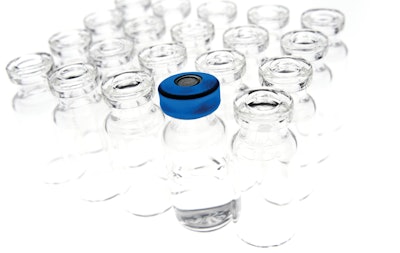
As Hari Pujar, PhD, MBA, operating partner, Flagship Pioneering, explained, existing packaging formats were used for RNA vaccines—vials and syringes—and they started off with frozen storage. “Container closure needed to be compatible with -80 or -20 storage. We're now hopefully transitioning to more traditional storage temperature… maybe room temperature is still a bridge too far at the moment,” he said. “The kinds of therapies that Tessera is pursuing, it's ultimately an LNP [lipid nanoparticle]. So the same packaging format that you might use for mRNA vaccines would translate to gene editing using RNA.”
He noted that the product volumes will be different—much larger than a 0.5 mL dose—but the formats will be similar to those used for vaccines and biologics.
Discussing the same topic for cell therapies, Don Healey, PhD, chief technology officer, Adicet Bio, said that because these are living entities, they can’t be lyophilized or shipped at room temperature at this point: “I don't think there's a way around frozen profiles. Obviously liquid nitrogen is the preferred long-term storage option, and even for shipping from a manufacturing site to clinical because of the issues of stability.”
 Speakers at the 2023 PDA Annual Meeting (from left): Hari Pujar, PhD, MBA, operating partner, Flagship Pioneering; Don Healey, PhD, chief technology officer, Adicet Bio.
Pujar also highlighted that the dosage also comes into play. “You can imagine, for example, an mRNA LNP as a protein replacement therapy that would need to be chronically dosed. It depends on the route of administration, it could be IV, it could be inhaled in the case of cystic fibrosis,” he explained. “Those dosage forms are still packaged in a similar manner, but the method of delivery into the patient needs innovation. If you are infusing somebody chronically, then you have to think about what's the patient experience there. For an inhaled mRNA LNP formulation, device innovation will be needed. So that's kind of a separate class of new modalities that are chronic, as opposed to the one-and-done therapy that we just described.”
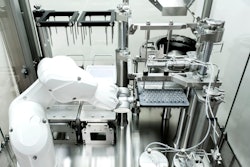
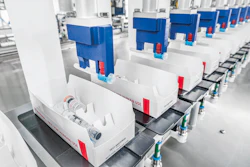
When asked if he had wishes for packaging suppliers to improve, Pujar noted that often in the filling technology world, many prefer to fill in-house as opposed to tapping a contract manufacturer, particularly if they’ve been through consent decrees or warning letters. “But I think the technology has moved quite a bit to robotic, isolator-based filling, and Vanrx is a great example of that. The number of choices for vials and stoppers, etc., for those new technologies are very few and far between. I think a wish would be to expand that capability.”