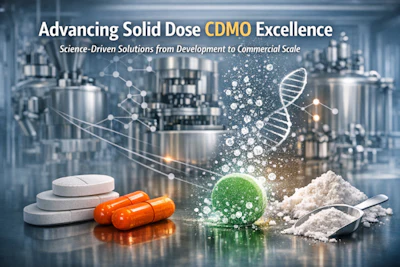
Marlyn Nutraceuticals expanded its solid-dose CDMO platform using a science-based approach called Mechanistic Integrity to ensure consistent, scalable supplement manufacturing. The company uses advanced technologies like mechanofusion particle engineering and non-aqueous hot-melt coating to manage complex ingredients and reduce production variability.
- Marlyn Nutraceuticals introduced Mechanistic Integrity, a discipline that applies scientific understanding to ingredient and processing interactions for predictable manufacturing outcomes.
- Advanced technologies including mechanofusion particle engineering and non-aqueous hot-melt coating enable solvent-free surface modification and consistent coating uniformity.
- The process-driven approach reduces downstream production issues and protects product quality from initial release through entire shelf life.
- This CDMO model is particularly valuable for high-growth supplement categories like immune, digestive, and cognitive health that use complex nature-based ingredients.
- Brand owners gain regulatory defensibility and de-risked industrialization pathways for scaling innovative formulations to cGMP-compliant commercial manufacturing.
Key Takeaways:
- A shift from trial-and-error development to a science-based manufacturing model is crucial for ensuring product consistency and stability in the maturing supplement industry.
- Advanced technologies like mechanofusion particle engineering and non-aqueous hot-melt coating are being adopted to manage complex, nature-based ingredients and ensure reproducible outcomes.
- For brand owners, partnering with CDMOs focused on process control and mechanistic understanding can mitigate risks associated with scaling, regulatory compliance, and long-term product performance.
As the dietary supplement market continues to expand, brand owners face significant operational hurdles in translating innovative formulations into stable, scalable, and commercially viable products. The challenge is particularly acute for brands utilizing complex or nature-based ingredients, where manufacturing variability can impact finished-dose performance and brand reputation. Addressing this need, Contract Development and Manufacturing Organization (CDMO) Marlyn Nutraceuticals, Inc. announced an expansion of its platform for oral solid-dosage (OSD) supplements, centered on a discipline it calls "Mechanistic Integrity."
The Phoenix-based company's approach moves beyond traditional trial-and-error methods by focusing on the scientific interactions between ingredient attributes and processing conditions. This model is designed to provide brand partners with a more predictable path from formulation to cGMP-compliant manufacturing for products like tablets, capsules, and functional powders.
“Brand owners bring the formulation vision and positioning,” says Meli Jelinic, President of Marlyn Nutraceuticals. “Our role is to ensure those formulas can be executed with precision—at scale, repeatedly, and with long-term performance integrity.”
Marlyn's integrated model aligns formulation science, particle engineering, process controls, and quality systems to deliver consistency throughout the product lifecycle. This framework is critical for supplements in high-growth categories such as immune, digestive, and cognitive health, which often rely on ingredients that demand precise manufacturing controls.
To support this model, the company has invested in advanced processing capabilities. These include mechanofusion particle engineering, which enables solvent-free surface modification, and non-aqueous hot-melt fluid-bed coating and granulation technologies. By using controlled thermal exposure and airflow management, these processes are designed to achieve consistent coating uniformity and stability for the finished dose.
The strategic goal is to reduce downstream production issues and ensure the final product meets its quality specifications from initial release through its entire shelf life.
“By applying the same mechanistic lens from development through commercial manufacturing, we reduce surprises and help protect our partners’ brands over time,” Jelinic adds.
For businesses in the functional supplement sector, this emphasis on process-driven manufacturing highlights a key industry trend: the need for scientifically grounded partners who can de-risk the industrialization of new products and ensure regulatory defensibility in a competitive market.