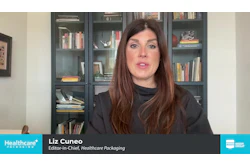
Ally Petschke is a Senior Packaging Engineer at AirLife, a leading North American manufacturer and distributor of consumable medical devices for anesthesia and respiratory care. We met at industry event last year and so I sat down with her to dive into how she entered the industry, packaging’s role in enhancing patient safety, and how AI, machine learning, and data analytics could change packaging engineering in healthcare.
HCP: Can you tell us about your path into packaging engineering and what led you to specialize in the medical device or healthcare space?
Petschke: I actually started my career path as a nursing major at Michigan State University. Toward the end of my sophomore year, I realized nursing didn’t feel like the right long-term fit, so I began exploring other programs at MSU.
Packaging had always been in the back of my mind—my grandfather graduated from MSU’s School of Packaging in 1960 and spent his career at Brach’s Candy in Chicago—so that family connection nudged me to take packaging 101 the following fall. After that first class, I knew I’d found the right place. My first internship was in the cosmetics industry, and at the time I imagined myself designing perfume and cologne bottles for a living. That experience opened my eyes to how broad the field really is. I realized packaging was far more than naming nail polish shades or developing holiday kits, and I wanted a deeper technical challenge with a more meaningful impact.
That led me to a second internship at Stryker Neurovascular. That experience changed everything for me. I felt an immediate passion for the medical-device industry—the pace, the precision, the cross-functional collaboration, and most importantly the impact. Having family members who have suffered strokes, it was incredibly meaningful to work on devices that were literally saving lives. I knew then that healthcare packaging was where I wanted to build my career, and I’ve never looked back.
HCP: Is there a product or specialty that you focus on within Air Life?
Petschke: AirLife is the global leader in consumable breathing products, with a portfolio spanning respiratory therapy, anesthesia, and patient monitoring. In my role, I support packaging engineering across the entire product range. Rather than focusing on a single specialty, I’m involved in everything from high-volume disposable respiratory components to more complex anesthesia and monitoring devices. That breadth allows me to collaborate with multiple teams and ensure that every product we deliver is packaged to the highest standards of quality, sterility, and patient safety.
HCP: How does your role interact with other teams — like R&D, quality assurance, and regulatory affairs — within Air Life?
Petschke: My role is inherently cross-functional. Packaging engineering touches every stage of a product’s lifecycle, so I collaborate closely with nearly every function within AirLife. With R&D, I’m involved early to ensure packaging is considered in design decisions, manufacturability, material compatibility, and risk mitigation.
With Quality Assurance, I partner on validations, nonconformances, and continuous improvement initiatives to ensure our packaging systems consistently meet performance and sterility requirements.
I also work hand-in-hand with Regulatory Affairs to align packaging designs and documentation with global standards and submission requirements, especially as regulations evolve. Beyond those groups, I engage with manufacturing, operations, supply chain, marketing, clinical, procurement, and suppliers to ensure that what we design can be produced efficiently, scaled appropriately, and maintained with strong quality and cost control. Because our products span respiratory, anesthesia, and patient monitoring, every project requires a different blend of collaboration—and that cross-functional synergy is what ensures our devices reach patients safely and reliably.
HCP: What are the key differences between packaging for respiratory or anesthesia products versus other types of medical consumables?
Petschke: Packaging for respiratory and anesthesia products carries a few unique considerations compared to other medical consumables.
- First, many of these devices have complex geometries and flexible assemblies—like breathing circuits, masks, valves, and tubing sets. Designing packaging that protects those shapes without causing deformation or occlusion takes careful material selection, fixture design, and transit testing.
- Second, these products often require very high sterility assurance and particulate control, especially anything entering the airway. That means tight coordination with manufacturing to minimize bioburden, and packaging systems that maintain integrity through sterilization and distribution without compromising breathability or functionality.
- Third, respiratory and anesthesia products frequently include a mix of rigid and flexible components or multi-material systems. That can complicate heat sealing, pouch sizing, tray design, and the way components settle inside the sterile barrier.
- Finally, many of these devices are high-volume consumables used in fast-paced clinical environments. Packaging has to balance robustness with efficiency—easy to open, intuitive, and supportive of rapid aseptic presentation, all while meeting demanding cost and automation requirements.
Overall, the challenge is creating packaging that protects functionally delicate devices, supports strict sterility needs, and still delivers speed and usability at the point of care. It’s a blend of engineering precision and practical human-factors design that sets respiratory and anesthesia packaging apart from other medical consumables.
HCP: What are the most critical considerations when designing packaging for sterile or single-use medical products?
Petschke: For sterile or single-use medical products, the most critical considerations are maintaining sterile barrier integrity, ensuring compatibility with the chosen sterilization method, and protecting the device throughout distribution and handling. It’s also essential to design packaging that supports aseptic opening and intuitive use in fast-paced clinical environments. Beyond that, materials and seals must be robust and consistent, validated through industry standards, and capable of maintaining performance through aging and shelf life. Finally, because many of these products are high-volume consumables, the packaging has to balance manufacturability, efficiency, and regulatory compliance—especially with ISO 11607 requirements.
HCP: Where do you see the biggest opportunities for innovation in medical packaging over the next decade?
Petschke: Over the next decade, I see major opportunities in three areas. First, smarter and more sustainable materials—packaging that reduces waste without compromising sterile barrier performance or compatibility with sterilization. Second, automation and digital traceability, including better in-line inspection, UDI integration, and data-driven quality controls that reduce variation and improve consistency. And third, human-factors-focused sterile packaging, especially solutions that make aseptic opening easier, faster, and safer in high-pressure clinical settings. As devices become more complex and global regulatory expectations continue to rise, the biggest innovations will come from designs that improve patient safety while simplifying manufacturing, reducing cost, and minimizing environmental impact.
HCP: How do you think AI, machine learning, or data analytics could change packaging engineering in healthcare? Are you using these tools now?
Petschke: AI, machine learning, and data analytics have the potential to transform healthcare packaging by making it more predictive, consistent, and efficient. One major area is automated quality inspection—AI can detect seal defects, material anomalies, or packaging irregularities far earlier and more accurately than traditional methods. Another opportunity is predictive modeling for distribution testing, sterilization effects, and material performance. Instead of relying solely on physical testing, ML could help simulate how packaging systems behave over time, reducing development cycles and improving design robustness.
On the manufacturing side, real-time data analytics can optimize sealing parameters, identify drift before it becomes a nonconformance, and improve process control across high-volume lines. AI also opens doors for better traceability, UDI integration, and supply-chain visibility, which ultimately improves patient safety. Overall, AI won’t replace packaging engineers—but it will enhance our ability to design smarter systems, validate faster, and maintain higher levels of quality and consistency across global operations.
HCP: What role do you think packaging will play in enhancing patient safety and user experience in the future?
Petschke: Early in my career, I learned that packaging engineers must design not only for manufacturing but also for the clinicians who rely on the product. In my role, I develop packaging systems used across clinics, hospital units, trauma centers, ICUs, and even home care. While these environments differ, the fundamentals are constant: a device is unusable if it arrives damaged or nonsterile. As devices grow more complex and clinical settings become busier, packaging will serve as an engineered safety system—not just protection. I see future designs strengthening aseptic technique through clearer opening cues, optimized ergonomics, and features that reduce touch-contamination risk.
Advances in materials and seal technologies will further improve sterile-barrier performance across demanding global supply chains. On the user side, packaging will enhance efficiency through faster, more intuitive presentation, simplified layouts, and clear identification during urgent situations. In the end, packaging will function as both a safety mechanism and a usability tool, directly supporting better patient outcomes.
HCP: Finally, what advice would you give to young engineers interested in entering the medical packaging field?
Petschke: My biggest advice is to stay curious and build a strong technical foundation early. Medical packaging sits at the intersection of materials science, sterilization, human factors, and global regulatory requirements, so take every opportunity to understand how these pieces fit together. Seek out internships or rotations that expose you to different parts of the product lifecycle—R&D, manufacturing, quality, and suppliers. The more you understand upstream and downstream impacts, the stronger your designs will be.
Don’t be intimidated by the regulatory side. Standards like ISO 11607 or ASTM test methods may seem overwhelming at first but learning them will give you a huge advantage and make you a more confident engineer. Finally, stay connected to your purpose. Medical packaging directly affects patient safety. When you see your work as part of a larger mission, it becomes easier to problem-solve, collaborate, and grow in this field.