Brands like Mars are questioning whether packaging has been over-engineered with unnecessary performance features for decades. As sustainability becomes a key priority and EPR regulations loom, companies are discovering they can use simpler, more recyclable materials with reduced shelf life without significantly compromising consumer satisfaction.
- Mars shifted several product lines to monomaterial PE or PP, advanced recycled materials, and reusable packaging to improve recyclability and meet sustainability goals
- Paper-based barrier packaging pilots for confectionery bars offer six-month shelf life compared to 12-15 months for traditional polypropylene wrappers while remaining curbside recyclable
- Oregon's EPR law takes effect July 1, 2025, requiring brands to pay fees based on packaging environmental impact, incentivizing material reduction
- Packaging performance is situational and consumption-dependent—grab-and-go single-use items require less shelf life protection than multipacks stored at home
- Inexpensive, optimized packaging formats have created supply chain dependency on excess performance features like puncture resistance and extended shelf life that may be unnecessary
 Matt Reynolds, editor, Packaging World
Why? Looming EPR is a big part of the calculus. Brand owners have frequently referenced the ticking clock on the Oregon EPR legislation and other impending rules, so the countdown that must be happening in all big brands’ sustainability and packaging divisions. Shortly after the state’s EPR law is enacted on July 1, 2025, brand owners doing business in the state are essentially going to get a bill from the PRO (Producer Responsibility Org). What happens then? How will the bill be routed internally? From what pool of a money will it be paid? Are brands ready? Because EPR is about to get real.
Whether in service of EPR compliance, lower eco-modulation fees within EPR, self-imposed and aspirational Ellen MacArthur Foundation goals, or just meeting consumer demand for sustainable packaging, the brand is certainly making progress. On its path, Mars seems to be discovering an important, and perhaps surprising fact about its packaging: “How much performance do we actually need?”
Eric Klingenberg, Mars’ material science lead, posed this very question at a recent Rethinking Materials panel on health and safety I attended in London. Klingenberg’s apparent realization that packaging may well have been over-engineered. That’s especially true of plastic, which has been honed to near application-specific performance perfection for decades. Only now that sustainability is becoming a major KPI that
“It causes us to ask the question, ‘Do we really need that level of performance?’ We’re learning a lot of that through our plastic transition and our wider packaging transition. ‘Do we need that oxygen barrier? That shelf life?’” he mused on the panel. “I don’t know. We bought a lot of [those packaging formats] really cheap—but maybe we don’t [need the performance]. Now we can look for new solutions that are more recyclable, compostable, better, and we don’t lose much as a tradeoff.”
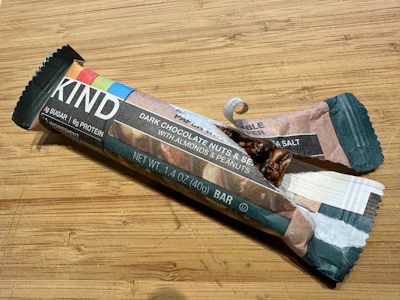
This rang especially true to me since I had just completed the article on Mars’ new Kind bar barrier paper pilot. The existing polypropylene wrappers have a 12- to 15-month shelf life. The latest curbside recyclable paper wrappers have a six-month shelf life. It’s important to note that these material launches are iterative, so next versions may well have better OTR and WVTR barriers, thus longer shelf lives. One major packaging supplier once told me that developing these new materials was like building a plane while flying it. They haven’t put the landing gear on quite yet, so expect improvements based on data gathered in these pilots.
Meanwhile, as brands like Mars are coming around to this idea, big chunks of the supply chain both upstream and down have grown accustomed to—maybe addicted to that extra level of performance. Inexpensive and highly optimized packaging formats afford slack to the system by way of shelf life, puncture resistance, tear resistance, machinability, and slick, glossy, colorful appearance.
But packaging is situational. The paper wrapper pilot is in single-use, grab-and-go style bars taken from a retail-ready container. One has to assume the bars will be consumed pretty quickly after purchase. They’re not in multipacks, which might sit on a shelf at home for months. So when you apply that situational filter consumption occasions for a packaged product, Klingenberg’s question is apt. Do you really need all that performance? PW