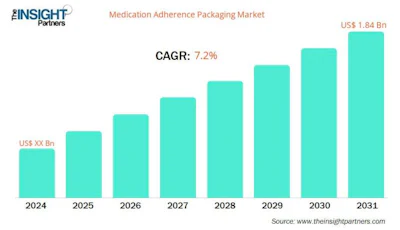
Medication adherence packaging is growing 7.2% annually and will reach $1.84 billion by 2031, helping patients take medications correctly while reducing costly healthcare errors and hospital readmissions.
- The medication adherence packaging market is projected to grow 7.2% annually from 2024 to 2031, reaching an estimated value of $1.84 billion
- Unit-dose and blister packaging formats dominate institutional settings, while multi-dose systems are gaining popularity in home care
- Smart packaging technology using sensors, QR codes, and RFID enables real-time adherence tracking and data-driven patient care
- Three key drivers fuel demand: rising chronic disease rates, aging populations, and healthcare cost pressures from non-adherence
- Sustainability trends are shifting material choices toward paper and paperboard alternatives, while plastics remain dominant due to cost and durability
Key Takeaways:
· Medication adherence packaging solutions play a critical role in ensuring accurate dosage, timely medication intake, and reduced medication errors.
· The mediation adherence market is poised to grow 7.2% from 2024 to 2031, resulting in an estimated value of $1.84 billion by 2031.
· Plastics dominate the market due to durability and cost-effectiveness, while paper and paperboard materials are gaining traction amid rising sustainability initiatives.
Medication adherence packaging is no longer a “nice to have," it’s becoming a core component of modern healthcare delivery. As chronic disease rates climb and treatment regimens grow more complex, packaging is stepping up as a frontline tool to improve compliance, reduce errors, and ultimately drive better patient outcomes.
From hospitals to home care, adherence-focused packaging solutions help ensure patients take the right medication, at the right dose, at the right time. The payoff is significant: improved therapeutic effectiveness, fewer avoidable hospitalizations, and lower overall healthcare costs tied to non-adherence.
A Market Built Around Accuracy and Convenience
According to The Insights Partners, the medication adherence market is poised to grow 7.2% from 2024 to 2031. The estimated value of the market being $1.84 billion by 2031. Medication adherence packaging spans unit-dose and multi-dose systems, each serving distinct care environments. Unit-dose formats remain dominant in institutional settings where error reduction is critical, while multi-dose solutions are gaining traction in outpatient and home care scenarios thanks to their flexibility and ease of use.
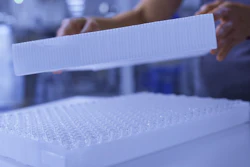
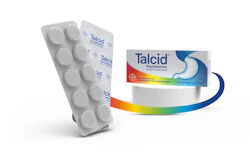
Blister packaging continues to anchor the market, valued for its clarity, contamination protection, and compatibility with adherence programs. Plastics still dominate material use due to cost and durability, but paper and paperboard alternatives are gaining momentum as sustainability moves higher on the healthcare agenda.
What’s Driving Demand?
Three forces are shaping market growth:
- Chronic disease prevalence continues to rise, increasing the need for structured medication management.
- An aging global population is driving demand for packaging that simplifies complex, multi-drug regimens.
- Healthcare cost pressures are pushing providers to adopt solutions that reduce preventable admissions linked to poor adherence.
Trends Redefining Adherence Packaging
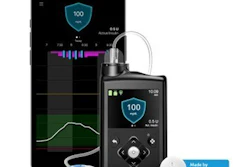
Innovation is accelerating. Smart and connected packaging—enabled by sensors, QR codes, and RFID—is opening the door to real-time adherence tracking and data-driven care. At the same time, patient-centric design is gaining priority, with easy-open formats, intuitive labeling, and visual dosing cues improving usability across age groups.
Sustainability is also reshaping material choices, as manufacturers balance performance requirements with environmental goals and regulatory expectations.
Where Opportunity Lies
The next wave of growth is being driven by integration. Pairing adherence packaging with digital health platforms and mobile apps enables personalized care and remote monitoring. Customized packaging tailored to individual patient needs is emerging as a powerful differentiator, while expanding healthcare infrastructure in emerging markets is creating new growth corridors. As adherence becomes a measurable driver of outcomes and costs, packaging suppliers are positioning themselves as critical partners in patient care—not just product providers.
In a healthcare system under pressure to do more with less, medication adherence packaging is proving that smart design and technology can deliver tangible clinical and economic value—one dose at a time.