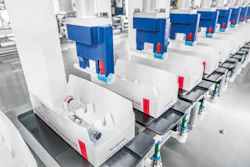
"Advances in online package inspection and integrity testing are exciting," exclaims Dana M. Guazzo, Ph.D., president of consulting firm RxPax LLC. "These include high-speed, noncontact ultrasound inspection technologies, light reflection technologies, and gas tracer techniques."
David Rudd, a senior engineering specialist with Cardinal Health, doesn't "anticipate any breathtaking advances. I do expect continual incremental improvements facilitated by increased application of servo motors, improved control software, and a drive to reduce costs. I'd like to see lower-cost machines that will allow users to buy more machines for increased scheduling flexibility."
On the materials side, Rudd says, "I expect that the development and acceptance of a better microbial barrier test will allow medical device manufacturers to make more informed decisions about materials used for sterilization vents." January 10, 2006
If a company is not willing to remove from the market a medical device, drug, biological product, or package that poses a significant health hazard to consumers, the Food and Drug Administration will request a recall in writing. Once the request from the FDA is received, a recall must be initiated by the manufacturer, utilizing the internal approved strategies discussed in last month's column.
If the product has been distributed to consumers, drafting a press release should be the manufacturer's first step. The manufacturer needs to determine whether this communication should be local, regional, nationwide, or global. For the broadest coverage, sending the press release to a news service such as the Associated Press might be appropriate. To expedite the recall, the press release should contain at least the following information: October 10, 2005